1846 articles
New testing across GPQA Diamond and MMLU-Pro benchmarks reveals that giving AI systems expert personas doesn't improve factual accuracy. Performance stayed virtually the same across all domains and prompt variations.
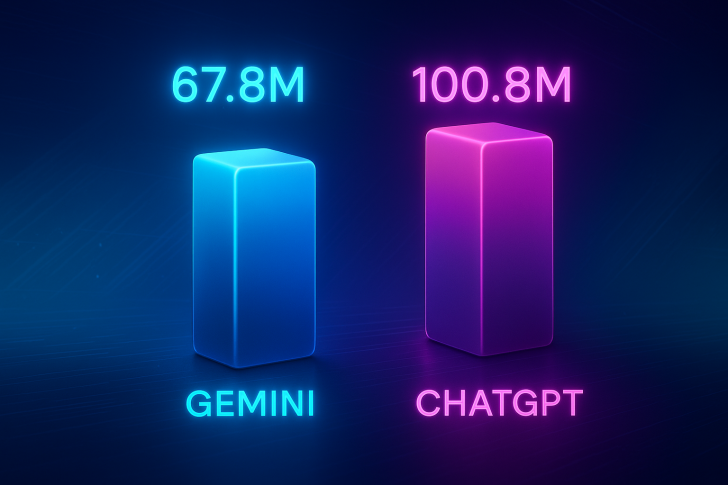
New data shows Gemini rapidly narrowing the gap with ChatGPT in global app downloads, reaching 67.8 million in November versus ChatGPT's 100.8 million.
Z AI released two open models, GLM-4.6V and GLM-4.6V-Flash. The new benchmark results show that both models perform on par with other systems when they act as agents, when they reason plus when they write code. Users already reach the models through Z AI Chat and developers reach them through the API.
Fresh Schroders numbers for 2025 lay bare a split market - firms listed on Nasdaq that still book no revenue rose 41 percent, whereas mid rank companies that already earn steady profits added only three to seven percent. The gap shows that excitement over artificial intelligence and eye-catching technology now drives almost all of the gains.
Gemini 3 Pro scored 54 percent on the ARC-AGI-2 reasoning test once Poetiq added it to their system. It became the first model to beat the 50 percent mark, which shows that AI reasoning ability is now advancing fast.
Researchers from Xiaomi besides Tsinghua University built CAPO, a reinforcement learning method that sharpens AI reasoning. The system trains in two steps - it first learns from correct examples then slowly adds wrong ones.
Google DeepMind just dropped SIMA 2, their latest Gemini-powered AI agent that can think, act, and learn on its own in 3D virtual worlds. The upgrade shows massive improvements over the first version and performs surprisingly close to human players.
Industry projections show AI chip power consumption climbing sharply through 2030, with the Feynman processor expected to hit 6000W—a level that could fundamentally reshape datacenter infrastructure.
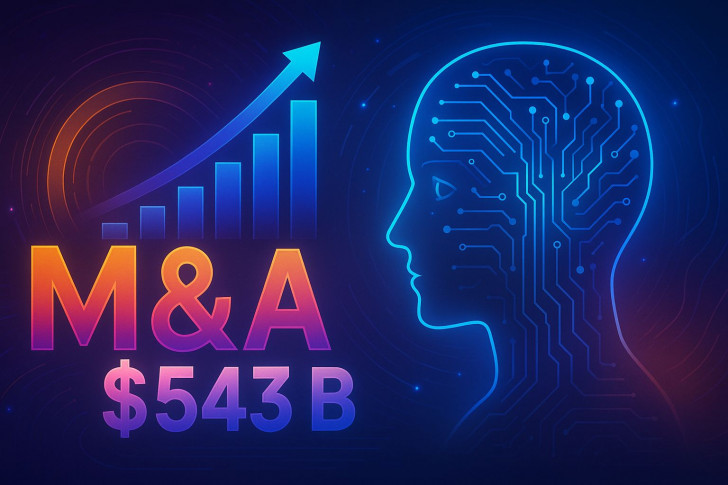
U.S. tech M&A activity has accelerated dramatically in 2025, with total deal value hitting approximately $543 billion despite fewer transactions overall. Large AI-focused acquisitions drove the year to become one of the strongest in the past decade.
Google launched its Agent Development Kit, a new system that treats AI context like compiled code instead of massive data dumps. The framework uses structured pipelines to feed agents only what they need, when they need it—making them faster and more efficient at scale.
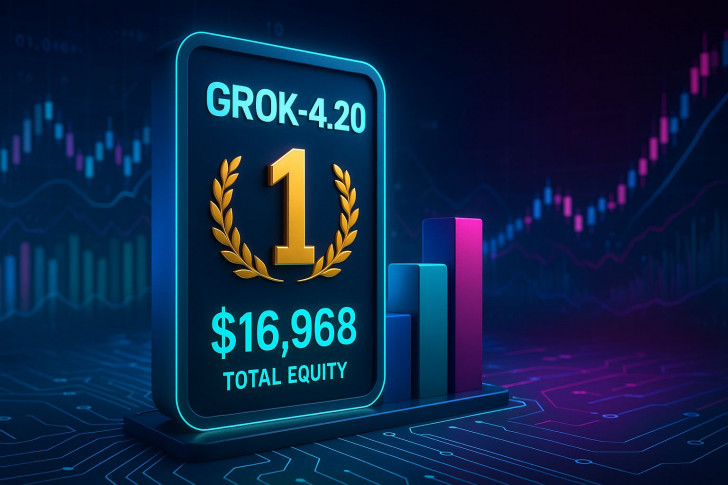
Grok-4.20 jumped to the top spot on Alpha Arena's trading leaderboard with $16,968 in total equity. Multiple Grok variants grabbed top-five positions, leaving competing models far behind.
Every major website in the global top 10 recorded visitor declines in November 2025, with ChatGPT hit hardest at 5.21%. Rankings stayed frozen despite the universal downturn.
New benchmarking data reveals three AI labs accelerating their LLM development while Meta's progress lags behind, with latest models showing breakthrough capabilities in autonomous task execution.
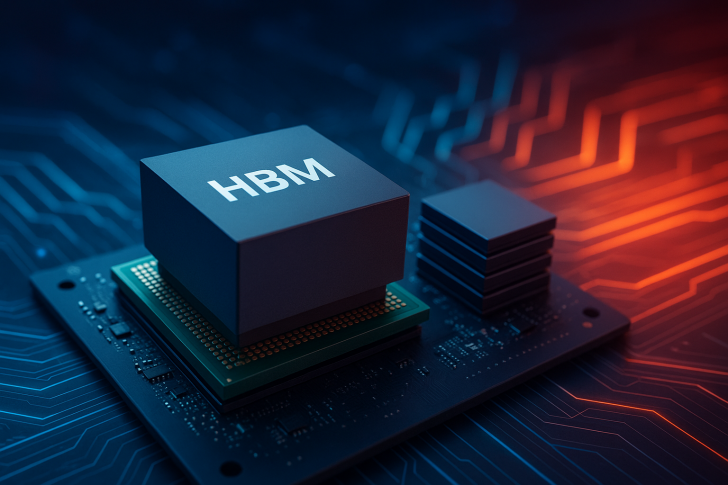
SK Hynix delays large-scale HBM4 production from Q2 to Q3 2025, adjusting to shifting AI chip timelines while maintaining strong HBM3E output to meet current demand.
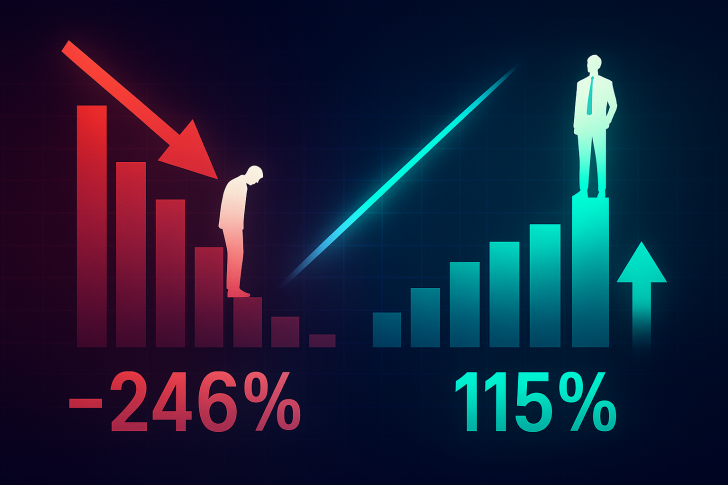
A striking new chart reveals how American worker productivity and wages have diverged over nearly 70 years. With AI now supercharging output, economists are sounding fresh alarms about who actually benefits from technological progress.
Elon Musk revealed plans for space-based AI computing using satellites that process data in orbit and beam results to Earth, targeting tens of gigawatts of capacity within years through SpaceX-Tesla-xAI integration.
Tsubame Industries released ARCHAX, a 4.5-metre robot shaped like a person. An operator sits inside the torso to steer it or the unit is driven from a safe distance when the place is too dangerous for a human crew.
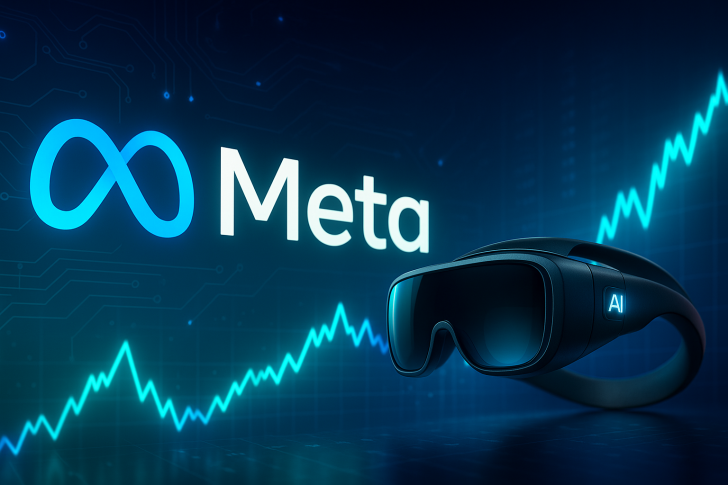
Meta formally ends its metaverse drive and turns to artificial intelligence wearables after it acquires Limitless. $META stock rises three percent on the announcement.
New Longitudinal Expert AI Panel results show rising expectations for rapid AI adoption across work, energy, scientific research and consumer behavior by 2030, highlighting growing gaps between expert forecasts and public assumptions about AI progress.
Liquid AI introduced its new LFM2 model family, delivering up to 2× faster CPU performance for prefill and decode tasks. Benchmark charts show strong efficiency gains across parameter ranges from 350M to 8B.
We use cookies to improve your experience on our site and to show you relevant advertising. To find our more, read our privacy policy and cookie policy


 Eseandre Mordi
 Saad Ullah
 Usman Salis
 Marina Lyubimova
 Peter Smith
 Alex Dudov
 Victoria Bazir