1846 articles
A Harvard-backed analysis of hundreds of millions of user interactions reveals AI agents handle serious cognitive work—not just casual queries.
SpaceX's Starship represents humanity's first real shot at becoming a multiplanetary civilization, built entirely without artificial intelligence.
Qwen has released Qwen3-Next-80B-A3B-Thinking, a new AI model that combines Hybrid Attention with high-sparsity MoE architecture to handle 1 million-token contexts and deliver superior reasoning performance compared to Gemini-2.5-Flash-Thinking.
Nvidia has received approval to sell reduced-performance AI chips to China, maintaining its presence in a crucial market despite tightened U.S. export controls.
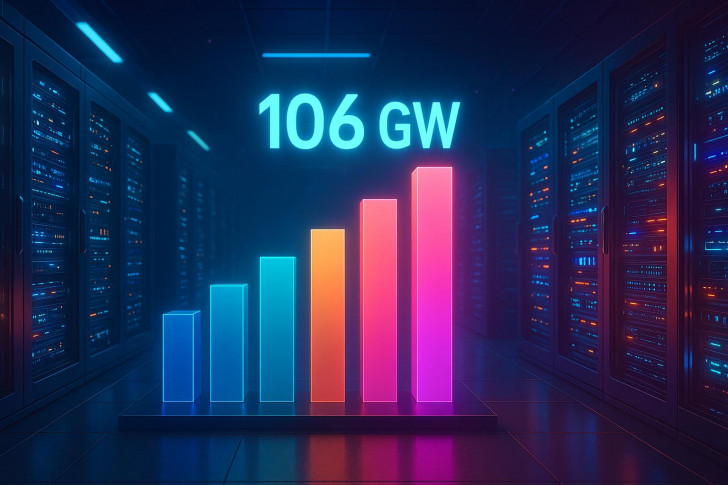
AI infrastructure boom drives 36% upward revision in electricity forecasts as nationwide grid expansion accelerates
Revolutionary surgical robots eliminate human hand tremors entirely, showcasing machine-level accuracy that's transforming operating rooms worldwide.
Enterprise spending on generative AI has jumped to $37 billion, representing about 6% of total software budgets. Companies are moving past the experimental phase and seeing real returns on their AI investments.
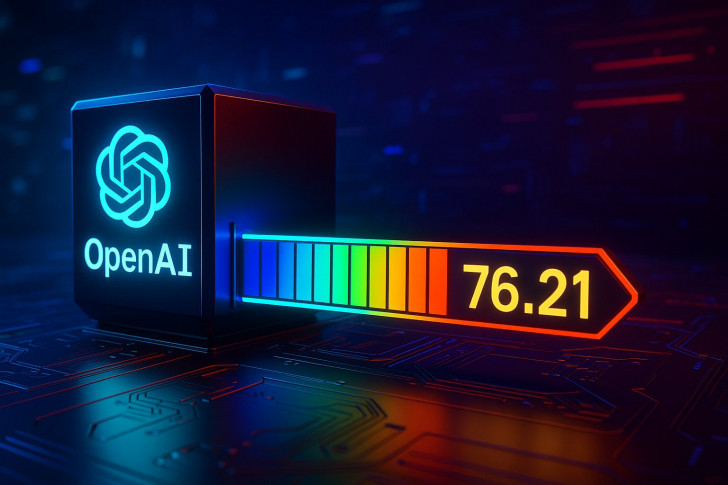
OpenAI's Max Extra High model claimed the number one position on LiveBench leaderboard with a 76.21 overall score, barely beating Anthropic's Opus 4.5. The tight race shows how quickly things are changing in the AI model space.
New studies show that when an AI model is told to act as a physicist or a lawyer, its answers do not become more factually correct on hard questions - only the style and tone of the replies change.
Grok Imagine v1.0 will receive a large update. The update should raise the quality of the images and videos the model produces. The change mirrors the fast pace of improvement now seen in every AI tool that creates pictures or footage.
Anthropic has moved ahead of OpenAI and now holds the largest share of generative AI spending by US companies. It captures forty cents of every dollar spent. The entire market has surged from 1.7 billion dollars in 2023 plus is forecast to reach 37 billion dollars in 2025.
Mistral just dropped two new open-source coding models—Devstral Small 2 and Devstral 2—that are crushing it on SWE-Bench with state-of-the-art results. They also launched Mistral Vibe, a CLI tool that automates your entire workflow.
Anthropic rolled out full Slack integration for Claude, letting users handle research, coding, and workflow automation right inside Slack. The update brings better context retrieval and fresh productivity tools across channels and threads.
Grok posted the strongest month-over-month traffic jump among major GenAI platforms in November, with a 14.74% increase. Meanwhile, established players like ChatGPT and Claude.ai saw their visitor numbers drop during the same period, according to Similarweb data.
Google is set to launch its first Gemini-powered smart glasses in 2026, featuring two product lines developed with partners like Samsung, Warby Parker, and Gentle Monster.
Huawei just dropped EMMA, a unified multimodal AI system that handles understanding, generation, and image editing all in one place. Early tests show it's hitting state-of-the-art performance while staying surprisingly efficient.
A University of Luxembourg study evaluated leading AI models using psychological profiling. Results revealed sharp differences in emotional expression and coping traits across Gemini, ChatGPT, and Grok.
LangChain explains that the craft of shaping agents now is a core discipline for constructing adaptive AI systems. The firm stresses that steady cycles of revision, joint work across teams and tests in live settings raise the trustworthiness of agents.
BIGAI rolled out its Native Parallel Reasoner framework on Hugging Face, bringing a 24.5% performance jump and 4.6× faster token generation. The release features a teacher-free training method that lets large language models build parallel reasoning capabilities on their own.
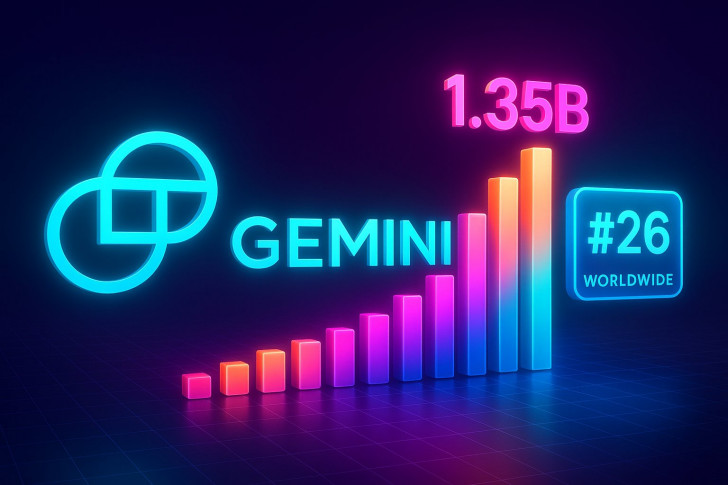
Gemini's website traffic exploded to 1.351 billion visits in November 2025, showing strong monthly growth and a massive 391% jump year-over-year. The platform climbed four spots to become the 26th most visited site globally.
We use cookies to improve your experience on our site and to show you relevant advertising. To find our more, read our privacy policy and cookie policy


 Sergey Diakov

 Alex Dudov

 Usman Salis
 Peter Smith

 Saad Ullah
 Eseandre Mordi
 Victoria Bazir
 Marina Lyubimova