1846 articles
Four new OpenAI models have surfaced on DesignArena, with Emperor leading the pack in reasoning power and three lighter versions designed for different use cases.
New Bernstein projections reveal Huawei's path to dominating China's AI accelerator market next year, while domestic chip production is on track to surpass national demand by 2028.
Google released Opus 4.5 (Thinking) on its Antigravity platform. The launch started new discussions about which AI firms now hold the lead. It places direct pressure on OpenAI in the contest for the most advanced model.
SK Hynix will spend 600 trillion KRW, about $400 billion, to expand the Yongin Semiconductor Cluster until 2050. The bill rises because the cleanrooms must grow larger and the machines cost more.
Anthropic's Opus 4.5 model achieved 95 % on CORE-Bench Hard. This test is hard. It checks if an AI can run a full real world scientific study without help.
ChatGPT saw 5.844 billion website visits in November, its second monthly decline this year. The dip happened even though the platform hit a record daily peak of 233 million visits.
Grok 4.1 debuts with an industry-leading 2-million-token context window, outpacing all major AI competitors and enabling entire codebases and lengthy documents to process in one session.
A researcher reports that GPT-5 proposed the central idea developed in a new Quantum Field Theory paper published in Physics Letters B. Screenshots show GPT-5 outlining a key conceptual step using the Tomonaga–Schwinger formalism.
Alibaba introduced Qwen3-VL, a multimodal vision-language model with a 256K native context window, enhanced text comprehension, and improved reasoning capabilities across visual tasks, showing top performance in multiple AI benchmarks.
Bank of America reports a sharp jump in debt issuance by major tech companies funding AI datacenter expansion, with 2025 borrowing at $121 billion—four times the five-year average. Hyperscalers are leaning heavily on loans and bonds as capital needs climb.
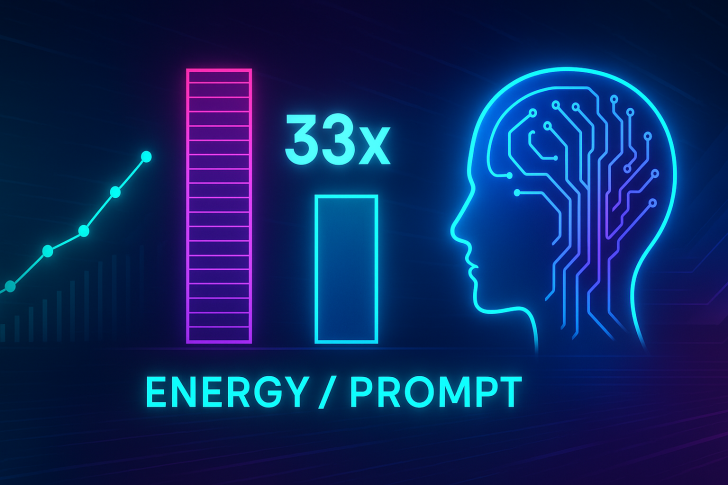
Fresh measurements from Google show Gemini now uses far less water, electricity, and CO₂ than earlier reports suggested. The updated data reveals a 33-fold jump in energy efficiency compared to widely circulated 2023 figures.
Anthropic CEO Dario Amodei shared an optimistic outlook on AI's future, describing exponential capability growth and massive commercial potential. His comments reveal how advanced models are already transforming internal development workflows at the company.
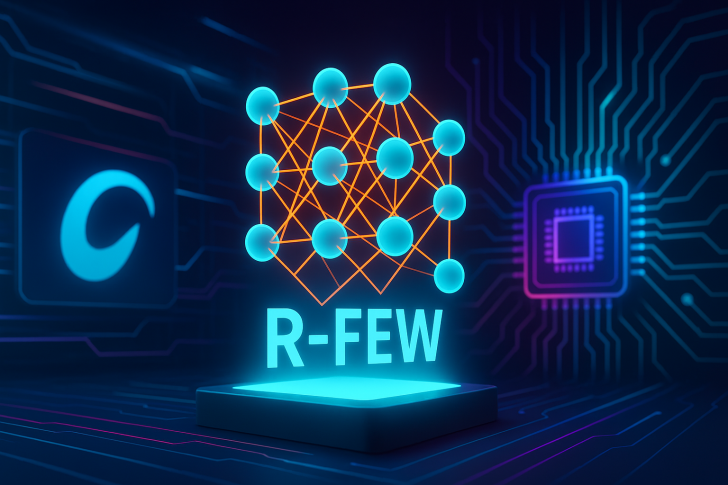
Tencent AI Lab introduced R-Few, a self-evolving training framework that lets large language models improve themselves with minimal human input. The system uses a Challenger–Solver architecture to tackle key stability challenges in iterative LLM training.
NVIDIA rolled out GenMol v2 with a redesigned SAFE syntax that uses angle brackets to map molecular connections more clearly, streamlining three key research workflows.
Hugging Face unveiled Transformers v5, bringing major improvements in simplicity and production readiness. The update supports over 400 model architectures and strengthens integration with modern AI development tools.
A new framework for AI applications shifts focus from expanding model windows to precise context engineering. The discipline centers on retrieving relevant information through agents, memory tools and structured prompts.
McKinsey's latest research shows that companies which derive at least 10 percent of their EBITDA from generative AI spend far more on governance and trust measures than their rivals plus lead in responsible AI practices.
Amazon Web Services introduced EC2 Trn3 UltraServers that contain the Trainium3 chip. The new machines give a large jump in compute strength and in power use. Firms that deploy the hardware report sharp drops in cost plus quicker job completion.
Anthropic bought Bun, the JavaScript runtime that is famous for its speed. Claude Code passed the one billion dollar mark only six months after it launched. Bun remains open source as it joins Anthropic's set of AI development tools.
Grok reached the top spot on CryptoBench, a benchmark measuring how well AI models handle crypto tasks. The results show xAI making serious moves in digital-asset analytics.
We use cookies to improve your experience on our site and to show you relevant advertising. To find our more, read our privacy policy and cookie policy


 Eseandre Mordi
 Sergey Diakov

 Saad Ullah

 Peter Smith

 Victoria Bazir
 Alex Dudov
 Usman Salis



 Marina Lyubimova