1846 articles
OpenAI is rolling out ChatGPT Go across Latin America as regional usage surges. The company is teaming up with Rappi to offer free trials in nine countries.
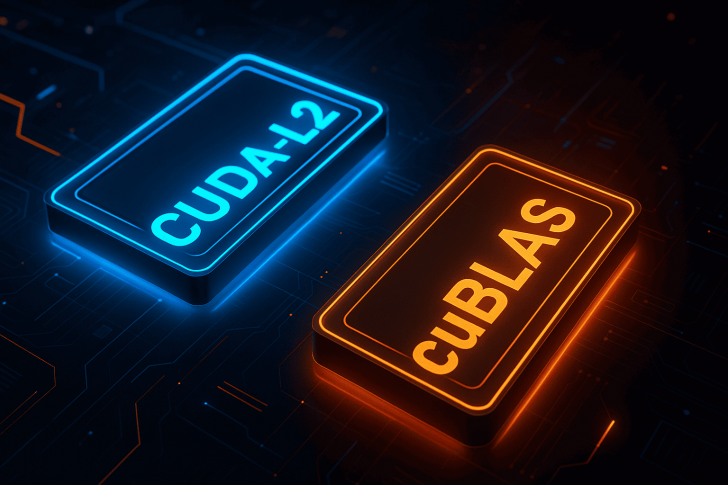
Researchers developed CUDA-L2, an AI-powered optimization system that uses reinforcement learning to generate GPU code. Tests show it can outperform Nvidia's standard cuBLAS library by up to 26 percent in real-time tasks
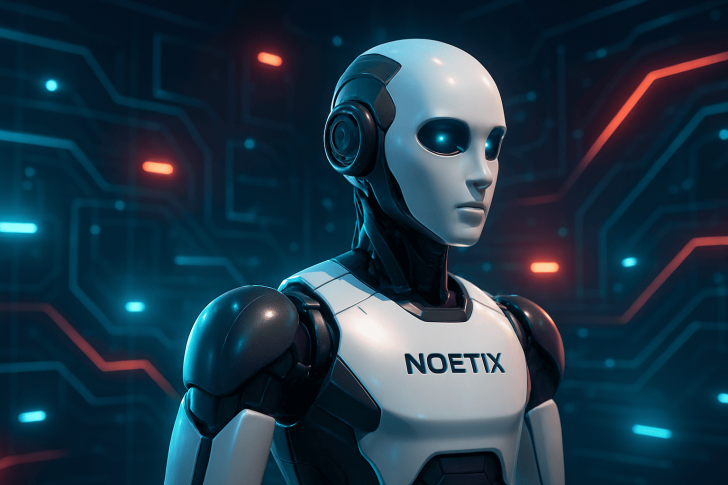
Chinese robotics startup Noetix Robotics has landed its largest commercial deal to date—a 1,000-unit order for its affordable Bumi humanoid robot from data analytics company HCR, which plans to integrate its proprietary AI system into the platform.
Microsoft slashed Copilot AI sales targets by up to 50% amid weak enterprise demand. Market data reveals Copilot holds just 14% share while ChatGPT dominates with 61%, exposing growing pressure on Microsoft's AI strategy.
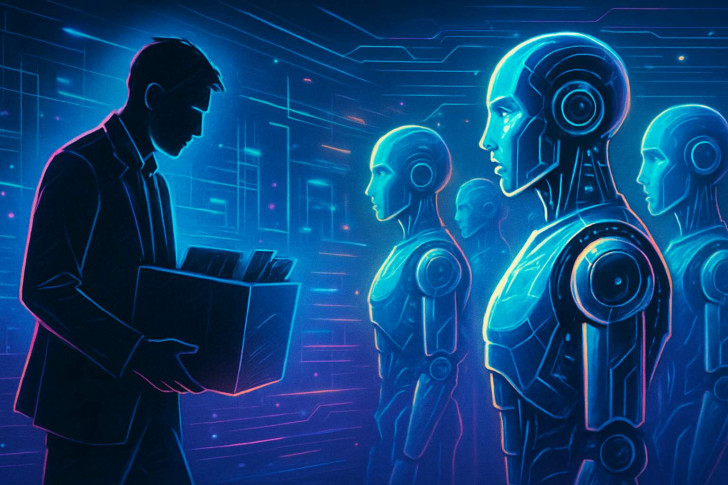
Public concern around artificial intelligence is shifting from bubble risks to job losses and inequality, with fears that AI-driven automation is accelerating faster than social and labor safeguards can keep up.
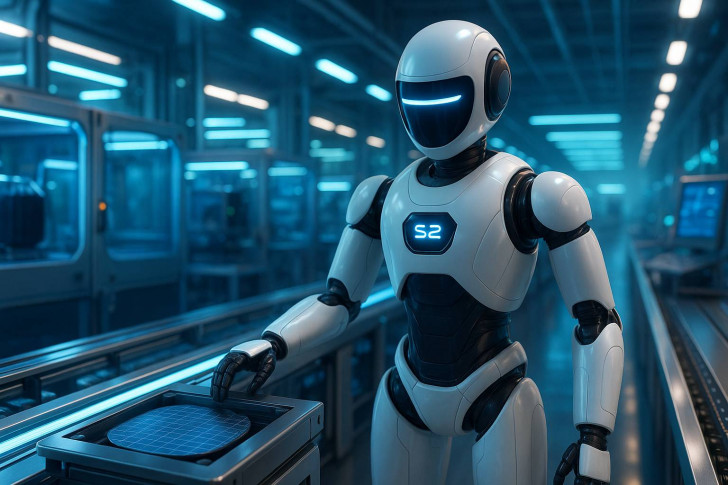
Texas Instruments is now testing UBTECH's Walker S2 humanoid robot on its actual production floors. Beyond the deployment, UBTECH will also use more TXN components in future robot builds, strengthening ties between the chipmaker and robotics manufacturer.
Google's Gemini 3 holds the top position on the Artificial Analysis Intelligence Index with a score of 73, matching OpenAI's GPT-5.2 in the latest benchmark rankings.
Mistral's Devstral-Small-2 achieves impressive local inference speeds on Apple M3 Ultra using MLX, with 6-bit quantization proving to be the sweet spot for balanced performance.
Comet Assistant plans to gradually transition its AI compute to fast, lightweight models, with some potentially running locally on user devices rather than in the cloud.
OpenAI's latest GPT-5.2 xhigh model completely failed a cutting-edge physics reasoning test, scoring zero on the CritPt benchmark designed to evaluate expert-level theoretical physics capabilities.
Nvidia's latest CUDA update brings new developer tools and performance features that help maintain the company's lead in AI infrastructure, even as competitors like AMD and Google push their own accelerator platforms.
Unitree introduces a groundbreaking marketplace platform that lets humanoid robots download new skills and behaviors like smartphone apps, marking a significant step toward mainstream robot adoption.
New labor market data reveals growing pressure on entry-level employment as AI adoption accelerates, with recent college graduates facing significantly higher unemployment risks than experienced workers.
Optical interconnects are emerging as a crucial component of AI infrastructure as demand intensifies, with Lumentum and Coherent positioned as major winners. Industry watchers believe optics could become a structural growth driver as AI labs start influencing revenue across the semiconductor sector.
Researchers have developed LatentMAS, a new framework that lets AI agents work together by sharing internal representations instead of text messages, slashing token consumption by 83% while boosting accuracy by nearly 15%.
Anthropic's latest Claude Opus 4.5 model shows dramatic improvements in performance benchmarks while slashing inference costs by two-thirds, marking a major shift in the Opus model family's competitive position.
A recent breakdown clarifies the key differences between non-agentic AI, agentic AI, and AI agents, showing how each fits into today's automation landscape.
Google's internal doubts about early chatbot quality allowed OpenAI to dominate the AI market. Company leaders now admit hesitation and limited computing investment created a strategic gap that defined the industry's direction.
Artificial intelligence is driving an unprecedented surge in global electricity demand from data centers, with consumption expected to more than double by decade's end. This creates a critical energy challenge as the need for continuous, reliable power clashes with renewable energy limitations.
Google DeepMind is set to open the UK's first fully automated AI-driven laboratory in 2026, focusing on breakthrough materials discovery for batteries, semiconductors, and other critical technologies through continuous robotic experimentation.
We use cookies to improve your experience on our site and to show you relevant advertising. To find our more, read our privacy policy and cookie policy


 Artem Voloskovets
 Peter Smith
 Saad Ullah
 Victoria Bazir

 Eseandre Mordi
 Alex Dudov
 Sergey Diakov


 Marina Lyubimova

 Usman Salis