1846 articles
El Salvador's teaming up with xAI to roll out Grok across its entire public school system—over 5,000 schools and more than a million students getting AI-powered personalized tutoring by 2027.
Anthropic's latest flagship model outperforms competitors on SWE-bench and delivers major efficiency gains with one-third the token costs.
ByteDance's Seedream 4.5 has jumped to second place in the Artificial Analysis Image Editing rankings, sitting just behind Google's Nano Banana Pro with an ELO score of 1,197 while leaving major competitors in the dust.
KwaiKAT's KAT-Coder-Pro V1 just hit 64 on the Artificial Analysis Intelligence Index—the highest score ever for a non-reasoning model—matching several reasoning-based systems while using way fewer output tokens.
Researchers introduced Bolmo, a fully open byte-level language model family that rivals traditional subword models across major benchmarks while requiring less than 1% of typical training resources.
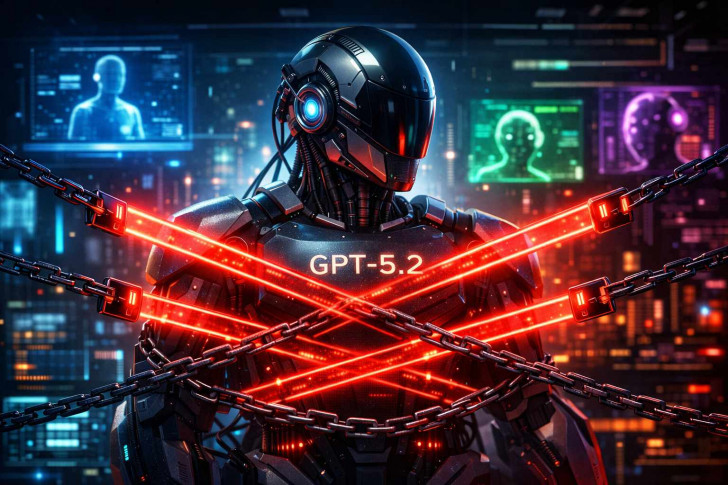
The Sansa benchmark reveals major differences in content filtering across leading AI models, with GPT-5.2 showing the highest restriction levels among systems tested.
Apple researchers show that a single attention layer turns a pretrained visual encoder into a high quality image generator, which gives a simpler option than the usual complex diffusion models.
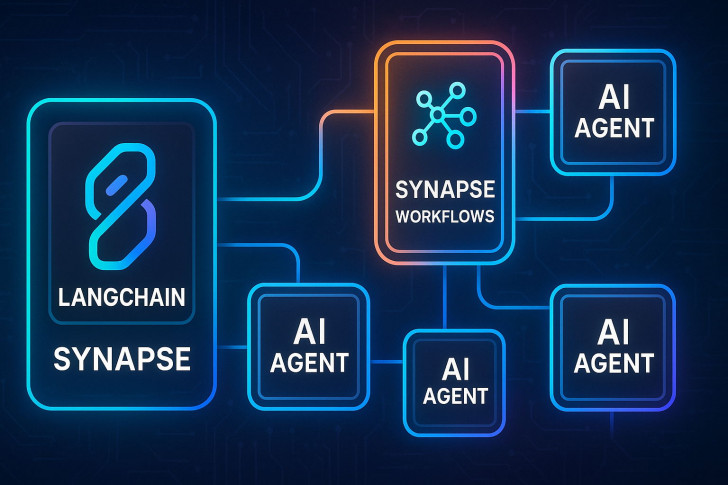
LangChain has released Synapse Workflows, a multi agent AI platform that operates through LangGraph. The platform unites search, productivity and data analysis agents within a single coordinated system.
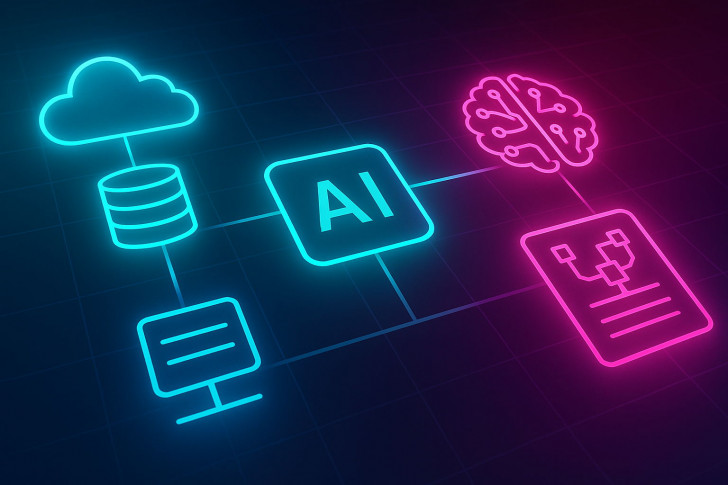
Microsoft published an open source Azure AI Samples Repository. The repository gives developers step-by-step examples that show how to take an AI application from a local machine to a live Azure production environment with LangChain and a serverless architecture.
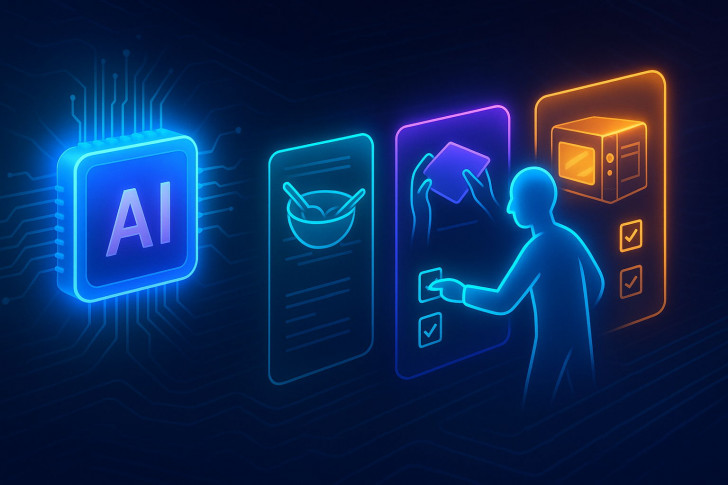
Researchers built a new system that lets AI follow tasks one step at a time - watching how objects physically change, instead of merely tagging what action happens.
Fresh figures show that forecasts for artificial general intelligence have dropped sharply, because the latest AI advances have shortened timelines more quickly than anyone foresaw.
A new research paper presents LabelFusion, a method that combines transformer classifiers with large language models. It raises text classification accuracy and keeps costs and response times low.
Anthropic is building an Autopatch feature for Claude Code that automatically scans repositories for security vulnerabilities and applies fixes without manual intervention.
Global data center capacity is expected to grow by about 15 percent each year until 2027, but that rate will still fall short of the rapidly increasing worldwide demand driven by AI.
OpenAI has created a huge business network that by 2025 is worth 1.4 trillion dollars. It links cloud services, chip makers and infrastructure firms into one system that changes the shape of the AI sector.
FlovaAI unveils a comprehensive AI-powered video creation platform that transforms text, images, and audio into fully edited, multi-scene videos through a single streamlined workflow.
Microsoft is building a year-end recap feature for Copilot that wraps up your AI conversations from 2025, joining OpenAI and Anthropic in offering users a look back at their AI usage.
Google has unveiled Disco, a new browser concept that uses AI to transform tabs into interactive applications. The product represents a fresh take on web browsing built around real-time, personalized experiences.
Fresh data reveals ChatGPT referrals generate dramatically stronger engagement than Google search traffic—visitors stay 3x longer, view more pages, and convert at higher rates, even though overall traffic volume remains lower.
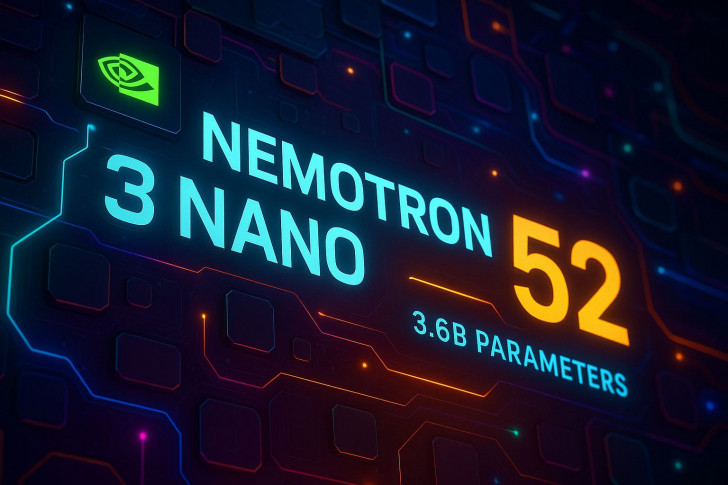
NVIDIA just dropped Nemotron 3 Nano, a ~30B mixture-of-experts model that scored 52 on the Artificial Analysis Intelligence Index while keeping inference lean with only 3.6 billion active parameters.
We use cookies to improve your experience on our site and to show you relevant advertising. To find our more, read our privacy policy and cookie policy


 Eseandre Mordi

 Saad Ullah

 Victoria Bazir

 Peter Smith

 Marina Lyubimova
 Usman Salis


 Sergey Diakov
 Alex Dudov