1662 articles
GPT-5.2 has successfully operated without interruption for seven consecutive days, building excitement around upcoming METR performance benchmarks that could showcase dramatic improvements in AI task efficiency.
Grokipedia's meteoric rise from 35,000 to 3.5 million daily visitors in just two months marks one of the fastest growth spurts in online encyclopedia history, positioning the platform as a serious challenger to Wikipedia's long-standing dominance.
OpenAI is partnering with Cerebras to add 750 megawatts of ultra-fast computing power to its infrastructure, significantly improving performance for coding, image generation, and AI agents.
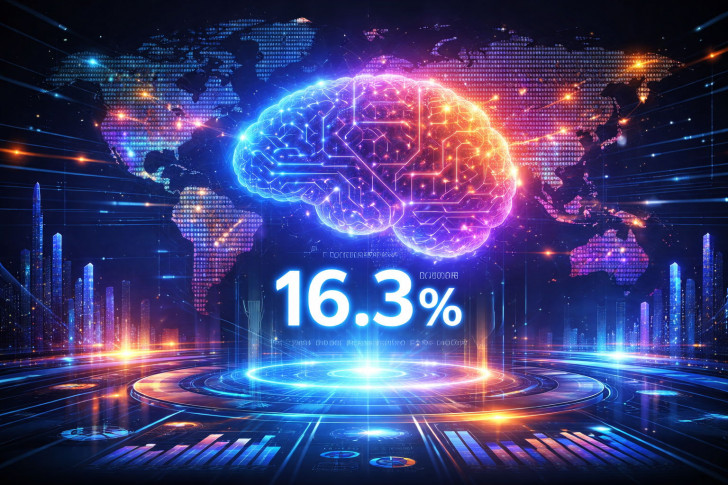
Microsoft's 2025 data reveals generative AI adoption reached 16.3% globally, with high-income economies pulling ahead while emerging markets lag behind. The gap between developed and developing regions continues to widen.
A new survey shows most firms report little to no measurable impact from AI adoption across productivity, decision-making, and customer outcomes. Only a small minority report gains exceeding 5%.
ViMoGen represents a breakthrough in AI-powered human motion generation, leveraging video diffusion models to deliver superior motion quality, precise text alignment, and enhanced real-world adaptability.
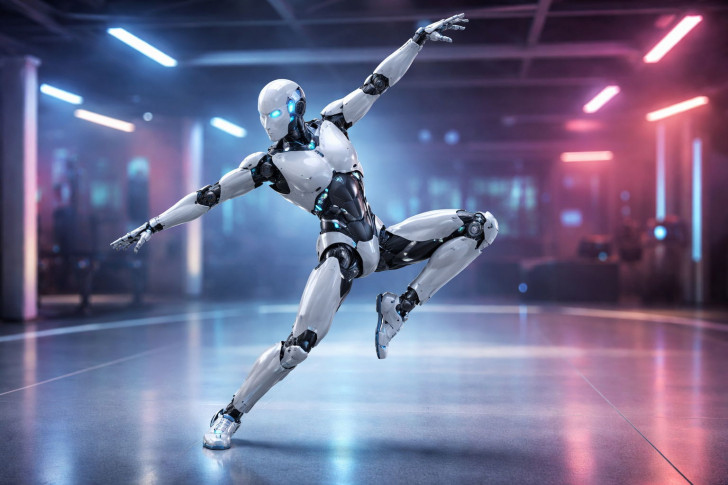
PNDbotics unveils Adam, a humanoid robot that combines remarkable limb flexibility with controlled strength, landing dance moves so quietly it doesn't even scratch the floor.
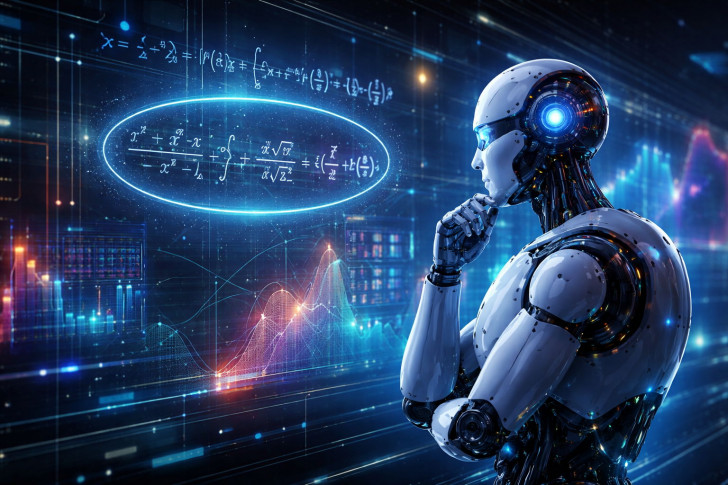
xAI's Grok 4.20 beta independently derived a new mathematical formula that beats the strongest known theoretical bound, delivering a research-level breakthrough in probability theory within minutes.
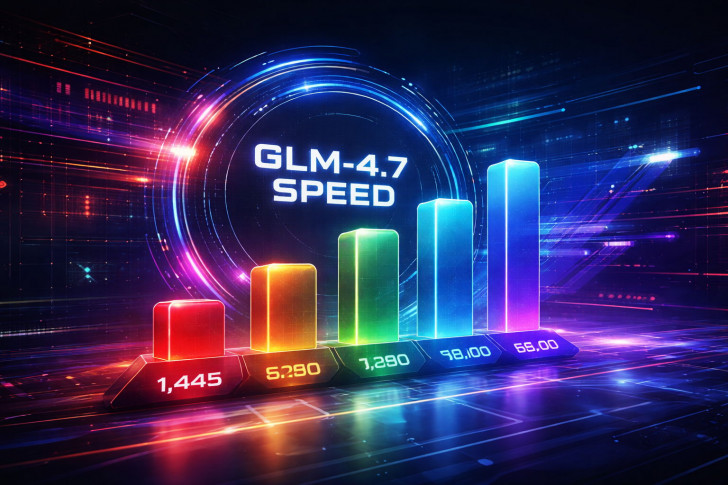
Fresh benchmarking reveals massive performance gaps among GLM-4.7 inference providers, with speed varying from 1,445 tokens/second down to double digits while pricing structures create distinct cost-performance trade-offs for agentic workloads.
Google is testing a redesigned Google AI Studio homepage built around getting developers from prompt to production faster with Gemini models.
Research teams from seven top institutions unveiled Controlled Self-Evolution (CSE), a breakthrough AI approach that learns from experience to optimize code generation, consistently outperforming all baseline models across generations.
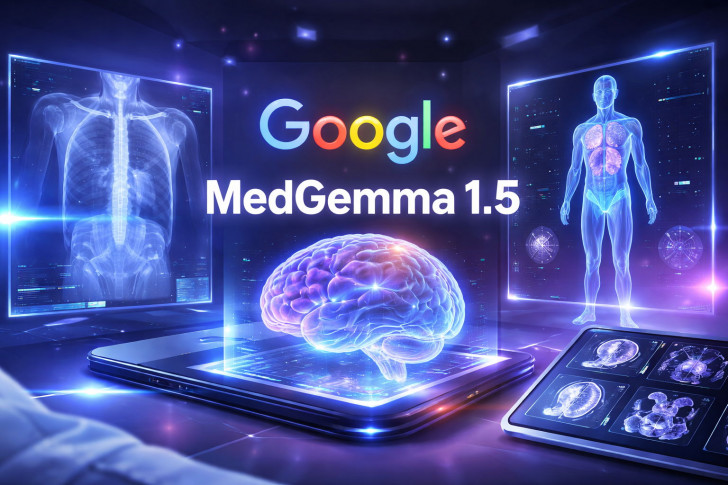
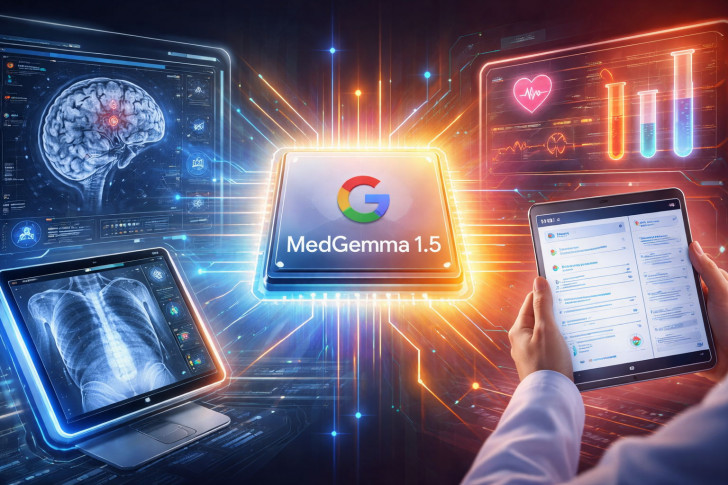
Google Research launched MedGemma 1.5, delivering 14% better medical imaging performance and 22% improvement in EHR question answering, while MedASR cuts transcription errors by up to 82% compared to standard systems.
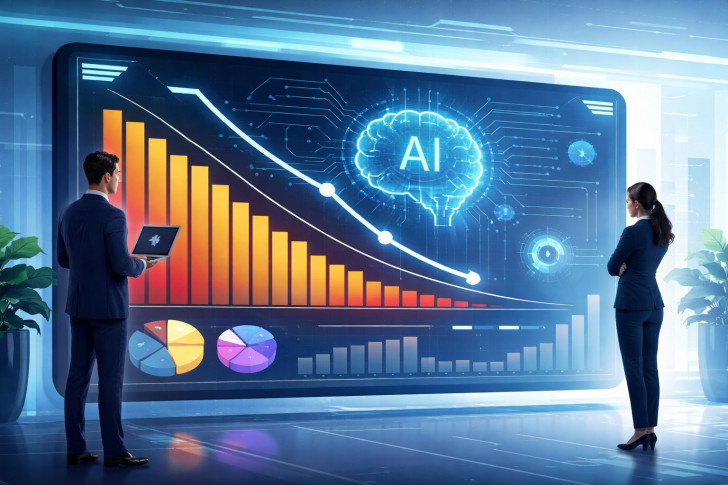
Token costs for top-tier large language models are dropping 900x per year, while mid-tier models see 40x reductions and basic models fall 9x annually, making AI accessible at unprecedented scale.
Agibot's Scalable Online Post-training system lets robots learn complex tasks by streaming real-time data to the cloud, making them better at everything from folding clothes to restocking shelves.
New McKinsey analysis shows AI agents and robots could handle over half of American work hours by 2024, though jobs needing emotional intelligence remain safe from automation.
Kling AI's viral dance challenge using its 2.6 Motion Control feature is closing soon, with users rushing to submit their one-photo-to-dance transformations before time runs out.
Elon Musk says artificial intelligence will hit digital superintelligence on its own—no brain chips needed. He's positioning Neuralink as a bandwidth booster for humans to keep up with AI that's already racing ahead.
DeepSeek just dropped a research paper on Engram—a new conditional and scalable memory module built to make large language models way more efficient. The timing's got everyone buzzing about what their next-gen model might look like.
Google just rolled out MedGemma 1.5, bringing native 3D CT and MRI scan support to its open-source medical AI toolkit. This update unlocks powerful multimodal capabilities that healthcare developers can actually use in real-world clinical settings.
A satirical post claiming Meta created a "Superintelligence Labs" division led by Alexander Wang went viral, sparking conversations about AI replacing corporate executives. The obviously fake announcement highlighted growing anxiety and humor around AI-driven leadership.
We use cookies to improve your experience on our site and to show you relevant advertising. To find our more, read our privacy policy and cookie policy


 Saad Ullah
 Eseandre Mordi
 Victoria Bazir

 Sergey Diakov
 Alex Dudov
 Usman Salis
 Peter Smith

 Artem Voloskovets