1662 articles
Leading AI models are holding the top ranking for barely over a month these days, showing just how crazy fast the competition in artificial intelligence has become.
Chinese AI lab DeepSeek is gearing up to drop its V4 model around mid-February, and early buzz points to some seriously impressive coding performance that could shake up the competition.
Global AI computing capacity is expanding at an unprecedented pace, doubling roughly every seven months. New data highlights sustained accelerator growth since 2022.
Nanobot debuts as an open-source MCP host that enables developers to build AI agents with flexible deployment options across chatbots, voice systems, and custom interfaces.
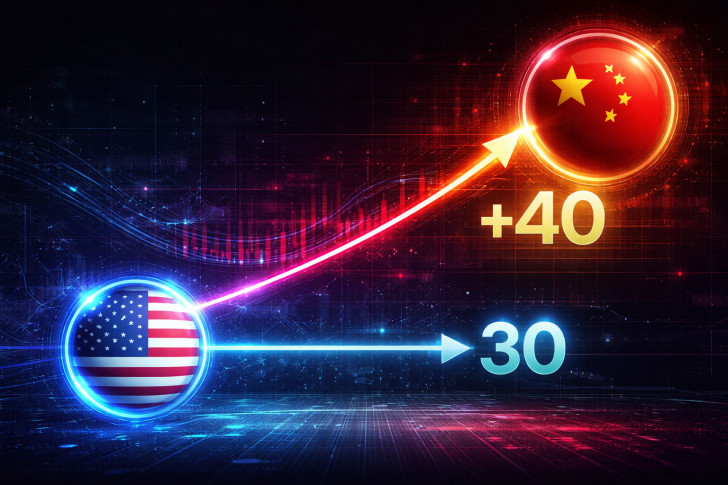
Chinese AI labs keep dropping new open-weights models that push intelligence scores higher every few months. Meanwhile, America's strongest public model hasn't budged since August 2025.
Google is bringing Gemini 3 deeper into Gmail with AI-powered summaries, smart search, writing help, and inbox sorting. The update pushes Gmail well beyond basic auto-replies into full contextual AI assistance.
Electricity consumption from AI and data centers is projected to surge through 2028, reaching record levels. Energy supply is becoming a critical bottleneck for AI expansion.
Google's Stitch platform now supports Gemini 3 Flash, a faster AI model designed to speed up design iteration while maintaining quality. The Pro model remains available for tasks requiring deeper analytical thinking.
Qwen releases Qwen3-VL-Embedding and Qwen3-VL-Reranker as open-source models for unified retrieval across text, images, documents, and video.
Elon Musk claims current AI operates at roughly 1% of its theoretical intelligence density, suggesting massive efficiency improvements are possible without simply scaling up model size.
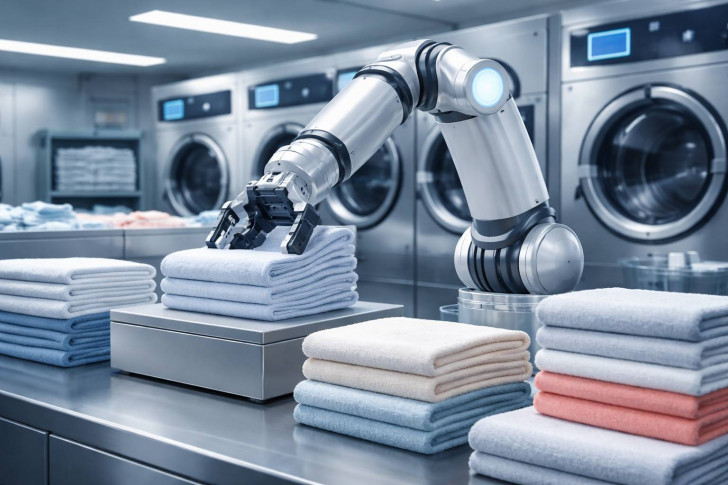
A DYNA robot has autonomously folded over 200,000 towels in three months at a Sacramento laundromat, showing how commercial robotics is moving from pilot projects to real-world business operations.
Epoch AI data reveals global AI compute capacity now exceeds 15 million H100-equivalents, with Nvidia dominating the market while Google, Amazon, AMD, and Huawei chip in with growing contributions.
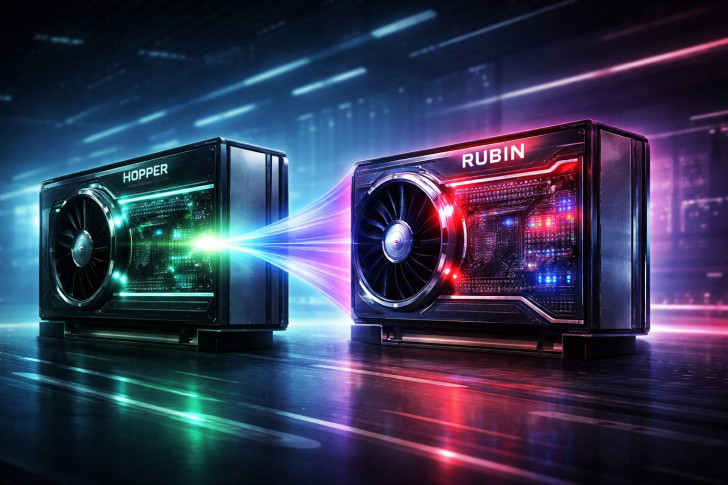
Nvidia's upcoming Rubin GPU platform promises 100x efficiency gains over Hopper and needs just 25% of the infrastructure required by current Blackwell systems to train massive AI models.
Technology Innovation Institute's Falcon-H1R-7B, a 7-billion-parameter reasoning model, scored 16 on the Artificial Analysis Intelligence Index v4.0, landing on the Pareto frontier for sub-12B models and marking UAE's growing presence in the AI benchmarking landscape.
xAI's Grok Voice Agent API topped the BigBench Audio benchmark for speech reasoning. The system already powers voice features in Grok apps and operates across millions of Tesla vehicles worldwide.
Tombot, an AI-powered robotic dog unveiled at CES 2026, uses motion sensors and responsive interaction to help seniors with dementia combat stress, anxiety, and loneliness through companionship rather than physical assistance.
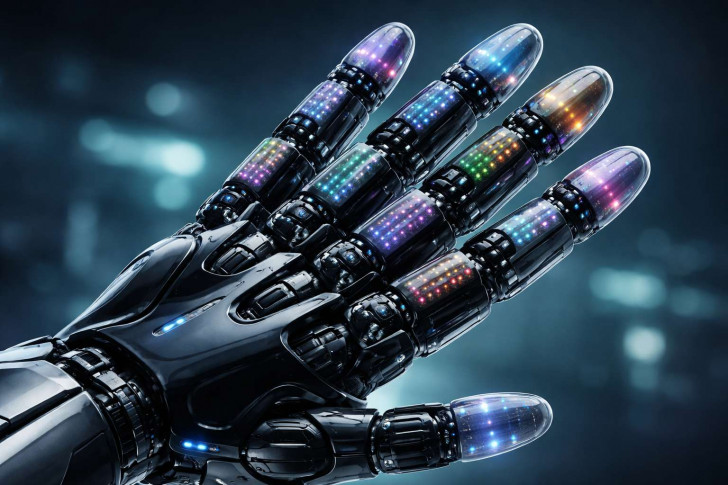
Sharpa demonstrated a robotic hand capable of picking up playing cards, highlighting major advances in tactile sensing and dexterity.
AMD CEO Lisa Su forecasts a 100-fold increase in AI computing demand over the next 4-5 years, while modern robotics prioritize practical functionality over human-like appearance.
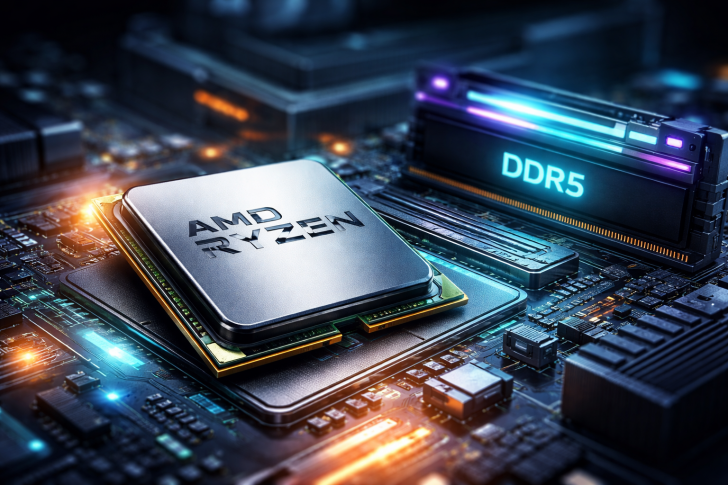
AMD might bring back its older AM4 processors as DDR5 memory costs skyrocket, offering budget-conscious PC builders a more affordable path forward.
DRAM and NAND prices surged dramatically in late 2025, with further increases expected through mid-2026 as AI demand outpaces supply.
We use cookies to improve your experience on our site and to show you relevant advertising. To find our more, read our privacy policy and cookie policy


 Peter Smith

 Saad Ullah

 Eseandre Mordi

 Victoria Bazir

 Sergey Diakov

 Artem Voloskovets

 Alex Dudov

 Usman Salis