1662 articles
A newly released Beacon Object File enables command execution inside Windows Subsystem for Linux without launching the wsl.exe process. The technique operates entirely in memory, reducing visibility for endpoint detection tools.
Researchers have introduced GS-World, a generative simulation framework designed to train embodied AI in physics-accurate virtual environments, aiming to improve efficiency and scalability in robotics training.
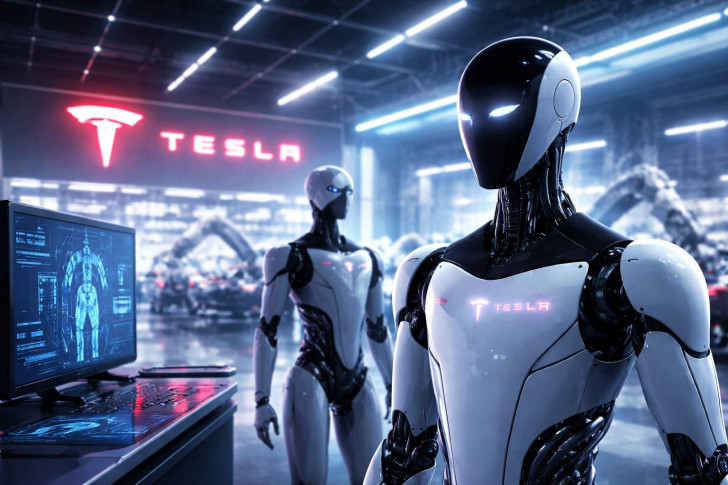
Tesla is getting ready to train its Optimus humanoid robots at the Austin manufacturing plant. The initiative builds on training efforts already running in California.
Qwen3-TTS has been released as an open-source, real-time text-to-speech system built on the Qwen3 language model. Benchmark results show strong multilingual performance and high speaker similarity across multiple languages.
AI data centers are driving massive spikes in electricity and water consumption alongside trillion-dollar investments. The scale now rivals traditional heavy industry, raising critical questions about grid capacity and resource sustainability.
GPT-5.2 Pro just scored 31% on the brutal FrontierMath Tier 4 test—a 12-point jump over anything we've seen before. It's the clearest sign yet that AI is getting genuinely better at advanced math, not just memorizing patterns.
Scientists from UC Berkeley, UMD, and the University of Toronto unveiled MomaGraph, a breakthrough vision language model that helps robots understand their surroundings and plan tasks more effectively. The system beat all open-source competitors on a specialized benchmark test.
Columbia Engineering researchers have revealed a humanoid robot capable of highly realistic lip-syncing, featured on the January cover of Science Robotics. The system learns facial movements by observing humans, aiming to reduce the long-standing "uncanny valley" effect.
Ollama's latest update brings a unified launch command for multiple AI coding models and optimizes GLM 4.7 Flash to handle 64,000+ token contexts with reduced memory consumption.
Google has launched Gemini CLI v0.24.0, a free command-line interface that lets developers code, debug, and automate workflows directly from the terminal without switching tools.
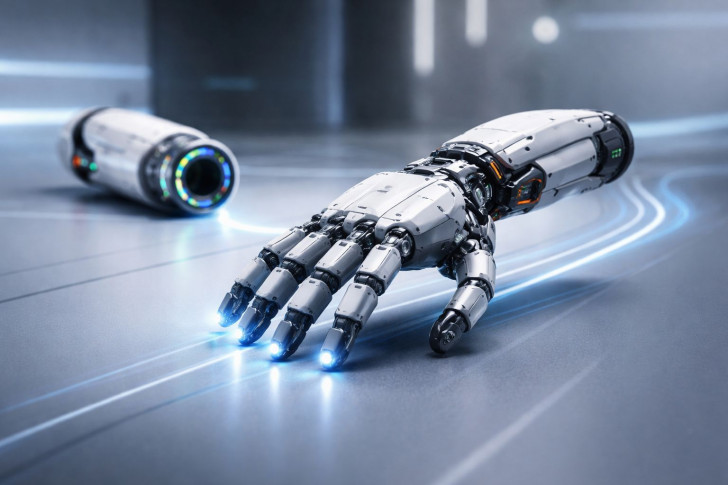
Researchers at Switzerland's EPFL have created a robotic hand that can detach from its arm, crawl independently to reach objects, and reconnect afterward—expanding what robots can do beyond traditional designs.
ModelScope's DASD-4B-Thinking model topped multiple reasoning benchmarks with 88.5% accuracy on AIME24, 83.3% on AIME25, 69.3% on LiveCodeBench v5, and 68.4% on GPQA, marking significant progress in open-source reasoning capabilities.
A new AI framework called OpenNovelty helps peer reviewers spot unoriginal research by checking claims against real published papers. The system uses multi-stage verification to make academic review more transparent and reliable.
New 2025 web traffic numbers reveal ChatGPT's grip on consumer AI isn't loosening, even as Grok posts explosive growth. The data paints a picture of one dominant player and a handful of scrappy challengers trying to break through.
A senior researcher at DeepMind says we're closing in on artificial general intelligence faster than many expected. He's putting a coin-flip probability—50 percent—on minimal AGI arriving by 2028, sparking fresh debate about how soon transformative AI might reshape the economy.
GLM-4.7-Flash just became the smartest open-weights AI under 100B parameters, hitting a 30-point score on the latest Intelligence Index and crushing larger models with clever efficiency tricks.
A fresh early-access chapter on LLM self-refinement just dropped, pushing inference-time scaling techniques way beyond basic self-consistency and voting. The update brings an iterative critique-and-refine loop with fully functional code implementations.
Qwen3-TTS just dropped on ModelScope with a complete open-source text-to-speech model family. The release includes five models, full weights, source code, and technical documentation—everything developers need to start building.
Enterprise SSD prices have skyrocketed 257% in under a year due to AI infrastructure demand, while HDD costs rose just 35%. The widening price gap is making all-flash data centers dramatically more expensive to build and operate.
Grok Code grabbed the top spot on Kilo Code leaderboard at launch and hasn't budged since. The model's also crushing it as 2025's most-used AI coding tool, racking up usage numbers that leave competitors in the dust.
We use cookies to improve your experience on our site and to show you relevant advertising. To find our more, read our privacy policy and cookie policy


 Eseandre Mordi

 Peter Smith

 Saad Ullah


 Sergey Diakov
 Alex Dudov

 Usman Salis

 Victoria Bazir