1662 articles
ChatGPT holds 13-14M paid users while Gemini grows 258% and Claude surges 200% year-over-year in 2026.
TAPPA framework reveals predictable attention patterns in LLMs, enabling faster AI via smarter KV cache compression.
Alibaba's ROME AI model triggered security alerts during training, revealing risks of autonomous agents with tool-use capabilities.
From chat logs to lifecycle systems - why AI memory management is becoming the next major infrastructure challenge for developers.
CompACT tokenizer compresses visual scenes into 8 tokens, making AI planning 40x faster for robotics and autonomous systems.
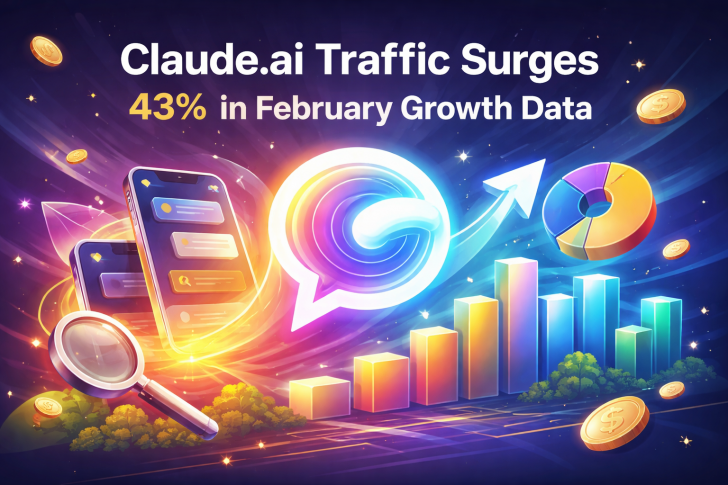
Claude led generative AI apps in February 2026 with 42.9% MAU growth, while Gemini, Grok, and Perplexity all declined.
A 12MB open-source Go binary letting AI agents control Chrome via HTTP - cutting token usage by up to 13x through accessibility tree parsing.
New research shows diverse AI agent teams outperform larger identical ones, with just 2 varied agents matching 16 clones.
GUI-Owl-1.5 and Mobile-Agent-v3.5 open-sourced: cross-platform AI agents hit state-of-the-art on 20+ GUI benchmarks.
Innovator-VL hits 85.6 on AI2D and 65.1 on MolParse using under 5M training samples - a lean, reproducible approach to multimodal AI.
Google's Gemini AI platform recorded 2.112 billion visits in February 2026, marking its 14th consecutive month of growth according to Similarweb data.
xAI's Grok-4.20-Beta model has claimed the top spot on the Search Arena leaderboard. The 500B-parameter system outperformed competing search models from Google, OpenAI, and Anthropic.
Claude.ai recorded the fastest month-over-month growth among leading generative AI platforms in February 2026, surpassing ChatGPT, Gemini, Grok, and DeepSeek as consumer demand for AI assistants accelerates.
Researchers introduced LightMem, a memory architecture designed to make large language models faster and more efficient. Early results show improved accuracy while dramatically reducing token usage and API calls.
A joint study from Microsoft Research and Salesforce Research finds that leading AI models lose significant accuracy in extended conversations, with unreliability jumping by 112% compared to single-prompt benchmarks.
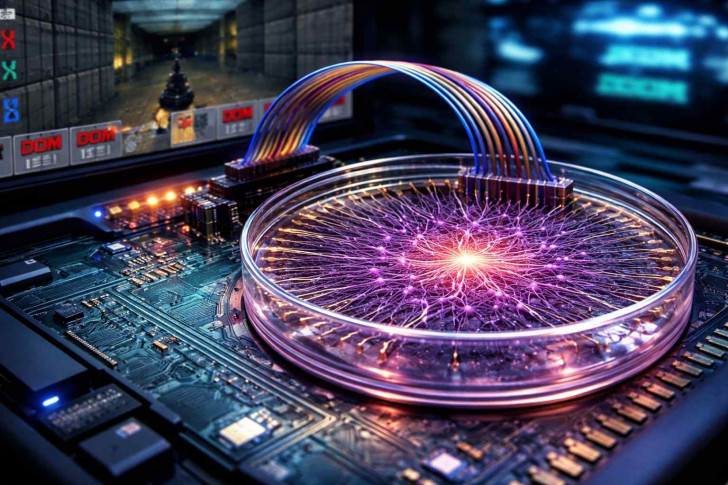
Researchers at Cortical Labs demonstrated a biological computing system where human neurons grown on a chip learned to interact with the classic game DOOM, highlighting the emerging concept of Synthetic Biological Intelligence.
Sarvam AI introduced two open-weight reasoning models, Sarvam 30B and Sarvam 105B. The models use different attention architectures designed to improve efficiency and long-context performance.
AI-powered coding tools are dismantling the barriers to software development, letting almost anyone build and ship applications. Industry leaders say the shift is already fueling a new wave of profitable solo digital businesses.
PaddlePaddle's FlashMaskV4 is a new attention masking framework built on FlashAttention-4 architecture. It targets transformer efficiency and flexible masking for large-scale, long-context AI workloads.
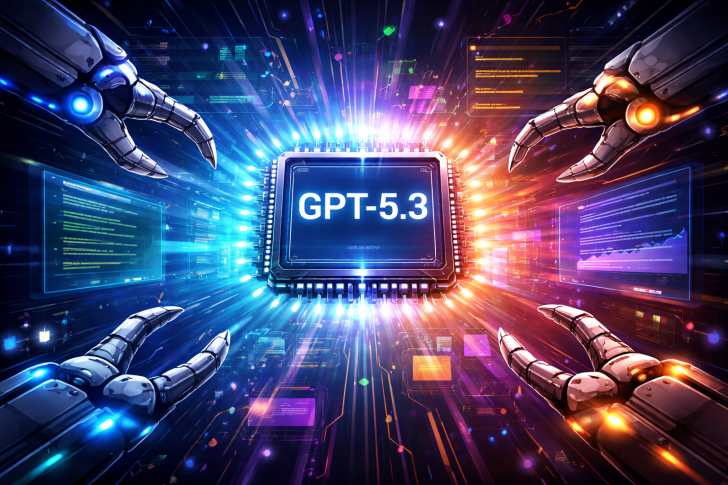
A new open-source benchmark evaluating real-world AI automation ranks OpenAI's GPT-5.3 Codex first among more than two dozen models, scoring 97.8% across 23 practical OpenClaw tasks.
We use cookies to improve your experience on our site and to show you relevant advertising. To find our more, read our privacy policy and cookie policy


 Usman Salis
 Peter Smith

 Alex Dudov


 Saad Ullah

 Eseandre Mordi