1662 articles
Anthropic's Claude Opus 4.6 reportedly solved a long-standing mathematical conjecture by legendary computer scientist Donald Knuth. The breakthrough highlights growing interest in advanced AI reasoning systems in scientific research.
Microsoft Research Asia introduced UniG2U-Bench, a benchmark designed to test whether generation improves understanding in unified multimodal AI models. The framework evaluates systems across seven reasoning regimes and 30 subtasks.
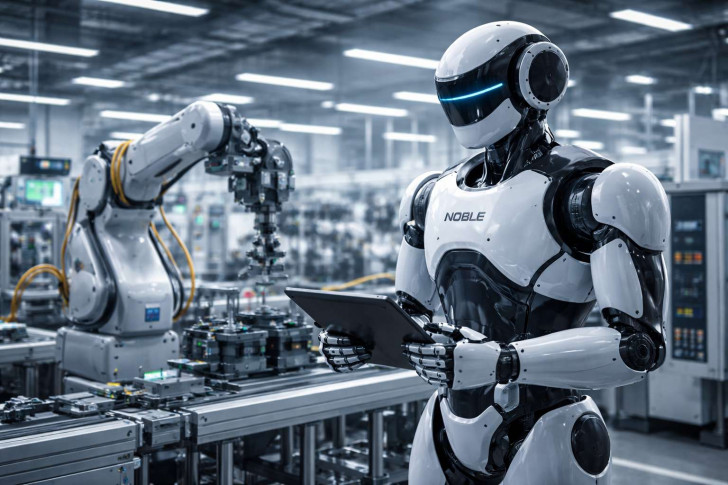
Noble Machines has unveiled an industrial humanoid robot already working inside a Fortune Global 500 facility, built by a team from SpaceX, NASA, and Apple to handle hazardous and physically intensive tasks.
Meta researchers introduced a structured reasoning method that forces AI systems to trace code step by step, significantly improving accuracy when verifying software updates without executing the code.
New Gartner research projects that AI will shift the global labor market toward net job creation around 2028-2029, reshaping over 32 million roles annually rather than triggering a wave of mass unemployment.
New data suggests Anthropic's Claude rapidly gained dominance in the U.S. enterprise AI chat market over the past year, marking one of the fastest adoption swings in the generative AI sector.
Anthropic rolled out a free interactive prompt engineering course with hands-on Claude notebooks that's already racked up more than 31,900 stars on GitHub, showing massive developer interest.
Cognition's early SWE-1.6 language model preview shows improved reasoning performance on the SWE-Bench Pro coding benchmark, achieving a 51.7% score while maintaining fast inference speed.
xAI has launched Grok 4.20 Beta 2 with improved instruction following, reduced capability hallucinations, better LaTeX support, and stronger multimodal performance - continuing Grok's fast-paced development cycle.
New web traffic data shows Claude.ai accelerating sharply in the second half of February 2026, closing in on competitors Grok and DeepSeek. The trend highlights shifting user engagement among leading generative AI platforms.
Researchers from the Chinese Academy of Sciences, UCAS, and FiveAges unveiled BridgeV2W, an AI model that enables robots to visualize future motion by generating embodiment masks. The system reportedly outperforms current state-of-the-art frameworks on robotics datasets.
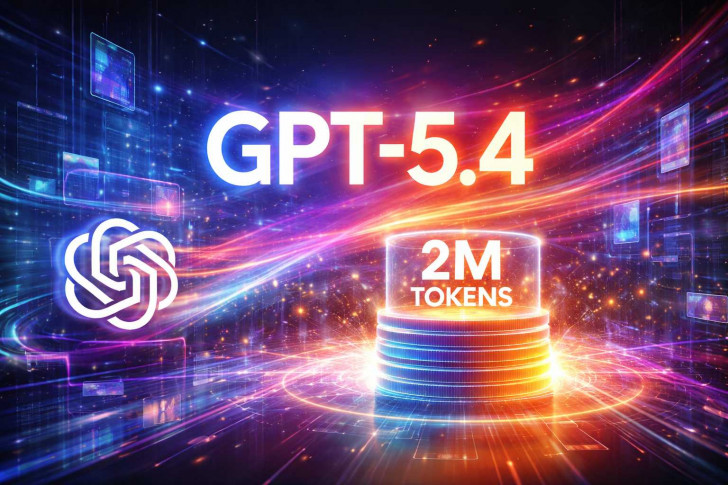
Screenshots from public repository edits suggest GPT-5.4 could introduce a 2 million token context window, full-resolution vision, and faster response tiers. Community prediction markets already assign high odds to an imminent release.
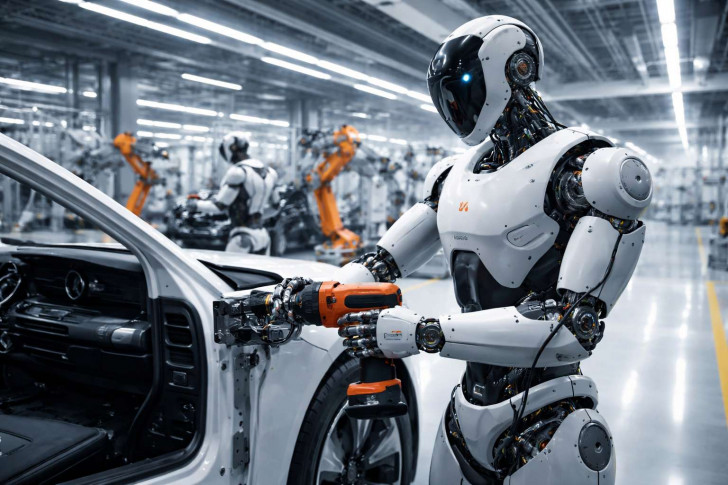
Xiaomi's humanoid robots completed a continuous 3-hour assembly trial in its EV plant, reaching 90.2% installation accuracy and signaling the company's push toward full factory automation within five years.
ByteDance Seed and AIR at Tsinghua University introduced CUDA Agent, a reinforcement learning system that generates optimized CUDA kernels. The model reportedly outperforms torch.compile and several leading LLMs on performance benchmarks.
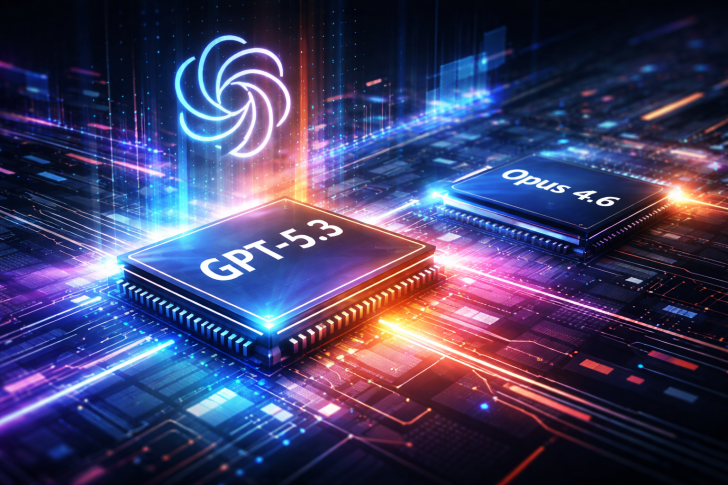
OpenAI's latest GPT-5.3 Codex model has claimed the top spot on the WeirdML benchmark with a 79.3% score, edging out Claude Opus 4.6 while keeping costs surprisingly low at just $2.35 per run.
A coalition of 56 researchers just released VBVR, the world's largest video reasoning benchmark. Top AI systems hit only 54% accuracy - while humans cleared 97%.
The Reagent framework was introduced to improve AI agent reasoning by providing detailed critiques of each step - delivering measurable performance gains across multiple reasoning benchmarks, including 43.7% on GAIA.
Similarweb data shows AI tools are becoming the dominant starting point for consumer discovery, while search engines regain relevance in comparison and purchase stages. The shift marks changing patterns in online decision journeys.
DeepVision-103K is a 103,000-sample mathematical dataset built to improve RLVR training for multimodal AI. It spans geometry, algebra, probability, and statistics, all paired with rich visual content.
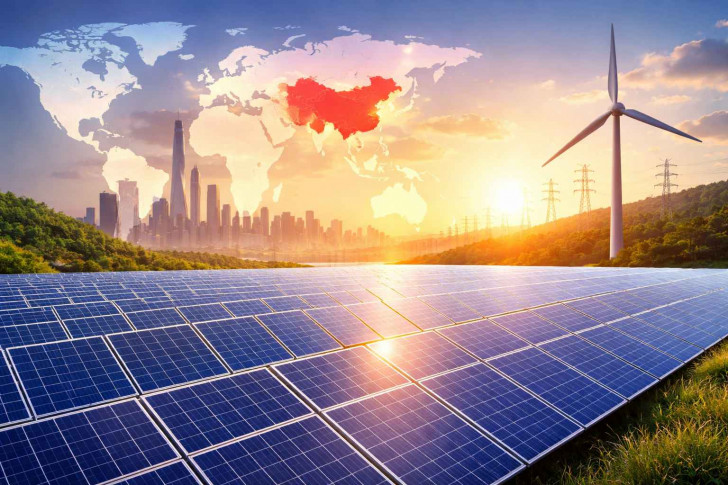
China generated 1,193 TWh of solar electricity in 2025 - more than three times the US output of 387 TWh and nearly equal to the combined total of every other country on Earth.
We use cookies to improve your experience on our site and to show you relevant advertising. To find our more, read our privacy policy and cookie policy


 Saad Ullah
 Peter Smith
 Usman Salis
 Victoria Bazir

 Eseandre Mordi