1662 articles
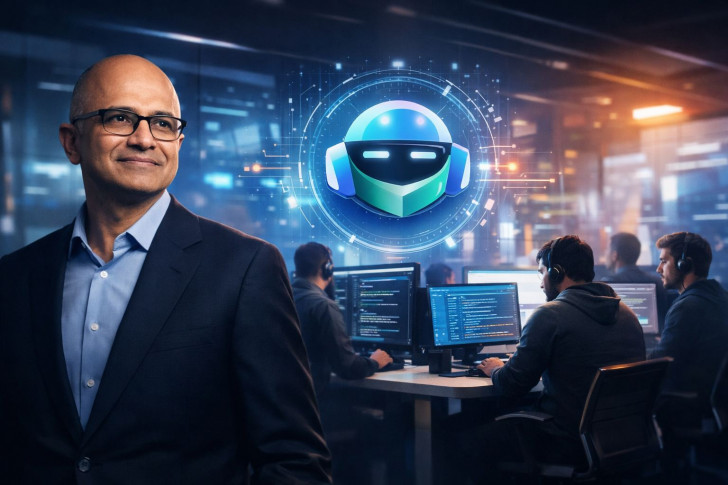
Microsoft CEO Satya Nadella has personally stepped in to tackle Copilot's reliability problems, joining a 100-engineer Teams channel and running weekly fix-it sessions to address user complaints across Microsoft 365.
Grok Code just claimed the top spot on the Kilo Agentic Model Leaderboard after logging 35.6 billion tokens in real developer usage—more than quadruple its nearest competitor.
Leading AI companies are paying interns engineer-level salaries and providing dedicated compute budgets as competition for early-career AI talent intensifies.
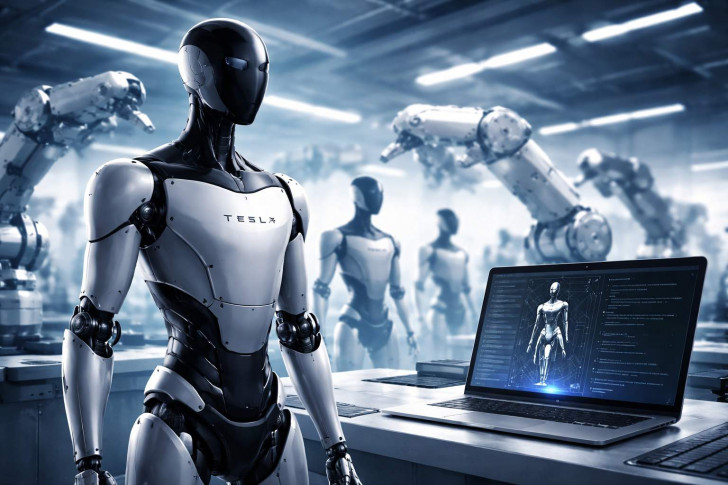
Tesla's ramping up its humanoid robot program in a big way—110 new job openings just went live for Optimus development, while Elon Musk eyes early 2026 for a production-ready prototype and aims to kick off mass manufacturing by year's end.
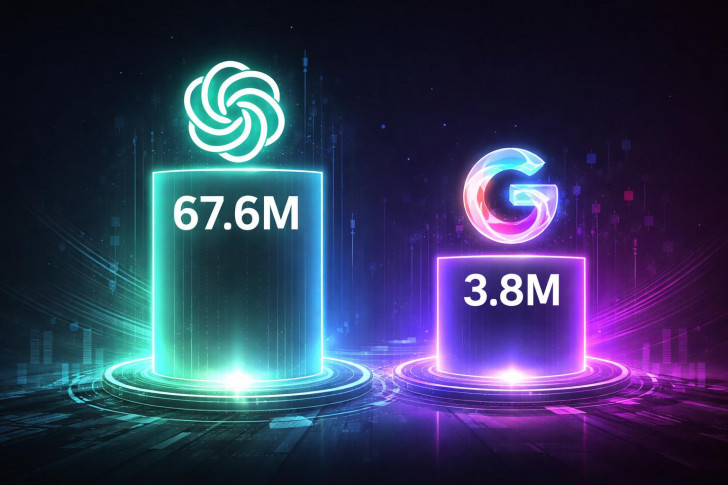
Latest data reveals ChatGPT's massive advantage in daily active users over Google Gemini, though market dynamics show shifting competitive landscape in AI platforms.
A breakthrough reinforcement learning technique called GTR-Turbo is transforming how vision-language models are trained. By creating self-contained teacher models from merged checkpoints, the method achieves double-digit accuracy gains while cutting training time in half and reducing compute expenses by 60%.
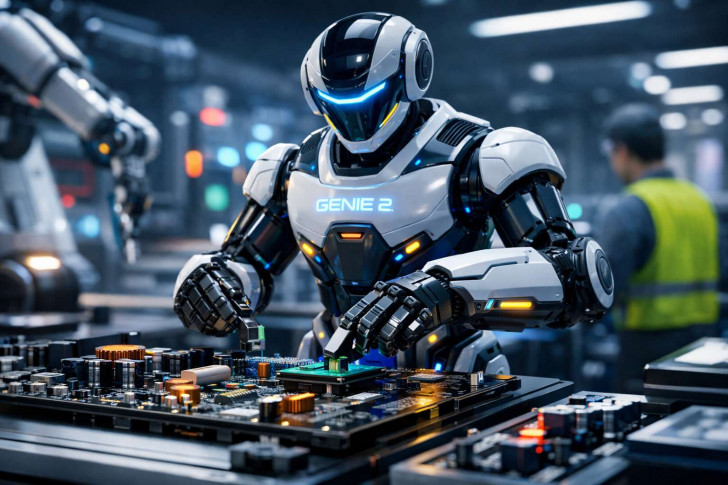
AgiBOT's Genie 2 humanoid robot just pulled off something impressive at PIA Smart's factory: assembling flexible components in 15 seconds flat with a 99% success rate — beating human workers by three seconds.
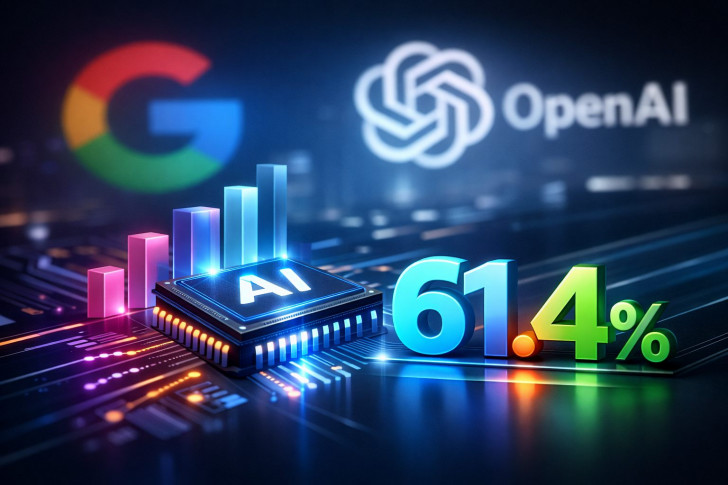
StepFun has released Step-DeepResearch, a deep-research AI agent that scores 61.4% on the Scale AI Research Rubrics benchmark with a 32B model, positioning it near OpenAI and Alphabet's Gemini DeepResearch while emphasizing lower cost.
2025 marked a turning point for AI as systems from OpenAI and Alphabet (GOOGL) reached gold-medal performance in global math and coding competitions, while agent-based tools moved from labs into everyday use.
MiniMax's language model achieves sub-second response times running on local GPU hardware, with dashboard data showing 918ms latency and 97.5 tokens per second throughput.
The AI landscape in 2025 saw major breakthroughs from DeepSeek R1, Claude 4, Grok 4, GPT-5 and Opus 4.1, with the industry rapidly moving toward "agent-first" platforms designed for real-world action.
Cyber attackers are changing tactics, embedding malicious activity inside trusted software, AI chatbots, Docker environments and Android devices as traditional standalone malware gives way to infrastructure-based attacks.
Meta Platforms unveils Self-Play SWE-RL research showing AI agents that autonomously learn from real codebases and generate new software independently, potentially surpassing human abilities in complex technical challenges.
A critical vulnerability in LangChain Core allows attackers to extract secrets and manipulate AI output through prompt injection, earning CVE-2025-68664 a severe 9.3 CVSS rating.
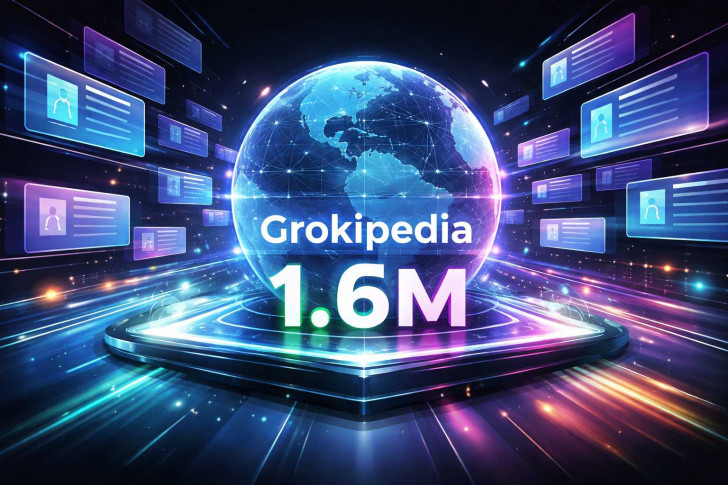
xAI's Grokipedia knowledge platform exploded by over 500,000 articles in just 24 hours following the launch of its "Suggest Article" feature, bringing the total database to more than 1.6 million user-contributed entries.
Bloomberg data reveals China's Tsinghua University has dramatically outpaced top US universities in AI patent filings since 2009, with China's overall patent applications soaring from 26,553 in 2000 to 1.8 million in 2024.
New analysis reveals US data centers rely mostly on natural gas while China uses coal to meet AI power needs. The IEA warns this fossil fuel dependence could drive electricity prices higher and create supply risks as AI demand explodes globally.
OpenAI just released a GPT-5 Prompting Guide with 9 structured rules to help users craft better, clearer prompts. With AI adoption heating up and names like NVDA staying front and center, the guide's designed to make working with advanced AI smoother and more predictable.
Liquid AI rolled out its reinforcement-learning enhanced LFM2-2.6B-Exp model, showing notable improvements in instruction following, knowledge tasks, and math evaluations compared to other 3B-parameter AI models.
Huawei Korea plans to introduce its Ascend AI chip lineup domestically next year as an alternative in the AI computing market, while expanding its Harmony OS ecosystem and delivering complete AI infrastructure solutions.
We use cookies to improve your experience on our site and to show you relevant advertising. To find our more, read our privacy policy and cookie policy


 Sergey Diakov
 Alex Dudov
 Usman Salis

 Victoria Bazir
 Saad Ullah
 Eseandre Mordi

 Peter Smith

 Artem Voloskovets