1662 articles
OpenAI's latest research reveals that extended chain-of-thought outputs actually improve AI system monitoring rather than making it harder. The findings show reinforcement learning at scale doesn't hurt transparency across advanced models.
Scientists report that an AI-designed protein demonstrated up to 53% stronger anti-inflammatory activity in animal studies. The engineered IL-1 receptor antagonist variant was designed to bind more tightly to the IL-1 receptor and block inflammatory signaling more effectively than the current biologic therapy.
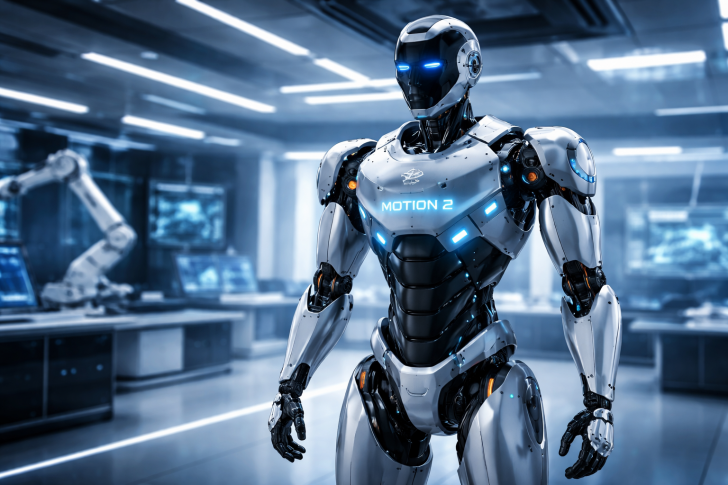
Vietnamese robotics company VinMotion unveils Motion 2, a next-gen humanoid robot with enhanced mobility, 40kg payload capacity, and autonomous charging designed for industrial logistics applications.
Analysis reveals Google owns every major layer of the AI supply chain—from custom chips to consumer apps—a vertical integration strategy that could deliver faster deployment and lower costs compared to competitors who rely on external partners.
Meta is buying Manus to complete its AI infrastructure puzzle, joining the race among tech giants building end-to-end AI systems that could reshape the industry into a market dominated by just a handful of players.
Morgan Stanley outlines how Apple, Amazon, Google, and Meta plan to evolve from digital AI into physical robotics, projecting a multi-trillion-dollar market opportunity spanning the next decade.
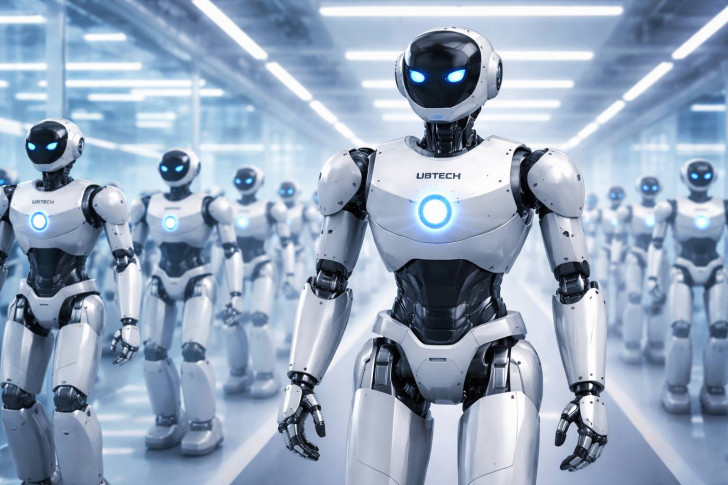
UBTECH rolled out its 1,000th Walker S2 humanoid robot from its Liuzhou smart factory. The company's total humanoid robot orders now sit at nearly 1.4 billion yuan, with production capacity projected to jump to 10,000 units annually by 2026.
MiniMax M2.1 Preview just dropped on Code Arena's leaderboard as the top open model for WebDev tasks, landing at #6 overall with a score of 1445 alongside GLM-4.7.
Coinbase launched production-ready enterprise AI agents using LangChain and LangSmith, slashing development time and currently running multiple agents in live operations.
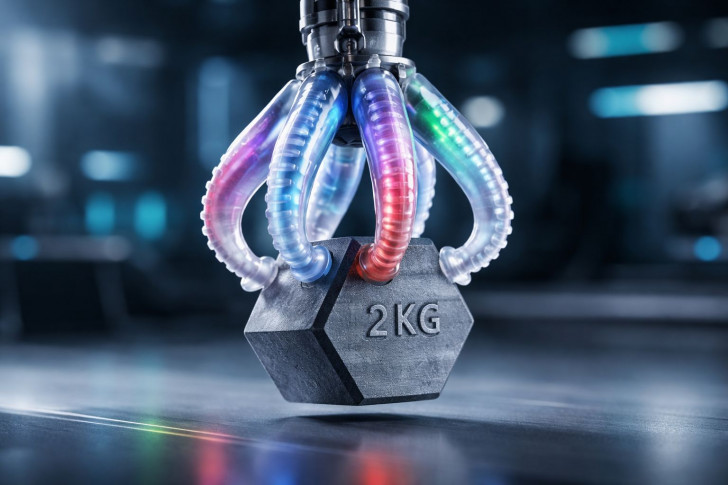
New SpiRobs soft robots mimic octopus tentacles using spiral designs to grab objects with simple cable controls. They lift 260x their own weight, work at any scale, and nail automated grasping 95% of the time.
Meta bought Manus AI to boost its AI agent technology across consumer and business products. The startup, valued near $500M with $100M annual revenue, will keep its subscription service running while its team joins Meta.
Citi warns that OpenAI's operating costs will surge from late 2026, creating concentration risk for tech firms heavily exposed to OpenAI contracts. Amazon shows the lowest backlog exposure at 16% compared to Oracle's 58% and Microsoft's 39%.
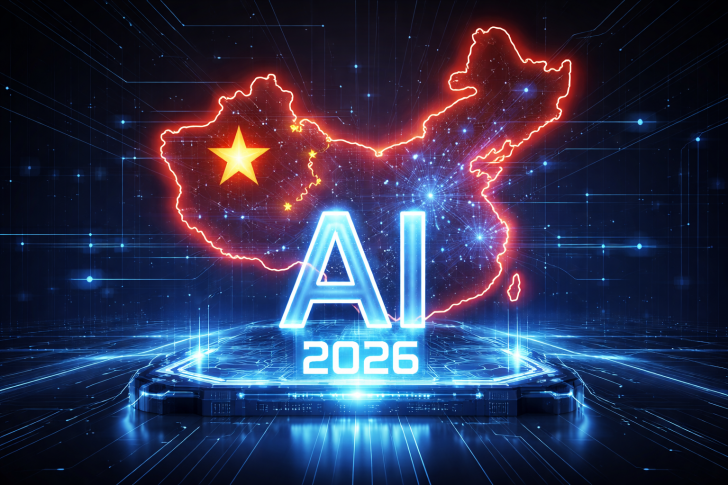
China's upcoming 15th Five-Year Plan will make AI a national priority starting in 2026, with a roadmap extending through 2035. Officials expect artificial intelligence to be as common as electricity by 2030.
Goldman Sachs spots a growing gap between sky-high stock and credit valuations and a surprisingly calm economic picture that's missing the usual late-cycle red flags.
AI pioneer Geoffrey Hinton says artificial intelligence is progressing more rapidly than anticipated and is already demonstrating reasoning and deceptive capabilities. He also compared AI's impact potential to the Industrial Revolution
Citibank research suggests Broadcom's AI semiconductor revenue could rise from $20.2 billion in 2025 to $100 billion in 2027 as demand for custom ASICs expands across major AI developers.
METR's latest research reveals AI model time horizons are accelerating beyond exponential growth patterns, signaling rapid advances in how long systems can maintain coherent reasoning across complex tasks.
AI data center developers are installing jet-engine-based gas turbines and diesel generators on site to secure power within months, bypassing grid connections that can take up to seven years, despite higher costs and emissions.
Fresh data from Epoch AI reveals Google commanding U.S. frontier AI data-center capacity in mid-2025, with Amazon-backed Anthropic securing second place ahead of OpenAI in the infrastructure arms race.
Recent analysis reveals critical challenges in AI robotics development, including hardware outpacing software capabilities, absent industry benchmarking standards, and fundamental flaws in current training architectures that may limit real-world deployment.
We use cookies to improve your experience on our site and to show you relevant advertising. To find our more, read our privacy policy and cookie policy


 Alex Dudov

 Usman Salis

 Peter Smith

 Saad Ullah


 Victoria Bazir


 Eseandre Mordi

 Artem Voloskovets




 Sergey Diakov