1846 articles
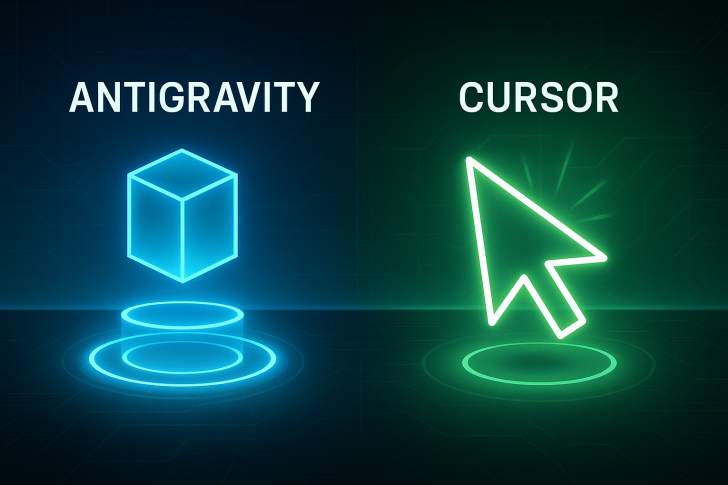
Hyperbrowser previewed its AI Research Comparison tool by analyzing Cursor against Google's Antigravity IDE, showing how the platform generates instant side-by-side evaluations with scoring dashboards and visual summaries.
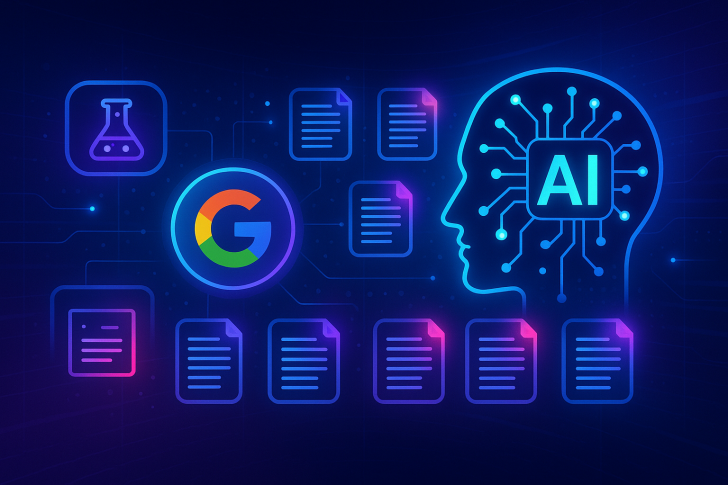
Google launched Scholar Labs, a tool that uses artificial intelligence to examine the ten papers most closely related to a research question, which helps researchers locate relevant literature more quickly.
Netflix's journey from burning billions to generating massive positive cash flow offers a roadmap for understanding frontier AI economics. The streaming giant's financial evolution shows how capital-intensive tech models can shift from deep losses to strong profitability.
HSBC analysis reveals OpenAI could face a $207 billion funding shortfall as AI infrastructure demands surge. The projection assumes ChatGPT reaches 3 billion users globally by 2030.
Google's Gemini AI platform just crossed 650 million monthly users while Veo 3 topped 230 million generated videos—both marking the fastest product adoption in Google's history. The company's AI stack is now processing over 1 quadrillion tokens monthly as enterprise and developer uptake accelerates.
New data reveals how AI use cases evolved from technical tasks to workflow-driven applications, with non-technical users now building powerful automated chains.
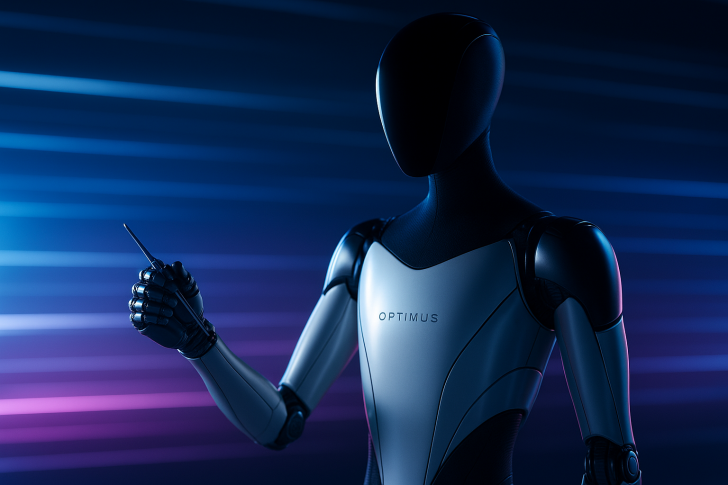
Elon Musk believes Tesla's Optimus robot could exceed human surgical accuracy while dramatically cutting global labor costs. His vision sparked fresh conversations about automation's potential impact on healthcare accessibility and poverty.
Alibaba's latest quarterly results revealed strong performance in its Cloud Intelligence Group, with a 34% revenue boost fueled by AI services that posted triple-digit growth for the ninth straight quarter. The e-commerce giant also saw customer management revenue climb 10% at Taobao Tmall.
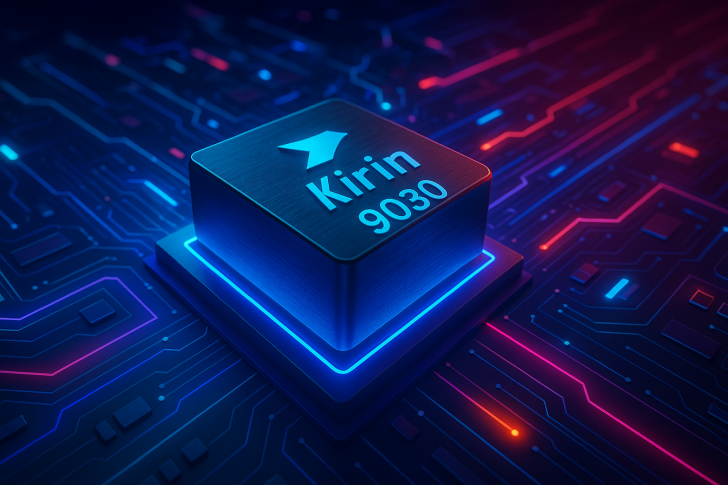
Fresh benchmark data for Huawei's Kirin 9030 chipset reveals a redesigned CPU structure and new GPU powering the Mate80 Pro Max, with results showing solid performance gains despite not running at full clock speeds.
Merck KGaA has entered a drug discovery partnership with Valo Health worth more than $3 billion. The agreement will leverage Valo's AI-driven data platform to accelerate work on neurodegenerative disease treatments.
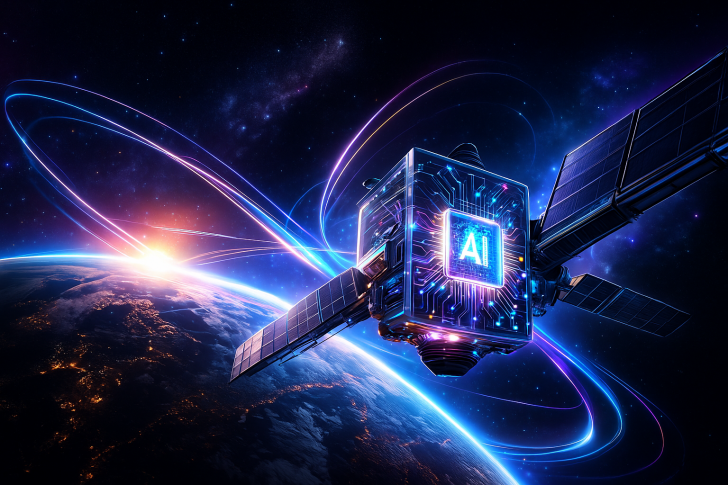
Elon Musk says large-scale artificial intelligence will move into space, arguing that only off-planet infrastructure can provide the energy and cooling required for civilization-level compute. He expects solar-powered satellites to become the lowest-cost AI platforms within five years.
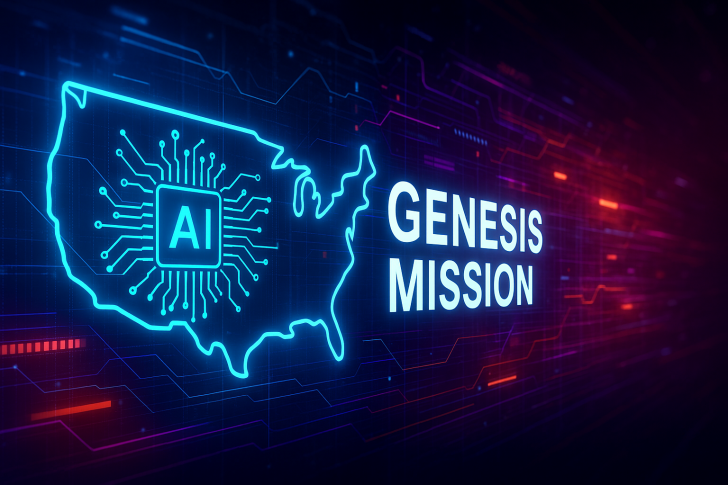
The White House introduced the Genesis Mission, a federal initiative tasking the Department of Energy with building a national AI research platform. The program establishes strict deployment deadlines to speed up discoveries in key scientific areas.
Microsoft will remove Copilot from WhatsApp in early 2026 because Meta has introduced new rules that limit AI chatbots. Users will still reach the assistant through its own apps and through web pages.
President Trump signed an order that directs 40,000 U.S. scientists and engineers to speed up work on artificial intelligence - the plan has been likened to the Apollo besides Manhattan Projects.
Anthropic's Claude Opus 4.5 sits at the top of the SWE-Bench table and costs 67 % less than its predecessors. The model now operates on AWS, GCP besides Azure plus it uses tokens more efficiently.
Anthropic has sharply reduced the price of Claude Opus 4.5; the cost per token has fallen by about two thirds because the model now runs on more efficient code and stronger infrastructure.
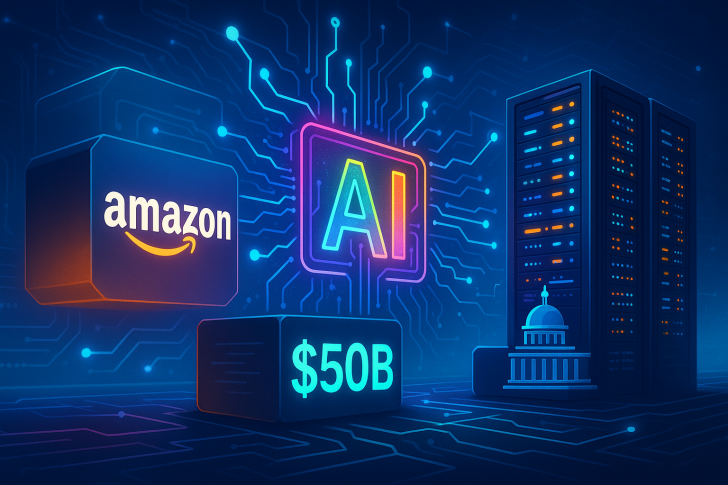
AWS is launching a massive infrastructure project worth up to $50 billion to build AI and supercomputing systems for U.S. federal agencies, creating a unified computing backbone across secure cloud environments starting in 2026.
Google rolls out Gemini 3.0 Heavy, a new AI model that uses four parallel agents to tackle complex tasks and produce unified, high-quality outputs in a single pass.
A leaked Epoch AI schedule hints Opus 4.5 could drop today, fueling speculation about whether it can beat Google's Gemini 3 Pro and shift the balance in the AI race.
Memori introduces an open-source memory engine that gives AI agents long-term memory using standard SQL databases instead of expensive vector storage, cutting costs by up to 90 percent while working across all major LLM platforms.
We use cookies to improve your experience on our site and to show you relevant advertising. To find our more, read our privacy policy and cookie policy


 Artem Voloskovets
 Eseandre Mordi
 Usman Salis

 Saad Ullah



 Alex Dudov
 Peter Smith


 Marina Lyubimova