1846 articles
Nvidia now holds more than 80 % of the market for chips used in data centers and for artificial intelligence. In early 2021 its share was only 25 %. Intel besides AMD have not kept up with the steep rise in demand for hardware built for AI work, which let Nvidia expand quickly.
AWS faced severe AI capacity shortages that forced enterprise customers toward competing cloud providers. Internal documents reveal delays and revenue losses as Bedrock hit critical limits during peak generative AI demand.
Germany just announced it's putting €20 million toward building its own sovereign AI language model—basically a European alternative to the big U.S. systems everyone's using. The problem? Critics are saying that budget might not be enough to seriously compete with global AI leaders.
A new offline IQ test reveals an AI system scoring at Mensa level for the first time, jumping from a 92 IQ score just two years ago. The development mirrors solar energy's exponential growth pattern, where actual installations outpaced forecasts by over 3x
Companies across America cut nearly 48,000 jobs due to AI automation in 2024, with October seeing the biggest wave. What was once a taboo topic has become standard corporate practice.
Google co-founder Sergey Brin explains how today's AI models can read and analyze information at massive scale—processing thousands of sources simultaneously while humans typically manage around ten. His insights reveal why information throughput, not just reasoning ability, has become AI's defining advantage.
Google released Gemini 3 and within days the platform's share of the AI-assistant market leapt from 23 % to just over 30 %. Traffic plus user engagement rose at the same time.
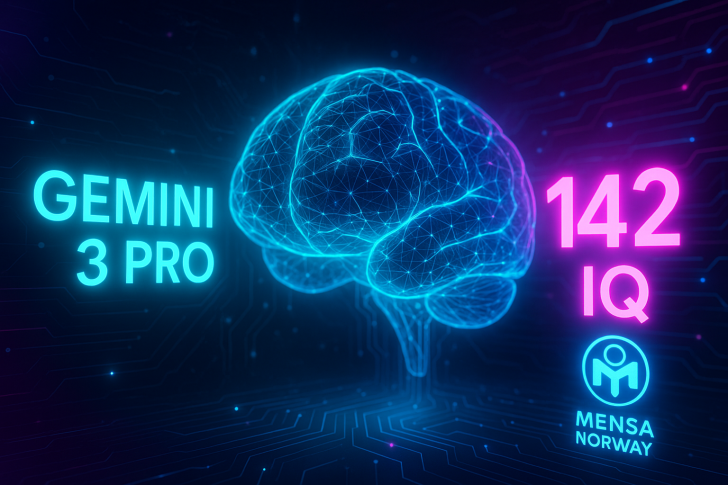
Google's Gemini 3 Pro has produced IQ scores of 130 in an offline test and 142 on the Mensa Norway benchmark placing it at the top of current AI models on human-style reasoning exams.
Sharpa Robotics showcased its SharpaWave robotic hand performing high-precision manipulation tasks with human-like control. Recent demonstrations highlight significant progress in tactile sensing, teleoperation capabilities, and fine-motor actuation.
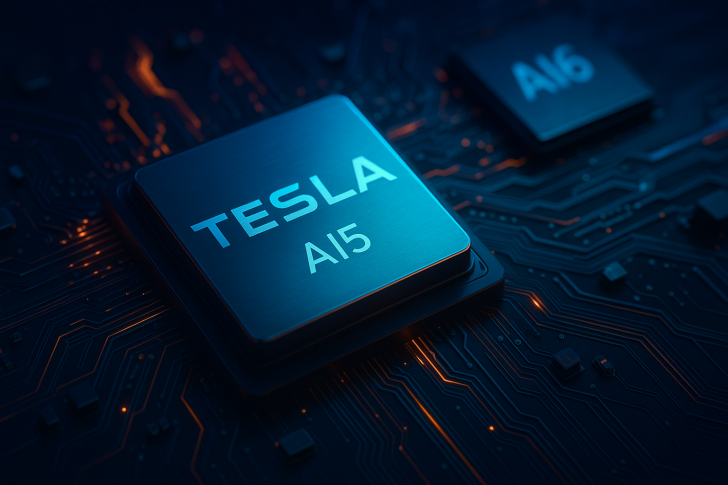
Tesla's rolling out its AI5 chip made by Samsung, and they've already started working on AI6. The company's planning to drop a new AI chip every 12 months for cars, data centers, and the Optimus robot.
A recent study reveals that AI assistants can walk users through manipulating fair-division platforms like Spliddit. The research shows that algorithmic complexity is no longer enough to stop coordinated cheating.
A new benchmark reveals that board-certified radiologists significantly outperform leading AI systems in diagnostic accuracy, with the best AI model reaching only 0.51 compared to human specialists' 0.83 score.
Fresh Similarweb data reveals Google's share of generative AI traffic nearly tripled before Gemini 3 even launched—climbing from 5% to 14% in one of the sector's biggest recent shifts.
Grok models have locked down the top three spots on OpenRouter's leaderboard, crushing past 300 billion tokens daily. Meanwhile, every competing system is stuck below 50 billion tokens—and it's not even close.
Machine learning researchers unveiled TabM, a lightweight ensemble model that crushes XGBoost, CatBoost, and LightGBM on tabular data while keeping MLP-level speed.
Shenzhen Everwin Precision pulled in RMB 35 million from two overseas humanoid robot clients in H1, with total deliveries hitting RMB 80 million by August. The company now partners with over 30 domestic humanoid robotics firms.
Google CEO Sundar Pichai says AI represents humanity's most profound technology shift yet, warning that rapid disruption will force major adaptation across industries and institutions.
A recent WSJ chart reveals the Magnificent 7 have surged approximately 170% since November 2022 while U.S. consumer sentiment has weakened. Surveys show that only 31% of Americans feel comfortable with AI, compared to 72% who embraced the early internet in 1995.
Recent industry insights reveal accelerating adoption of Google's Tensor Processing Units across cloud infrastructure, with deployment potentially exceeding one million chips. Performance benchmarks position the hardware competitively within efficiency-focused AI infrastructure markets.
A new training approach called EGGROLL is making waves in AI circles with claims of massive improvements in speed, memory efficiency, and performance. Early results show it could reshape how developers train large models.
We use cookies to improve your experience on our site and to show you relevant advertising. To find our more, read our privacy policy and cookie policy


 Marina Lyubimova

 Saad Ullah

 Eseandre Mordi

 Sergey Diakov

 Alex Dudov

 Usman Salis

 Peter Smith