1846 articles
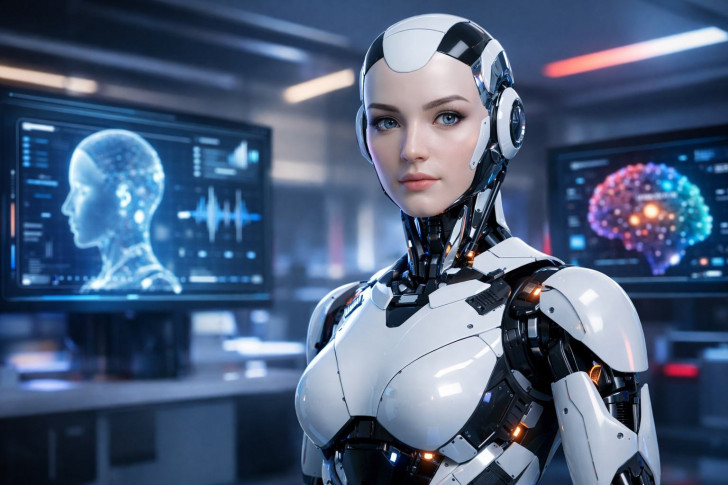
Chinese tech firm EIR Robotics just launched AI Q, a cartoon-faced humanoid robot with 59 degrees of facial freedom that can recognize emotions and respond like a real companion.
ChatGPT's daily active users more than doubled compared to last year's New Year's Day, while website visits climbed nearly 50%, according to fresh Similarweb analytics.
MemU is a new open-source framework that gives AI agents structured long-term memory. It lets them store and organize knowledge naturally—going beyond traditional retrieval methods to help AI understand and reason over what it remembers.
Economic historian warns that AI's biggest threat isn't technical—it's political. Constant surveillance by governments and tech giants is creating unprecedented power concentration that goes beyond traditional capitalism.
xAI rolls out two new workplace-focused versions of its Grok AI assistant, offering enhanced security features, native integrations, and enterprise-grade controls for teams and large organizations.
Telegram has launched AI Summaries, its first official AI-powered feature that automatically creates condensed overviews of long posts and articles. The tool operates on open-source AI models through Telegram's privacy-focused Confidential Compute Open Network.
NVIDIA has released its Nemotron 3 Nano model as a fully managed, serverless offering on Amazon Bedrock, delivering hybrid mixture-of-experts performance designed for building scalable AI multi-agent systems.
Foxconn has taken over full production of OpenAI's first AI hardware device after the project moved away from Chinese manufacturer Luxshare. The shift reflects growing concerns about supply chain security, with manufacturing now headed to Vietnam or the U.S.
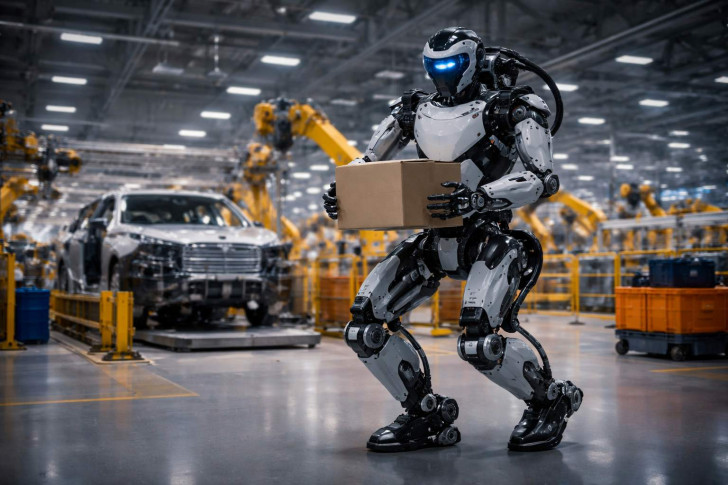
Boston Dynamics' Atlas humanoid robot is now being field-tested inside a Hyundai factory near Savannah, Georgia, where it autonomously sorts parts in the warehouse. A new version of Atlas is expected to be unveiled at CES 2026.
A refreshed LiveBench leaderboard now ranks Claude 4.5 Opus as the top-performing AI model with a 76.20 global average. The benchmark was redesigned to better reflect real-world AI behavior and prevent gaming.
2025 became the tipping point for agentic AI—systems that handle complex tasks at extremely low cost. This transformation is redrawing the line between what humans do and what machines automate.
China has pulled Unitree Robotics from its accelerated IPO approval process, though the robotics company can still pursue a public listing through standard channels.
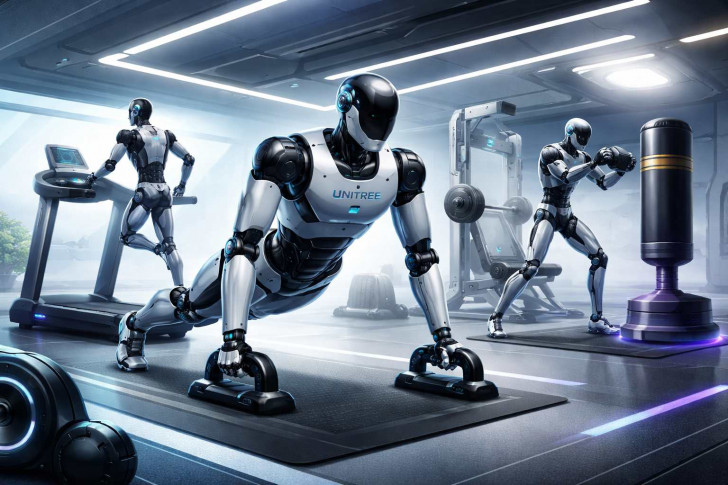
Unitree released fresh footage of its humanoid robot going through daily workouts, reminding people to keep safe distances and handle robots responsibly.
ModelScope has launched Qwen-Image-2512-Fast, a new AI image generation model that delivers up to 20x faster performance while maintaining image quality, generating images in as few as 4 to 8 inference steps.
Fresh data from Similarweb reveals that worldwide searches for "AI agents" hit their peak in March 2025, then gradually cooled off throughout the rest of the year as the industry moved from initial buzz to actual implementation.
Industry observers are spotting something big: Pinterest's user behavior data might be exactly what AI needs. It's not about the images—it's about the intentions behind them.
OpenAI is constructing a massive AI computing facility in the UAE designed to reach 1GW of on-site power using four industrial gas turbines, marking a significant expansion in dedicated AI infrastructure.
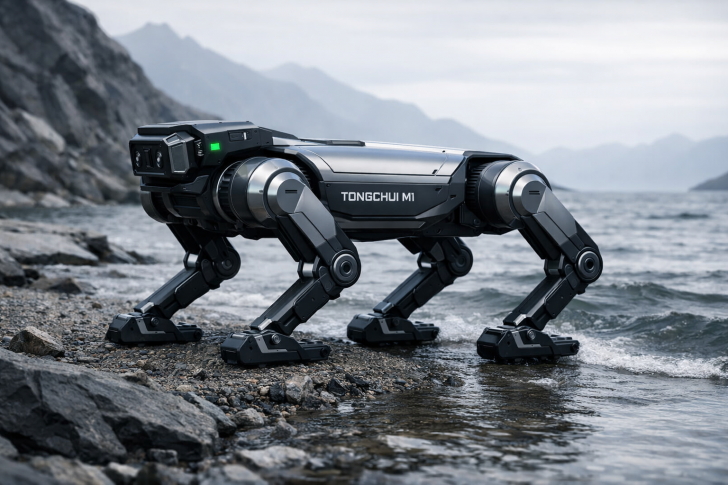
Genisomai has launched the Tongchui M1, a heavy-duty amphibious quadruped robot designed for extreme environments. The industrial-grade platform features a 1:1 payload-to-weight ratio, IP67 protection and modular wheel-to-foot mobility.
Open-source project DeepCode has attracted over 13.3K GitHub stars as interest grows in AI-driven code generation systems. The framework uses multi-agent coordination to convert research papers and natural-language descriptions into code.
Fresh economic data reveals that AI-related business investment peaked in early 2025 before declining sharply, suggesting AI spending may offer limited support to U.S. economic growth throughout 2026.
We use cookies to improve your experience on our site and to show you relevant advertising. To find our more, read our privacy policy and cookie policy


 Victoria Bazir
 Eseandre Mordi

 Sergey Diakov

 Alex Dudov

 Usman Salis

 Artem Voloskovets

 Marina Lyubimova

 Peter Smith

 Saad Ullah