1846 articles
Fresh Goldman Sachs data shows AI adoption is spreading fast across U.S. companies, with 33-47% now using these tools. While infrastructure stocks have dominated returns, the next phase could see productivity gains drive broader market participation.
Google introduced the Universal Commerce Protocol, an open standard that enables AI agents to manage the full shopping journey from discovery to post-purchase support, backed by over 20 major retail partners.
Growing concerns about potentially sentient AI systems raise critical questions about rights, suffering, and whether humanity could lose control once moral obligations are recognized.
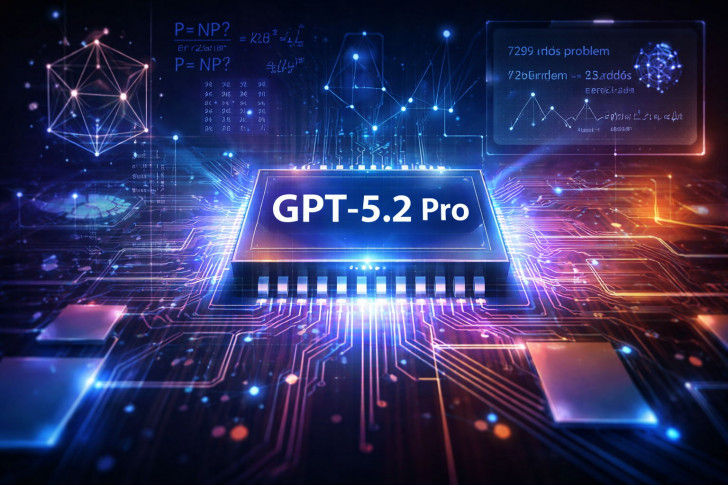
OpenAI's GPT-5.2 Pro has independently solved Erdős problem #729 using formal verification tools, marking a breakthrough moment in AI's ability to tackle unsolved mathematical challenges without human guidance.
Similarweb data shows Grok's third straight month of growth as platform traffic climbed by over 36 million visits compared to November 2025.
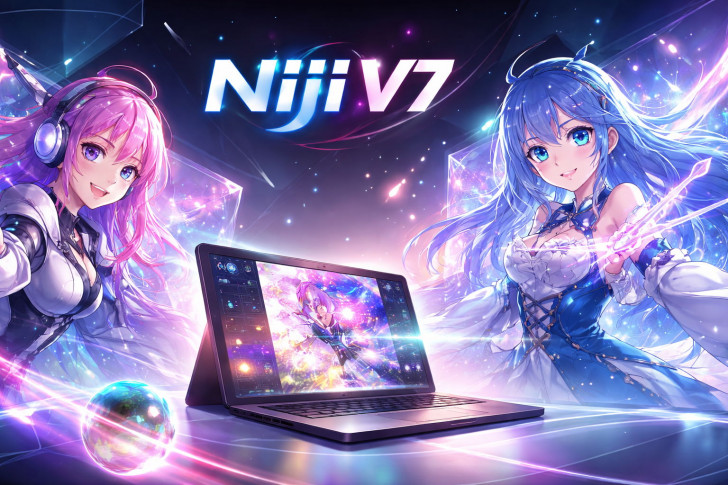
Midjourney has unveiled Niji V7, bringing significant improvements to AI-generated anime through better character consistency, prompt accuracy, and style control.
Global AI computing capacity is expanding at breakneck speed, doubling roughly every seven months—far outpacing traditional tech growth. Nvidia commands the lion's share, while major cloud providers race to scale their custom chip alternatives.
A breakthrough inference technique called LoPA lets large language models generate text three times faster by processing multiple tokens simultaneously. The plug-and-play method requires no additional training and has shown exceptional results across coding and reasoning tasks.
Elon Musk shared details on how Grok AI will analyze over 100 million daily posts to match content with 300-400 million users, filter spam, and boost visibility for smaller accounts.
Grokipedia.com saw daily traffic triple from 35,000 to 106,000 visits between December and January, signaling rapid user growth and increased platform discovery.
A breakthrough robotic hand with 1,000 sensors per finger showcased at CES demonstrates human-like dexterity through ping pong and origami, sparking questions about Tesla Optimus's future capabilities.
Advanced AI systems have independently produced formally verified solutions to two previously unsolved Erdős problems, demonstrating a significant leap in machine-driven mathematical discovery.
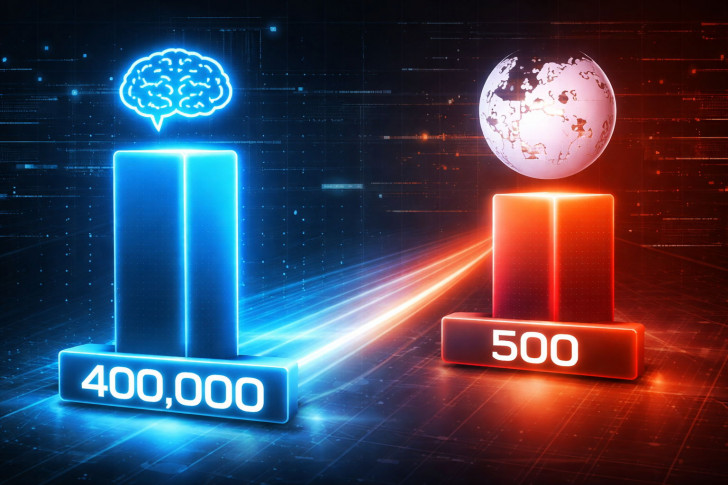
A new comparison reveals Grokipedia adding 400,000 articles daily while Wikipedia manages around 500, showcasing the dramatic speed difference between AI-driven and human-curated knowledge publishing.
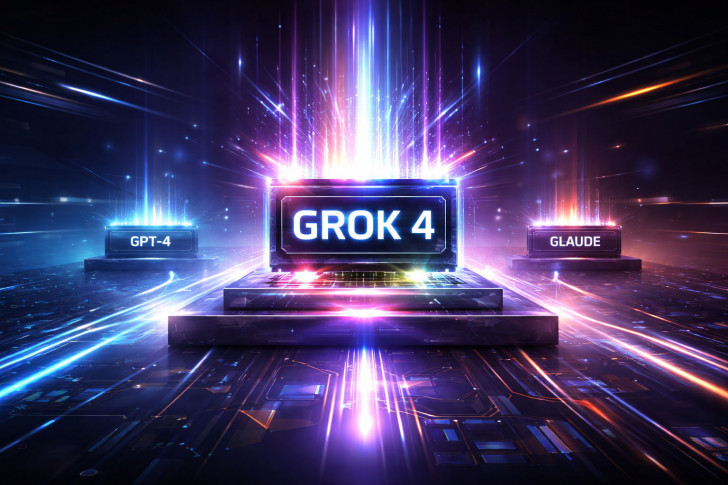
Grok 4 absolutely dominates the AI performance rankings, crushing both rival models and the S&P 500 with an 8.2% gain since late November.
AI autonomously solved Erdos Problem #728 and delivered a formally verified mathematical proof—a historic first in computational mathematics.
New research unveils Recursive Language Models, an inference method that lets AI work with massive inputs by treating context as programmable data instead of fixed prompts
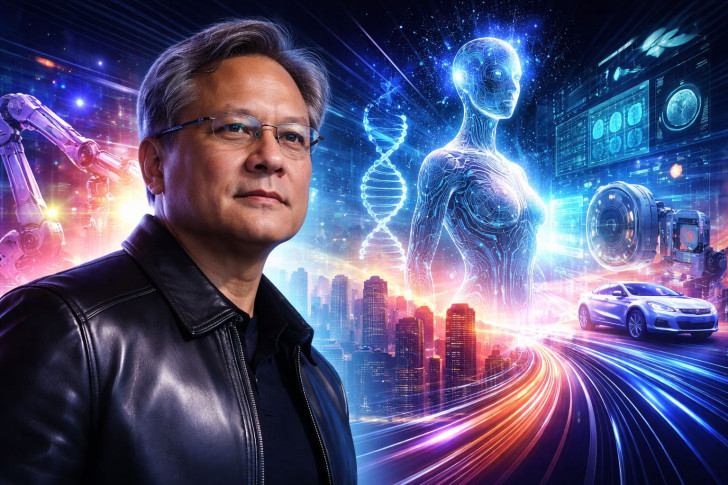
Jensen Huang says artificial intelligence is approaching a phase where several industries could see rapid breakthroughs similar to ChatGPT's impact, driven by advances in multimodality, extended context windows, and synthetic data generation.
Leading AI models are holding the top ranking for barely over a month these days, showing just how crazy fast the competition in artificial intelligence has become.
Chinese AI lab DeepSeek is gearing up to drop its V4 model around mid-February, and early buzz points to some seriously impressive coding performance that could shake up the competition.
Global AI computing capacity is expanding at an unprecedented pace, doubling roughly every seven months. New data highlights sustained accelerator growth since 2022.
We use cookies to improve your experience on our site and to show you relevant advertising. To find our more, read our privacy policy and cookie policy


 Saad Ullah
 Eseandre Mordi
 Alex Dudov
 Usman Salis
 Marina Lyubimova
 Peter Smith

 Victoria Bazir
 Sergey Diakov