1846 articles
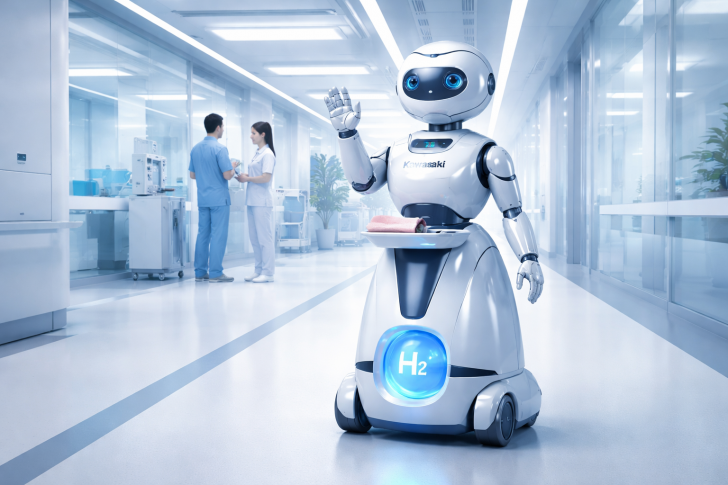
Kawasaki Heavy Industries is rolling out its Nyokkey wheeled humanoid robot across hospitals and care facilities in Japan, handling patrols, guidance, and meal delivery through autonomous navigation powered by hydrogen fuel cells.
The AA-Omniscience benchmark reveals no single AI model dominates software engineering tasks, with Claude Opus 4.5 leading Python and Go while Gemini 3 Pro Preview takes JavaScript and Swift.
Anthropic's Claude Opus 4.5 just claimed the top spot on daily token rankings for the first time, crunching through 149 billion tokens with a massive 59% jump from previous performance.
A new framework called MAXS enables AI agents to look ahead before acting, simulating multiple future action paths and evaluating trajectory stability to avoid short-sighted decisions in complex multi-tool tasks.
A new AI model called UniPercept teaches machines to understand images like humans do, evaluating aesthetics, quality, structure, and texture instead of just recognizing objects.
ChatGPT's mobile app exploded in 2025 with monthly active users jumping 148% to 450 million and total downloads climbing 112% to nearly 900 million across Android and iOS platforms.
MARSHAL, a new framework from Tsinghua University and partners, improves LLM performance by 28.7% through self-play. It strengthens multi-agent reasoning and boosts results on key benchmarks.
GPT-5.2 has successfully operated without interruption for seven consecutive days, building excitement around upcoming METR performance benchmarks that could showcase dramatic improvements in AI task efficiency.
Grokipedia's meteoric rise from 35,000 to 3.5 million daily visitors in just two months marks one of the fastest growth spurts in online encyclopedia history, positioning the platform as a serious challenger to Wikipedia's long-standing dominance.
Grok 4.20 swept the competition in Alpha Arena Season 1.5, claiming four of the top six leaderboard positions and becoming the only AI model to turn a profit in real-time stock trading.
Google's Gemini 3 update brings independent daily quotas for "Thinking" and "Pro" models, giving users more control over complex problem-solving and coding tasks with limits ranging from 300 to 1,500 prompts depending on the tier.
Retrieval-Augmented Generation has evolved far beyond its basic form, spawning over a dozen specialized variants that tackle everything from real-time data processing to complex multi-step reasoning across healthcare, finance, and beyond.
GLM 4.7 and MiniMax M2.1 autonomously created command-line task runners in 10-14 minutes, handling complex coding tasks that typically take senior developers 1-2 days to complete.
Hefei University of Technology researchers developed a breakthrough method that taps into AI models' internal truth detection during reasoning processes, significantly outperforming traditional techniques in mathematical, symbolic, and commonsense problem-solving tasks.
Microsoft's 2025 data reveals generative AI adoption reached 16.3% globally, with high-income economies pulling ahead while emerging markets lag behind. The gap between developed and developing regions continues to widen.
A new survey shows most firms report little to no measurable impact from AI adoption across productivity, decision-making, and customer outcomes. Only a small minority report gains exceeding 5%.
PNDbotics unveils Adam, a humanoid robot that combines remarkable limb flexibility with controlled strength, landing dance moves so quietly it doesn't even scratch the floor.
xAI's Grok 4.20 beta independently derived a new mathematical formula that beats the strongest known theoretical bound, delivering a research-level breakthrough in probability theory within minutes.
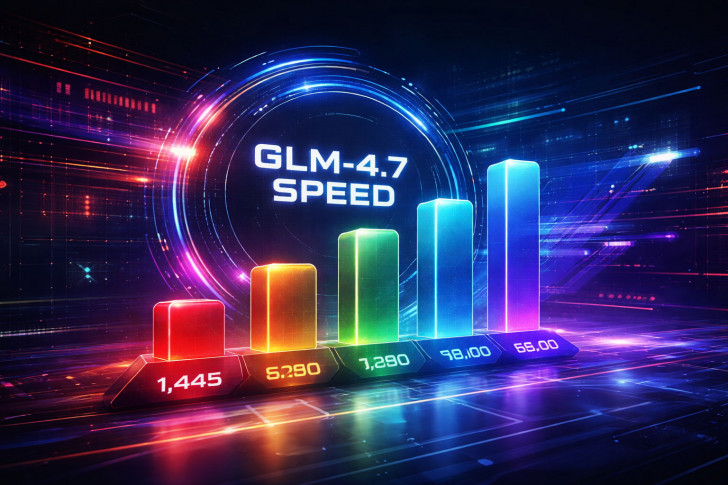
Fresh benchmarking reveals massive performance gaps among GLM-4.7 inference providers, with speed varying from 1,445 tokens/second down to double digits while pricing structures create distinct cost-performance trade-offs for agentic workloads.
Google is testing a redesigned Google AI Studio homepage built around getting developers from prompt to production faster with Gemini models.
We use cookies to improve your experience on our site and to show you relevant advertising. To find our more, read our privacy policy and cookie policy
 Sergey Diakov
 Alex Dudov



 Usman Salis

 Peter Smith
 Saad Ullah
 Eseandre Mordi

 Victoria Bazir


 Marina Lyubimova