49 articles
Fresh Schroders numbers for 2025 lay bare a split market - firms listed on Nasdaq that still book no revenue rose 41 percent, whereas mid rank companies that already earn steady profits added only three to seven percent. The gap shows that excitement over artificial intelligence and eye-catching technology now drives almost all of the gains.
U.S. tech M&A activity has accelerated dramatically in 2025, with total deal value hitting approximately $543 billion despite fewer transactions overall. Large AI-focused acquisitions drove the year to become one of the strongest in the past decade.
A 47 GW power gap looms for U.S. data centers between 2025 and 2028, even with fast-track power solutions, as AI infrastructure demand rapidly outpaces supply.
Fresh U.S. mobile data reveals ChatGPT's commanding lead in the AI app space, boasting over 41 million monthly users and the strongest daily engagement rate among major generative AI platforms.
The 2025 Global AI Vibrancy Tool ranks the United States first in AI development, followed by China and India. The framework analyzes 36 countries using 42 indicators covering research, investment, governance, and infrastructure.
McKinsey's new report reveals AI-driven automation could fundamentally transform U.S. labor markets and generate up to $2.9 trillion in economic value by 2030, with AI fluency becoming the fastest-growing job requirement nationwide.
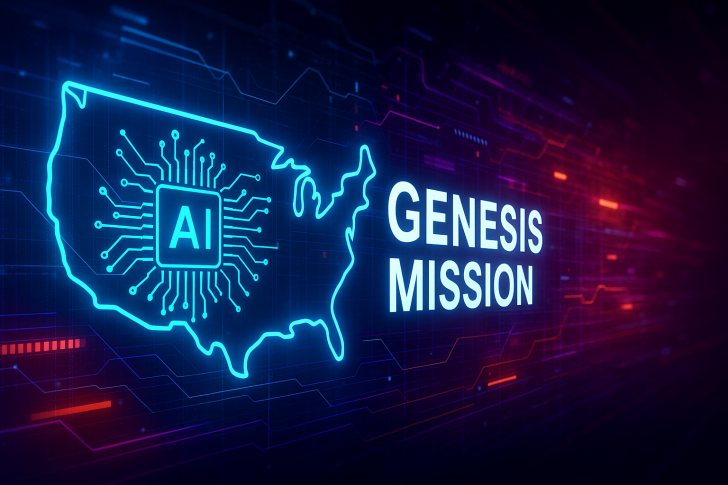
The U.S. government launched the Genesis Mission, a Department of Energy initiative designed to speed up AGI development through scientific AI, massive computing power, and automated research systems. The program brings together national computing resources, datasets, and top research talent under one roof.
OpenAI launched ChatGPT for Teachers, a secure GPT-5.1 workspace with unlimited messages, file uploads, search tools, and connectors for verified U.S. educators—free through June 2027 as AI adoption accelerates in K–12 classrooms.
U.S. data-center investment has surged more than 300% in three years, far outpacing all other commercial construction categories. New data shows AI-related spending contributed most of U.S. GDP growth in early 2025.
New MIT research reveals that current AI technology might already handle tasks performed by nearly 12% of American workers. Researchers modeled 151 million worker profiles to pinpoint which jobs face immediate automation threats.
New economic data reveals AI hardware and software investments accounted for more than 90% of U.S. GDP growth in early 2025, while most other economic sectors stayed flat. Warning signs include slower hiring, declining construction, and weakening consumer confidence.
New research from Anthropic indicates that current AI models might almost double US labor productivity growth rates. The analysis draws from 100,000 real-world interactions with the Claude chatbot.
The White House introduced the Genesis Mission, a federal initiative tasking the Department of Energy with building a national AI research platform. The program establishes strict deployment deadlines to speed up discoveries in key scientific areas.
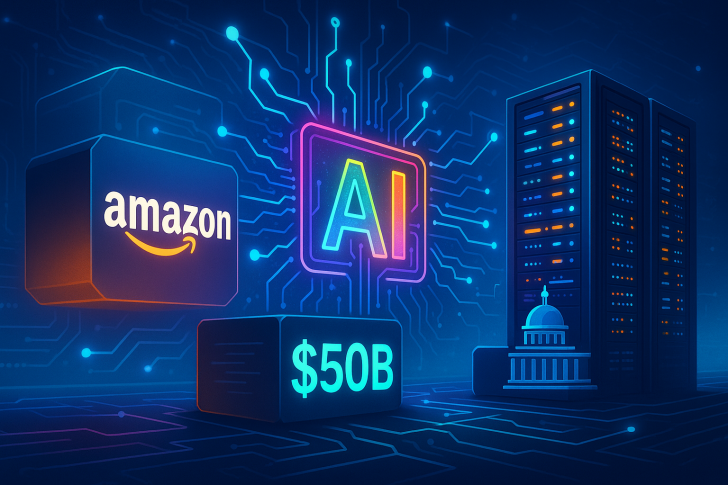
AWS is launching a massive infrastructure project worth up to $50 billion to build AI and supercomputing systems for U.S. federal agencies, creating a unified computing backbone across secure cloud environments starting in 2026.
Companies across America cut nearly 48,000 jobs due to AI automation in 2024, with October seeing the biggest wave. What was once a taboo topic has become standard corporate practice.
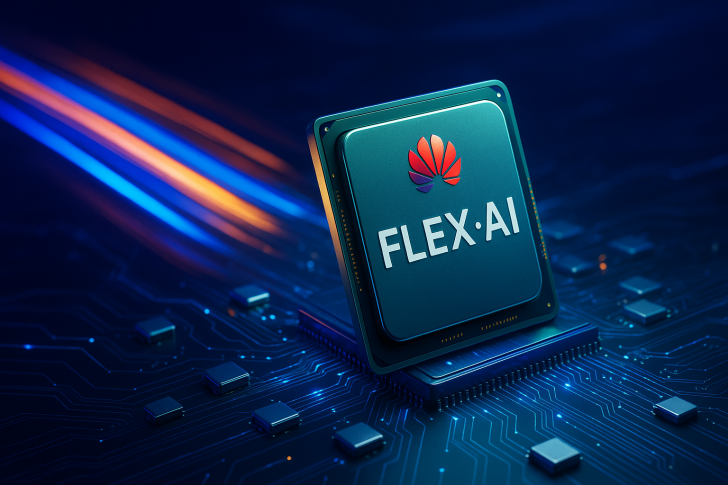
Huawei has released Flex:ai, an open-source software system designed to increase AI chip utilization by roughly 30%. The launch supports China's efforts to strengthen its domestic AI hardware ecosystem as US export limits continue.
Foxconn is planning a massive US expansion worth up to $5 billion as AI server demand explodes. The Taiwan-based manufacturer expects to double its weekly production to 2,000 server racks by 2026 to keep up with orders from Nvidia and OpenAI.
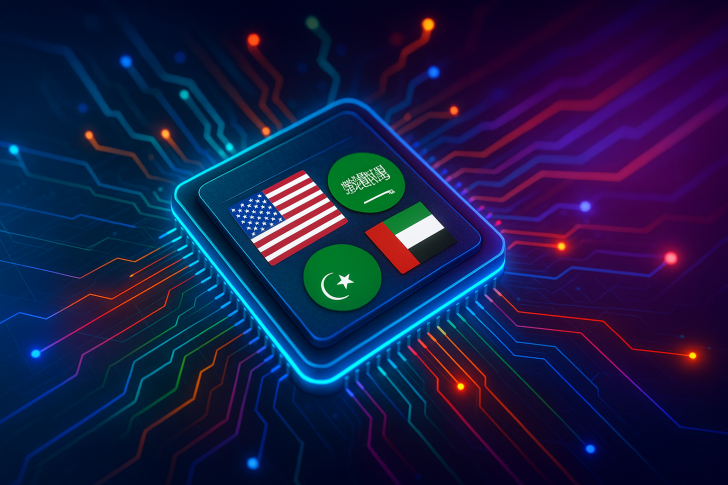
Washington has greenlit exports of cutting-edge American semiconductors to Saudi and Emirati companies, marking a strategic pivot in AI hardware policy as global powers compete for technological dominance.
The U.S. stock market has jumped 72 percent since late 2022, with tech giants driving a historic split from global markets. Other developed and emerging economies are struggling to keep pace.
Recent Hugging Face data reveals Alibaba's Qwen models are generating significantly more derivative uploads than U.S. and European AI foundations. The trend suggests that cost, efficiency, and ease of use are increasingly outweighing geopolitical and cybersecurity concerns for AI customers worldwide.
We use cookies to improve your experience on our site and to show you relevant advertising. To find our more, read our privacy policy and cookie policy


 Marina Lyubimova

 Victoria Bazir

 Usman Salis

 Sergey Diakov

 Saad Ullah


 Eseandre Mordi

 Alex Dudov