49 articles
China's AI models are closing the gap with US leaders and already surpass them in open-source performance - a shift that could reshape global AI adoption.
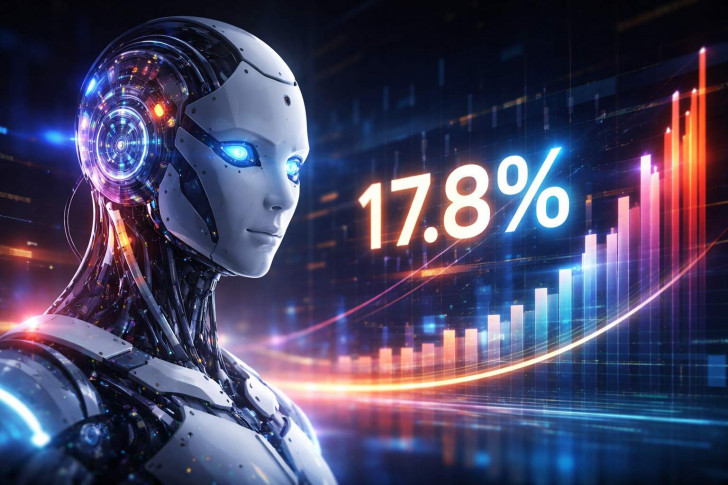
Grok's slice of the US AI assistant market jumped from 1.9% to 17.8% in just one year, showing nearly tenfold growth as users rapidly shift toward the platform.
America's slice of the global chip market jumped from 21.9% in 2021 to 32.2% in 2025, fueled by explosive AI demand. The comeback marks a dramatic shift in tech infrastructure spending.
The United States has reclaimed dominance in global chip sales as AI demand drives America's semiconductor market share to 32.2%, marking the strongest recovery in over two decades and nearly matching dot-com era peaks.
New Similarweb data breaks down which countries are sending the most traffic to generative AI sites — and the results reveal just how global the AI boom really is.
OpenAI has quietly started showing sponsored ads inside ChatGPT to some Free and Go tier users in the U.S., promising the ads won't mess with your actual responses.
Cross-referenced industry and policy data shows U.S. chip export restrictions are significantly limiting China's advanced AI chip production, with China producing only 1-4% of U.S. output in cutting-edge semiconductors.
The United States has released Trinity Large, a new open-source language model positioned as comparable to GLM 4.5, marking a notable moment in the global AI landscape.
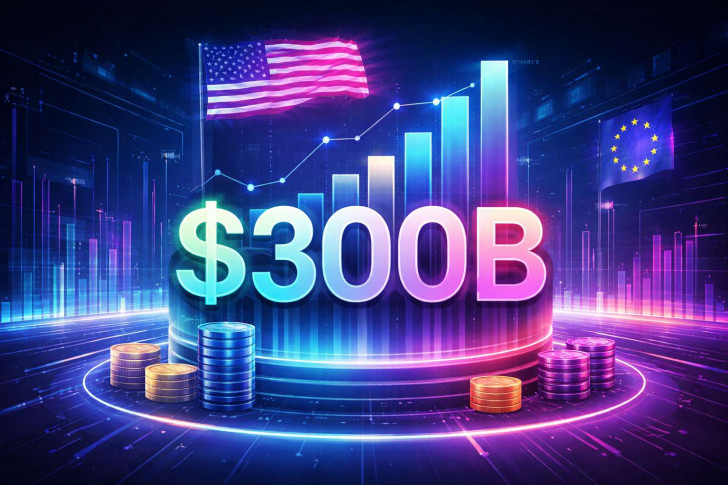
New data reveals US companies invested nearly five times more in artificial intelligence than European firms between 2020 and 2024, creating a massive funding gap that could reshape global tech leadership.
US data centers are on track to consume almost 10% of the country's total electricity by 2030, showing a dramatically sharper increase compared to other major regions worldwide.
AI data centers worldwide now consume around 30 gigawatts of power—roughly equal to New York State's peak electricity usage on the hottest summer days, according to new research from Epoch AI.
Chinese AI labs keep dropping new open-weights models that push intelligence scores higher every few months. Meanwhile, America's strongest public model hasn't budged since August 2025.
Bloomberg data reveals China's Tsinghua University has dramatically outpaced top US universities in AI patent filings since 2009, with China's overall patent applications soaring from 26,553 in 2000 to 1.8 million in 2024.
New analysis reveals US data centers rely mostly on natural gas while China uses coal to meet AI power needs. The IEA warns this fossil fuel dependence could drive electricity prices higher and create supply risks as AI demand explodes globally.
New York and California rolled out the first major legal requirements for AI companion bots, covering suicide risk detection, user disclosures, and protections for young users.
A new U.S. survey reveals Americans are evenly divided on whether artificial intelligence will help or harm society, with public opinion ranging from optimism to caution as AI continues reshaping everyday life.
OpenAI and the U.S. Department of Energy just inked a deal to work together on scientific research using cutting-edge AI technology.
Federal Reserve Chair Jay Powell acknowledges artificial intelligence is starting to impact American jobs, marking the first time the Fed has officially connected AI adoption to rising unemployment numbers.
Donald Trump signed an executive order blocking U.S. states from enforcing their own AI laws, consolidating oversight under one federal framework. The decision overrides transparency and bias-testing requirements already adopted by states like California and Colorado.
AI infrastructure boom drives 36% upward revision in electricity forecasts as nationwide grid expansion accelerates
We use cookies to improve your experience on our site and to show you relevant advertising. To find our more, read our privacy policy and cookie policy


 Usman Salis
 Saad Ullah

 Eseandre Mordi

 Peter Smith



 Alex Dudov

 Victoria Bazir