48 articles
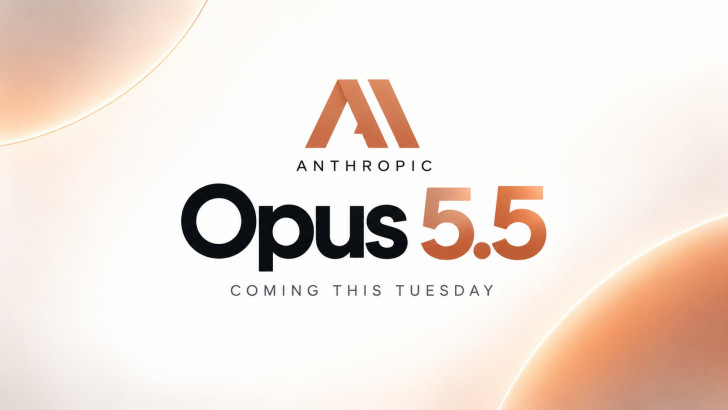
Anthropic is set to release Opus 5.5 this Tuesday, bringing a 20% price reduction and improved performance in 3D and frontend tasks compared to Opus 5.1. The new model, tested under the codename claude-wafer-eap, features an 872K context window and aims to compete with models like GPT-6 Sol.
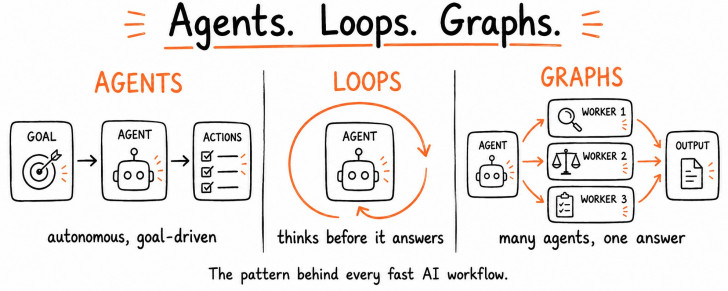
A one-hour Anthropic workshop teaching Loop engineering, turning a single prompt into a self-improving loop, is gaining attention online, with viewers pointed to specific timestamps covering memory, build cycles, and building an MVP in under an hour.
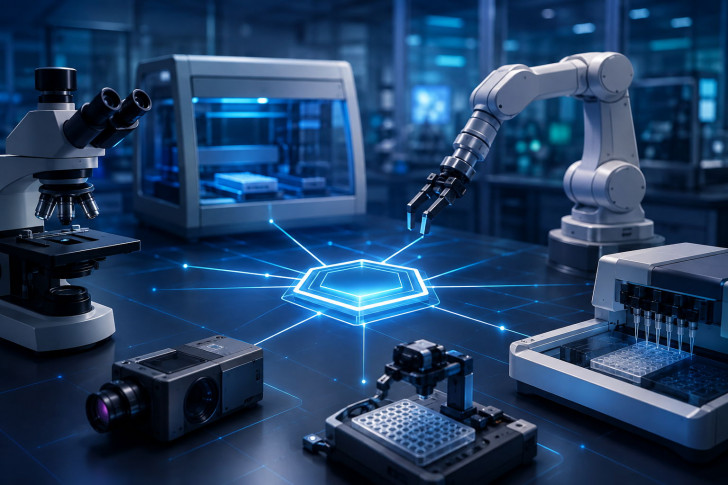
Anthropic has opened a research preview of the Model Hardware Standard (MHS) to selected research labs and advanced manufacturers. The specification gives AI agents a common interface for controlling microscopes, liquid handlers, robotic arms, lasers and other programmable equipment.
A new Anthropic study shows AI could theoretically perform most white-collar job tasks, yet real-world adoption remains far below that potential across nearly every profession.
Anthropic's Claude Opus 4.6 reportedly solved a long-standing mathematical conjecture by legendary computer scientist Donald Knuth. The breakthrough highlights growing interest in advanced AI reasoning systems in scientific research.
Anthropic rolled out a free interactive prompt engineering course with hands-on Claude notebooks that's already racked up more than 31,900 stars on GitHub, showing massive developer interest.
Anthropic's Claude AI services experienced multiple partial outages this month, raising questions about reliability as the company scales rapidly. While uptime metrics remain above 98%, clustered disruptions suggest potential infrastructure strain.
The U.S. Department of Defense is reassessing its relationship with Anthropic following tensions over the company's strict limits on military AI applications.
Anthropic landed $30 billion in fresh capital and announced $14 billion in annual run-rate revenue, with explosive growth in its Claude Code enterprise product.
Anthropic's latest research reveals that AI coding tools don't automatically build skills—what matters is how developers use them. The study shows that curiosity and active learning make all the difference.
Anthropic has dramatically increased its revenue forecasts through 2029, projecting growth to $148 billion while acknowledging that model training costs will exceed $100 billion during the same period.
Anthropic is rolling out a Security Center for Claude Code that brings security scanning and issue tracking directly into the development workflow, marking a shift toward integrated safety tools in AI-powered coding platforms.
Anthropic released new interpretability research outlining the "Assistant Axis," a method to measure and constrain AI behavior across 275 distinct archetypes. The work aims to reduce persona drift without harming model capability.
Anthropic's developing a new search menu for Claude that'll give users faster access to past chats and instant actions, making the AI assistant more practical for everyday workflows.
Anthropic has revealed a broad expansion of its research and engineering hiring, pointing to work across audio, biology, cybersecurity, scientific discovery, and computer vision. The new roles highlight the company's growing ambitions beyond text-based AI.
Anthropic now leads enterprise LLM API usage as corporate generative AI spending explodes 3.2× year-over-year, reaching $37 billion in 2025 amid widespread production deployments.
Anthropic's new Economic Index Report reveals how Claude AI performs across different education levels and regions, showing strong productivity boosts on difficult work but declining success rates as tasks get harder.
Anthropic rolled out Claude for Healthcare and expanded Claude for Life Sciences with HIPAA-compliant tools and specialized data connectors, strengthening the AI's presence in clinical, regulatory, and research environments.
SpaceX, OpenAI and Anthropic are reportedly preparing potential IPOs as early as 2026, with combined valuations that could exceed $1.5 trillion and capital raises in the tens of billions of dollars. Even one listing could surpass the entire 2025 US IPO market.
Anthropic has introduced Selective Gradient Masking, a technique designed to block specific dangerous knowledge in AI models while keeping their overall abilities intact. The company says this method is tougher to reverse than standard unlearning approaches.
We use cookies to improve your experience on our site and to show you relevant advertising. To find our more, read our privacy policy and cookie policy


 Marina Lyubimova
 Peter Smith

 Saad Ullah

 Usman Salis



 Eseandre Mordi


 Alex Dudov





 Artem Voloskovets