1662 articles
Tesla's rolling out its AI5 chip made by Samsung, and they've already started working on AI6. The company's planning to drop a new AI chip every 12 months for cars, data centers, and the Optimus robot.
A recent study reveals that AI assistants can walk users through manipulating fair-division platforms like Spliddit. The research shows that algorithmic complexity is no longer enough to stop coordinated cheating.
A new benchmark reveals that board-certified radiologists significantly outperform leading AI systems in diagnostic accuracy, with the best AI model reaching only 0.51 compared to human specialists' 0.83 score.
Fresh Similarweb data reveals Google's share of generative AI traffic nearly tripled before Gemini 3 even launched—climbing from 5% to 14% in one of the sector's biggest recent shifts.
Grok models have locked down the top three spots on OpenRouter's leaderboard, crushing past 300 billion tokens daily. Meanwhile, every competing system is stuck below 50 billion tokens—and it's not even close.
Machine learning researchers unveiled TabM, a lightweight ensemble model that crushes XGBoost, CatBoost, and LightGBM on tabular data while keeping MLP-level speed.
Shenzhen Everwin Precision pulled in RMB 35 million from two overseas humanoid robot clients in H1, with total deliveries hitting RMB 80 million by August. The company now partners with over 30 domestic humanoid robotics firms.
Google CEO Sundar Pichai says AI represents humanity's most profound technology shift yet, warning that rapid disruption will force major adaptation across industries and institutions.
A recent WSJ chart reveals the Magnificent 7 have surged approximately 170% since November 2022 while U.S. consumer sentiment has weakened. Surveys show that only 31% of Americans feel comfortable with AI, compared to 72% who embraced the early internet in 1995.
Recent industry insights reveal accelerating adoption of Google's Tensor Processing Units across cloud infrastructure, with deployment potentially exceeding one million chips. Performance benchmarks position the hardware competitively within efficiency-focused AI infrastructure markets.
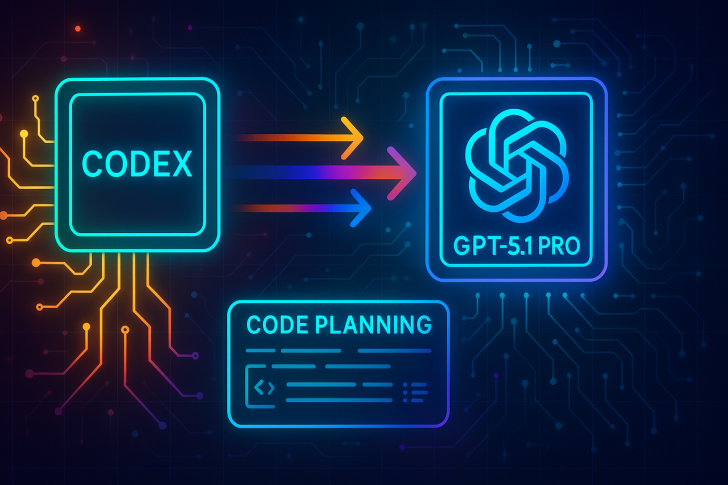
Codex Max is improving how GPT-5.1 Pro handles complex code-planning tasks, offering a stronger workflow for large-scale software development and highlighting growing reliance on advanced AI systems in engineering environments.
Oracle's five-year credit default swap spreads have spiked to 90-100 basis points while major AI companies like Meta and Google issued $66 billion in corporate debt this year, raising concerns about leverage across the tech sector.
New projections suggest OpenAI's electricity usage could surpass UK and Germany consumption within five years and potentially exceed India's within eight years, sparking concerns about AI sustainability and energy policy.
UBS Research finds global AI capital spending remains modest compared to past investment booms, with current levels well below the threshold typically associated with historical bubble periods.
Google is ramping up its infrastructure game plan, aiming to double AI serving capacity every six months as demand for Gemini and other AI services explodes.
Figure AI is facing a whistleblower lawsuit from its former Head of Product Safety, who claims the company rushed unsafe humanoid robots to market after raising over $1 billion. The complaint alleges robots generated enough force to fracture skulls and that the company retaliated when safety concerns were raised.
OpenAI is gearing up to launch a refined reasoning model in December. The upgraded system, codenamed "Shallotpeat," builds on its predecessor's gold medal achievements across IMO and IOI competitions.
xAI's Grok 4.1 Fast has grabbed the top spot on OpenRouter's Trending Leaderboard, pushing Google's Gemini down to second place. The numbers show a massive spike in usage across the platform.
Recent research shows large language models frequently update their beliefs incorrectly and make decisions that directly contradict their stated probabilities, raising concerns about their reliability in real-world applications.
Chinese robotics company MagicLab just dropped their latest humanoid robot, the MagicBot Z1. Standing at 1.4 meters tall and weighing 40 kilograms, this compact machine is turning heads with jaw-dropping agility demonstrations—including backflips and dodging arrows mid-flight.
We use cookies to improve your experience on our site and to show you relevant advertising. To find our more, read our privacy policy and cookie policy


 Peter Smith

 Saad Ullah


 Eseandre Mordi
 Sergey Diakov
 Alex Dudov

 Usman Salis