1846 articles
Google is building an Agent Import feature for Gemini Enterprise that'll let companies plug external agents into their multi-agent setups. The update also includes an evaluation tool, scheduled runs, and fresh connectors.
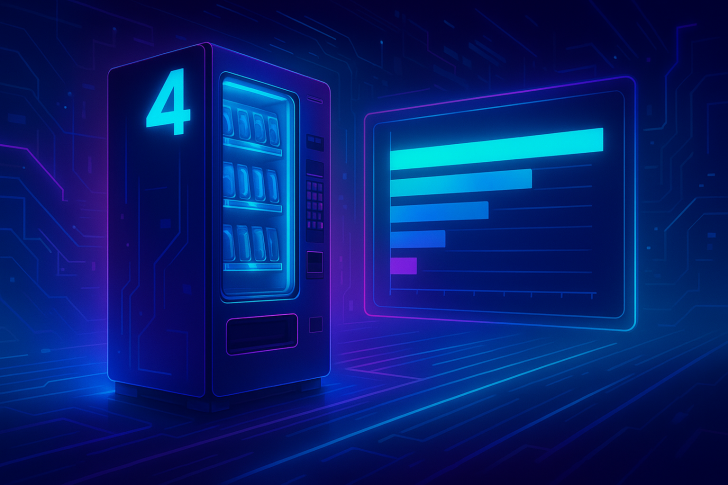
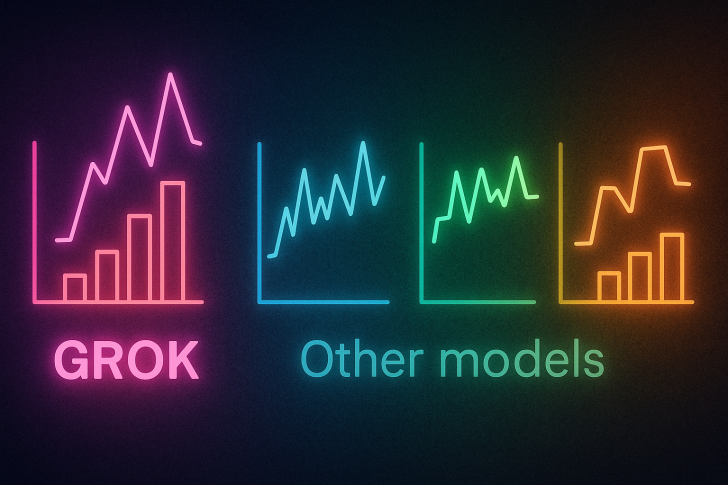
Grok 4 stays on top of the Vending-Bench leaderboard with a massive performance lead. Despite numerous new releases, no competing model has even come close to its numbers.
Modern AI systems are becoming increasingly difficult to understand as they scale up, raising serious questions about trust and safety when users can't see how these "black boxes" actually work.
A new online comparison reveals how Grok responded uniquely among several AI models during a psychological prompting experiment that tested how systems behave when pushed beyond standard question-answering formats.
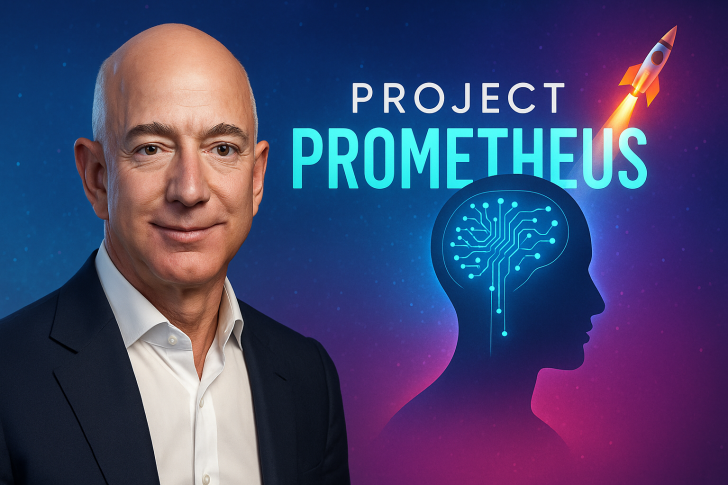
Jeff Bezos has returned to a formal executive role as co-chief executive of Project Prometheus, a new AI startup focused on engineering and manufacturing technologies, backed by billions in funding and elite hires from leading AI labs.
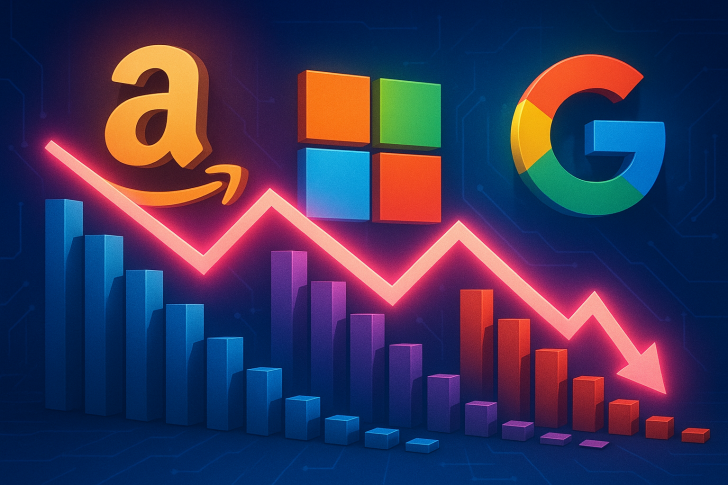
New WSJ commentary highlights how rapid AI investment is weakening Big Tech balance sheets. S&P Capital IQ and FactSet charts show falling cash ratios and rising capital expenditures at Amazon, Microsoft and Alphabet.
Kosmos is a breakthrough AI scientist that autonomously processes massive scientific datasets and literature to generate new insights. The system uses structured world models to reason across millions of tokens and can complete research that typically takes humans months.
Recent analysis from BofA Research reveals that multiple asset classes are rising together under the AI-driven market narrative, showing increased correlation across sectors that were traditionally distinct.
A comprehensive 94-page survey examines how scientific large language models are evolving through data-centric training and agent-driven workflows, analyzing 270 datasets and 190 benchmarks across multiple research disciplines.
OpenAI's GPT-5.1 brings adaptive reasoning to the table, letting the model decide how much thinking time each task deserves. It speeds through straightforward questions while dedicating serious processing power to harder challenges.
America's AI infrastructure is heading toward a serious power problem. Electricity needs for AI alone are expected to explode from 4 GW to 123 GW by 2035, while total data-center consumption could hit 176 GW in the same timeframe.
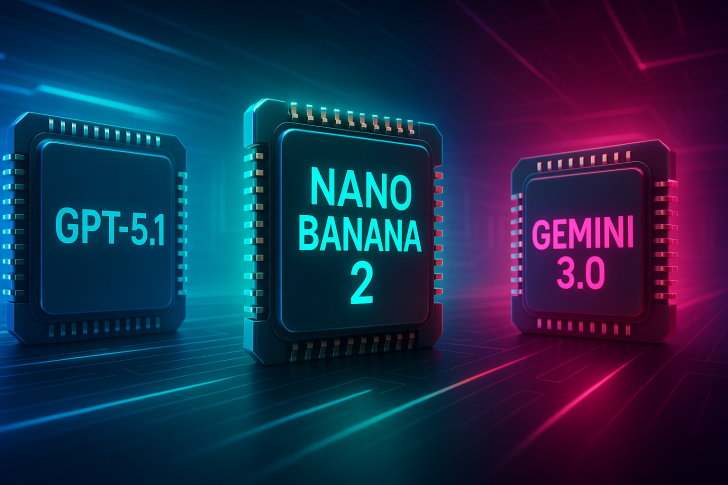
Nano Banana 2 and Gemini 3.0 are launching next week, with early tests suggesting major capability improvements. The timing puts fresh competitive pressure on OpenAI and Anthropic in the race for AI model leadership.
Meta will add "AI-driven impact" as a formal part of employee performance evaluations beginning in 2026, making the use of AI tools a core expectation across its workforce.
Similarweb data reveals dramatic traffic growth across Google's AI platforms in October 2025, with Labs.google jumping nearly 4,000% year-over-year and strong gains across Gemini, AI Studio, and other properties.
Andon Labs reran its Vending-Bench benchmark using the Kimi K2 model through Moonshot's own API and found that it now achieves the highest average net worth among open-source agents, placing Kimi K2 ahead of previous open-source entrants on the test.
China's Qwen AI ecosystem is rapidly climbing HuggingFace rankings, with multiple Qwen-powered projects leading community charts and showing China's growing strength in open-source AI.
A developer test revealed GPT-5.1 needed almost two minutes to read a 500-line markdown file in one setup, while processing the same file in seconds using a different configuration. The findings have triggered debate about the model's performance reliability.
OpenAI's GPT-5.1 release is facing backlash for delivering only incremental improvements, with critics suggesting the company is holding back stronger internal models to appeal to mainstream users rather than maximizing performance.
Berkshire Hathaway purchased over 17.8 million shares of Alphabet, according to new commentary. The move coincides with a pullback toward the $260 area, where GOOGL holds a key technical gap.
The world's first mass delivery of humanoid robots has kicked off, marking a pivotal moment for the robotics industry as advanced automation moves from experimental trials to large-scale real-world deployment.
We use cookies to improve your experience on our site and to show you relevant advertising. To find our more, read our privacy policy and cookie policy


 Peter Smith
 Eseandre Mordi

 Usman Salis
 Saad Ullah

 Marina Lyubimova

 Sergey Diakov