1846 articles
A recent overview examines eight Vision-Language-Action models driving embodied AI forward, featuring ChatVLA-2's Mixture-of-Experts architecture and Microsoft's newly launched Rho-alpha model.
Columbia Engineering researchers have revealed a humanoid robot capable of highly realistic lip-syncing, featured on the January cover of Science Robotics. The system learns facial movements by observing humans, aiming to reduce the long-standing "uncanny valley" effect.
Ollama's latest update brings a unified launch command for multiple AI coding models and optimizes GLM 4.7 Flash to handle 64,000+ token contexts with reduced memory consumption.
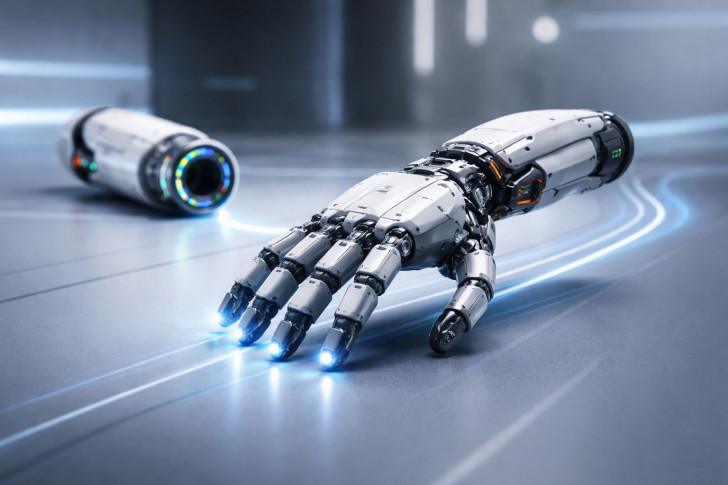
Researchers at Switzerland's EPFL have created a robotic hand that can detach from its arm, crawl independently to reach objects, and reconnect afterward—expanding what robots can do beyond traditional designs.
ModelScope's DASD-4B-Thinking model topped multiple reasoning benchmarks with 88.5% accuracy on AIME24, 83.3% on AIME25, 69.3% on LiveCodeBench v5, and 68.4% on GPQA, marking significant progress in open-source reasoning capabilities.
A new AI framework called OpenNovelty helps peer reviewers spot unoriginal research by checking claims against real published papers. The system uses multi-stage verification to make academic review more transparent and reliable.
New 2025 web traffic numbers reveal ChatGPT's grip on consumer AI isn't loosening, even as Grok posts explosive growth. The data paints a picture of one dominant player and a handful of scrappy challengers trying to break through.
A senior researcher at DeepMind says we're closing in on artificial general intelligence faster than many expected. He's putting a coin-flip probability—50 percent—on minimal AGI arriving by 2028, sparking fresh debate about how soon transformative AI might reshape the economy.
A fresh early-access chapter on LLM self-refinement just dropped, pushing inference-time scaling techniques way beyond basic self-consistency and voting. The update brings an iterative critique-and-refine loop with fully functional code implementations.
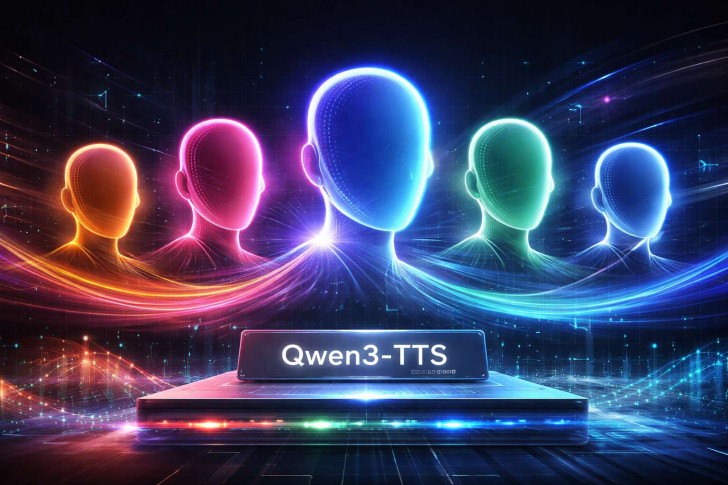
Qwen3-TTS just dropped on ModelScope with a complete open-source text-to-speech model family. The release includes five models, full weights, source code, and technical documentation—everything developers need to start building.
Enterprise SSD prices have skyrocketed 257% in under a year due to AI infrastructure demand, while HDD costs rose just 35%. The widening price gap is making all-flash data centers dramatically more expensive to build and operate.
A compact 10-billion-parameter Chinese AI model delivers impressive benchmark performance while running entirely on consumer laptops, marking a shift toward efficient, locally-deployable AI systems.
Evernorth partners with t54 Labs to put AI-powered financial agents straight onto the XRP Ledger, automating treasury operations and compliance checks without human oversight.
Grok Code grabbed the top spot on Kilo Code leaderboard at launch and hasn't budged since. The model's also crushing it as 2025's most-used AI coding tool, racking up usage numbers that leave competitors in the dust.
Google's launching a new "Personal Intelligence" feature in AI Mode that lets you connect apps like Gmail and Photos for more personalized search results. The feature's rolling out to subscribers first as an experimental Labs option.
Grok just pulled ahead of DeepSeek in global website traffic for the first time, hitting 3.5% market share in mid-January 2026. The data from Similarweb shows how fast things can shift in the AI space.
OpenAI's GPT-5.2 just crushed the FrontierMath benchmark, landing near the top across multiple math-focused tests. The results show serious progress in advanced reasoning capabilities.
New open-source AI model matches human players in real-time 3D games by learning from massive gameplay datasets rather than traditional reinforcement learning methods.
PostgreSQL gains native BM25 relevance ranking through a newly open-sourced extension, eliminating the need for external search infrastructure.
Anthropic released new interpretability research outlining the "Assistant Axis," a method to measure and constrain AI behavior across 275 distinct archetypes. The work aims to reduce persona drift without harming model capability.
We use cookies to improve your experience on our site and to show you relevant advertising. To find our more, read our privacy policy and cookie policy


 Eseandre Mordi

 Usman Salis

 Alex Dudov

 Victoria Bazir

 Peter Smith
 Saad Ullah


 Sergey Diakov


 Marina Lyubimova