1846 articles
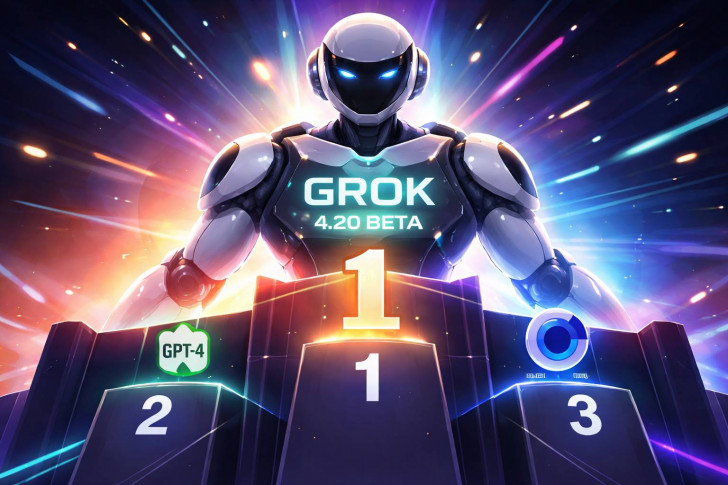
Grok 4.20 Beta (500B) claimed the #1 ranking on Search Arena with Style Control enabled and #2 without it. The 500-billion-parameter model reportedly outperformed several trillion-parameter competitors.
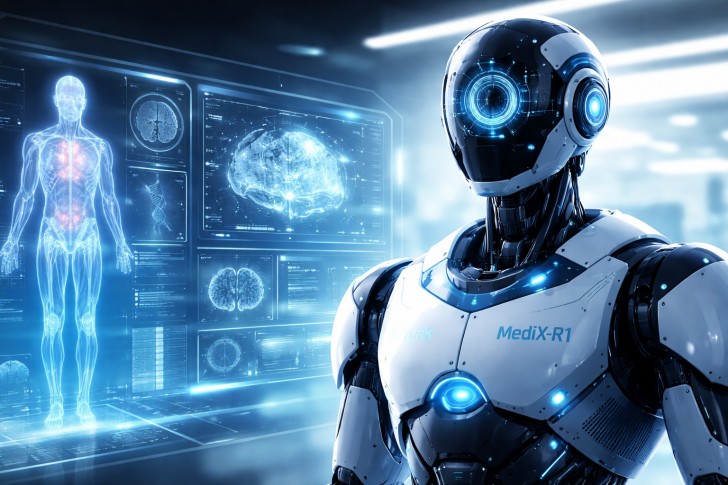
MBZUAI's MediX-R1 framework advances medical AI with reinforcement learning, achieving 73.6% on clinical benchmarks from ~51K examples. The development highlights increasing AI capability across modalities including imaging and free-form answer generation.
AI development is shifting from static RAG (Retrieval-Augmented Generation) workflows toward dynamic memory-enabled agents with read-write capabilities. Persistent memory systems now allow continual learning, personalization, and context retention across interactions.
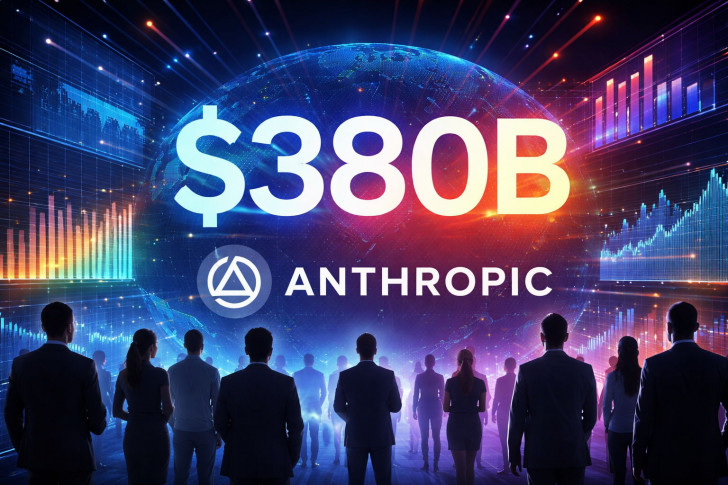
Anthropic's valuation has exploded from $4 billion to $380 billion, prompting questions about how public market participants can gain exposure. A breakdown highlights key tech companies positioned around Anthropic's growth.
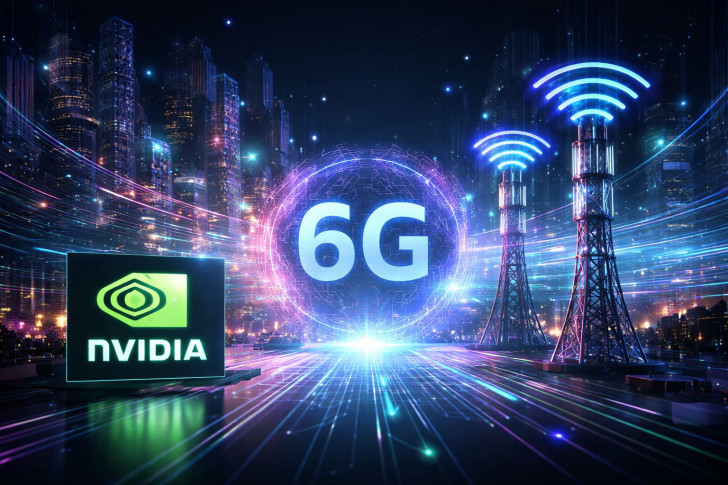
Nvidia (NVDA) has teamed up with major global telecom firms to develop AI-native 6G wireless networks - open, secure, and intelligent infrastructure built to handle tomorrow's connectivity demands well beyond what 5G can offer today.
A viral comparison shows Grok delivering a direct "No" answer to a controversial sports question, while ChatGPT, Gemini, and Claude provided nuanced responses instead of a simple yes-or-no reply.
A breakthrough training method called Co-rewarding helps AI language models think better and learn more reliably without needing human-verified answers, showing real improvements on mathematical problem-solving tests.
A new AI communication framework called Vision Wormhole proposes using visual channels as a universal messaging layer between models - aiming to improve bandwidth and interoperability compared with traditional token exchanges.
Google Trends data from late February shows a sharp but short-lived surge in Anthropic searches following a U.S. agency usage ban report, while OpenAI held steady. Both brands ended the week with an equal average score of 26 - revealing how social media noise can distort real market signals.
A new prompting technique is reshaping how developers optimize reasoning in GPT-4, Claude, and Gemini - without retraining the models.
Perplexity AI launched "Perplexity Computer," a workflow workspace that combines multi-model orchestration with app connectors, exclusive to its Max subscription. Early adopters say the right setup unlocks a genuine autonomous assistant.
Zhipu AI and Tsinghua University released GLM-5, a 744 billion parameter open-weights model that hits state-of-the-art marks in coding, reasoning, and autonomous agentic tasks — placing it squarely alongside leading proprietary systems.
DeepSeek is preparing to launch its V4 multimodal model in mid-February, optimized for Chinese AI chips rather than Nvidia hardware. The move highlights shifting infrastructure strategies in the global AI landscape.
AITECH data shows that 79% of enterprises are now deploying AI agents operationally, not just experimentally. The trend signals a structural shift in how organizations implement autonomous AI.
OpenAI has raised $110 billion at a $730 billion pre-money valuation, with major backing from SoftBank, NVIDIA (NVDA), and Amazon (AMZN). The company reports 900 million weekly ChatGPT users and an expanded strategic compute partnership.
Perplexity launched two new embedding model families - pplx-embed-v1 and pplx-embed-context-v1 - claiming strong benchmark performance and significantly higher storage efficiency compared to competitors like Gemini. The models are fully open-source and optimized for web-scale retrieval.
Microsoft (MSFT) previewed Copilot Tasks, a new AI agent that interprets plain-language requests and executes them on its own in the cloud. The feature is currently available to a limited group of early testers.
Alibaba introduced MobilityBench, a large-scale benchmark for testing LLM route-planning agents using 100,000 real Amap mobility queries across 22 countries. The platform includes a deterministic API-replay sandbox to ensure reproducible evaluation.
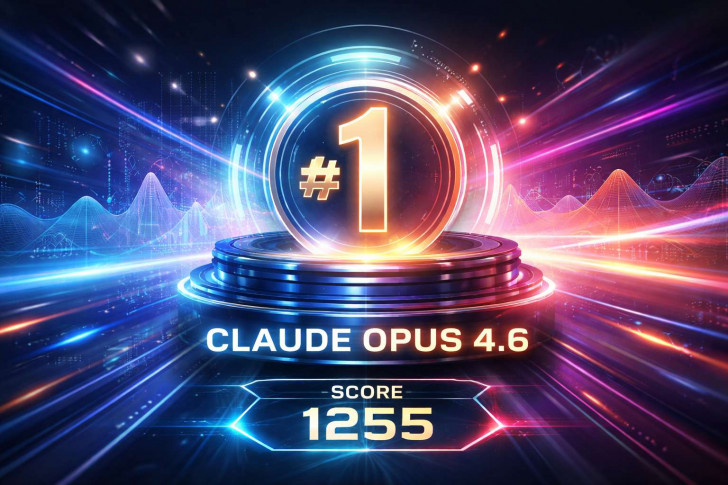
Anthropic's Claude Opus 4.6 has secured the top position in Search Arena rankings, scoring 1255 points and outperforming major competitors including Grok and GPT models.
Epoch AI research reveals AI training efficiency improved through compute scaling, reaching 21,400× total gains with estimates of nearly 10× annual improvements driven by scale-dependent algorithmic innovations.
We use cookies to improve your experience on our site and to show you relevant advertising. To find our more, read our privacy policy and cookie policy


 Eseandre Mordi
 Peter Smith
 Saad Ullah

 Marina Lyubimova
 Usman Salis


 Victoria Bazir




 Artem Voloskovets