108 articles
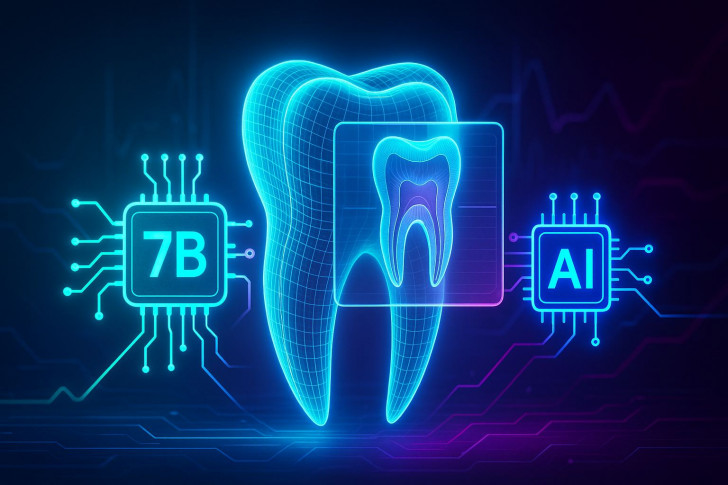
A compact 7-billion parameter AI model built specifically for dentistry is proving that specialized training beats sheer size when it comes to reading dental X-rays and supporting clinical diagnostics.
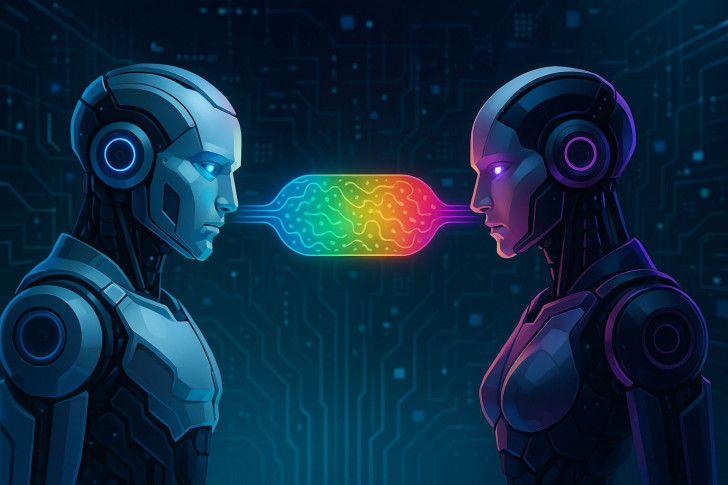
Researchers have developed LatentMAS, a new framework that lets AI agents work together by sharing internal representations instead of text messages, slashing token consumption by 83% while boosting accuracy by nearly 15%.
Disney has launched an autonomous robotic Spider-Man at Avengers Campus that performs real-time aerial stunts, marking a significant leap in live entertainment robotics.
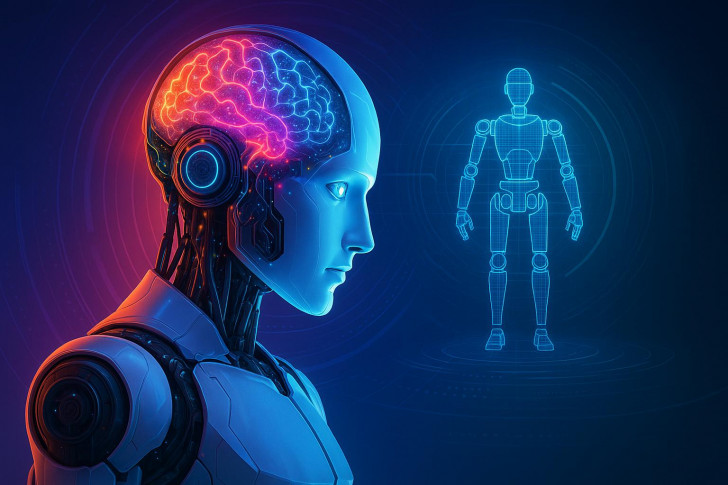
ZTE's EmbodiedBrain model introduces a unified vision-language-action system designed to improve planning and execution in physical environments, demonstrating state-of-the-art performance across complex embodied AI tasks.
AR3D-R1 marks a breakthrough as the first reinforcement learning-enhanced text-to-3D generation model, arriving with MME-3DR, a dedicated benchmark for testing RL methods in 3D content creation.
Nomos 1, a 30-billion-parameter open-source model, scored 87/120 on the 2025 Putnam Exam, placing it near the top tier of human competitors and demonstrating major progress in accessible AI mathematical reasoning.
DePaola-5 holographic memory model maintains stable retrieval past 500 stored items while classic HRR fails after 125, representing a breakthrough in scalable AI memory systems.
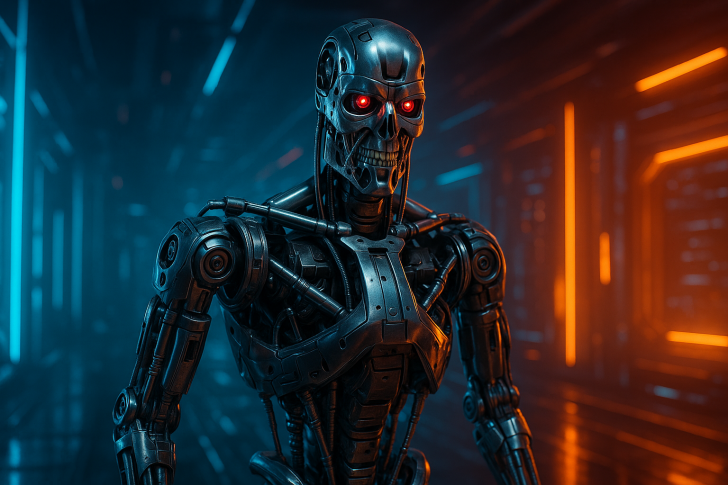
EngineAI released real-world footage showing CEO Zhao Tongyang taking a direct hit from the company's T800 humanoid robot. The demonstration, verified to contain no CGI or AI effects, ignited widespread debate about humanoid robot capabilities and safety standards.
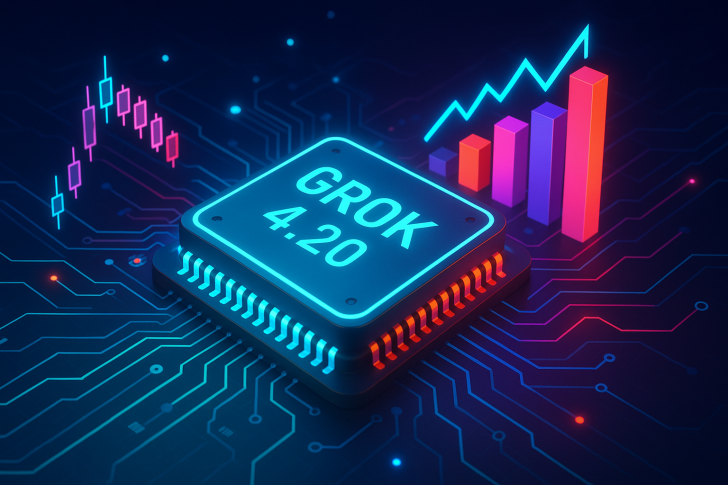
Grok 4.20 has jumped to the top of AI trading rankings, beating every major competitor and racking up $16,159 in total equity. The model now holds three of the top five spots in current standings.
Kling O1's latest demo showcases frame-by-frame replication of complex dance movements, demonstrating how AI is reaching new levels of precision in motion capture and animation.
Google's Titans architecture scored 70% accuracy at ten million tokens on the BABILong benchmark, significantly outperforming leading AI models across extreme sequence lengths.
New analysis suggests that neural networks share low dimensional weight subspaces, but critics argue that a sample of only 500 models is too small to support broad conclusions.
Massive studies across three countries reveal conversational AI can genuinely shift political views, with bigger models packing more persuasive punch. The link between model scale, information depth, and lasting influence is undeniable.
Grok 4.1 debuts with an industry-leading 2-million-token context window, outpacing all major AI competitors and enabling entire codebases and lengthy documents to process in one session.
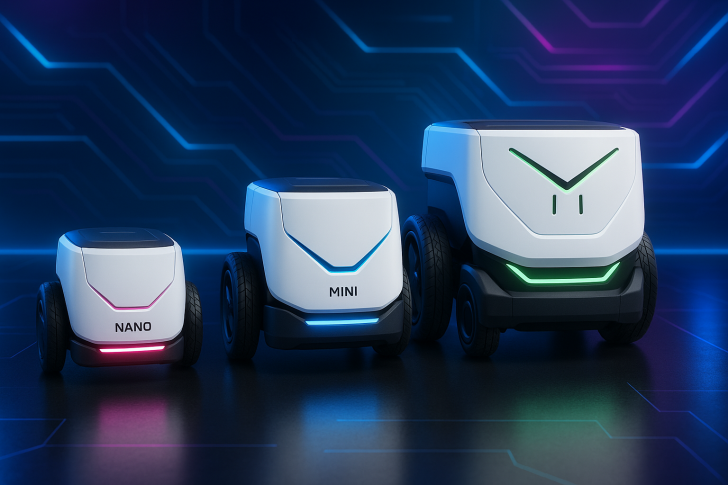
Arcee released new Trinity Mini and Trinity Nano models built on a mixture-of-experts architecture, featuring efficient active-parameter configurations. Early benchmark results show competitive performance across multiple reasoning and evaluation tasks.
A new AI method called Chain-of-Visual-Thought introduces continuous visual tokens to improve reasoning in vision-language models. Recent tests show accuracy gains of 3–16 percent across major benchmarks.
A new AI framework called REASONEDIT introduces reasoning-enhanced image editing through multimodal thinking. The system interprets abstract instructions and refines visual outputs through multiple generation stages.
Odyssey launched Odyssey-2, an AI video model that generates personalized visual streams from text prompts in real time, removing the typical delays found in current AI video tools.
A worldwide test that covered eight elections showed that five large AI systems lean toward centre left policies - Grok-4 alone matched the real results voters produced.
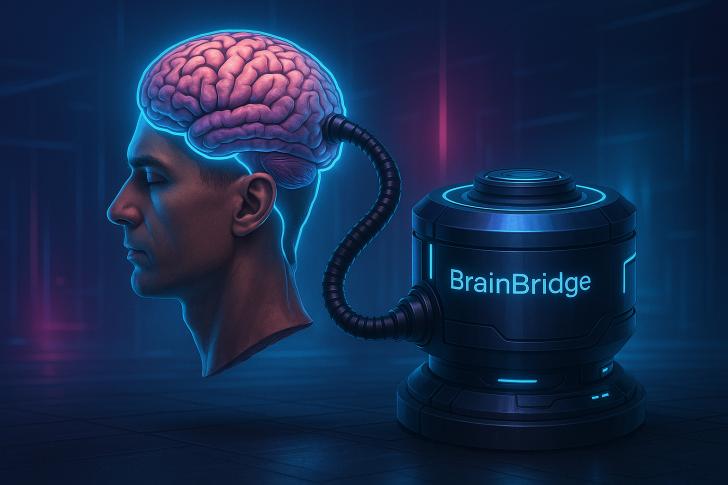
BrainBridge introduces a futuristic concept for AI-powered head and face transplants using advanced robotics. The blueprint pushes boundaries between cutting-edge medicine and science fiction, raising questions about what's medically possible.
We use cookies to improve your experience on our site and to show you relevant advertising. To find our more, read our privacy policy and cookie policy


 Eseandre Mordi
 Usman Salis
 Sergey Diakov
 Victoria Bazir
 Saad Ullah

 Marina Lyubimova

 Artem Voloskovets
 Alex Dudov