108 articles
Ant Group researchers just dropped LingBot-VLA, a vision-language-action AI model that can control multiple robot types through a single system. The model crushes existing approaches in both performance and training speed across real-world robotic tasks.
New wage-based compensation models for AI systems are showing significant efficiency improvements, with early testing revealing productivity gains of 20-50% as agents optimize their resource usage to maximize earnings.
Fresh benchmark data reveals major performance gaps between leading language models. Trinity-Large pulls ahead with exceptional throughput and response speed thanks to its ultra-sparse mixture-of-experts design.
The United States has released Trinity Large, a new open-source language model positioned as comparable to GLM 4.5, marking a notable moment in the global AI landscape.
A January 2026 governance framework establishes principles for managing risks and accountability in autonomous AI systems as their adoption grows across industries.
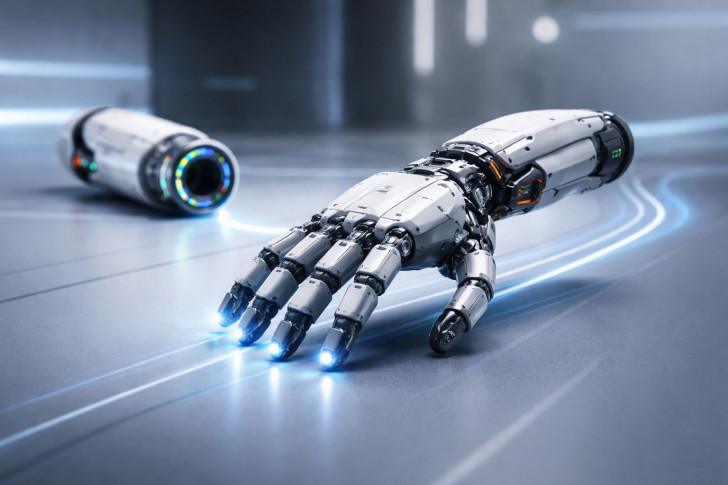
Researchers at Switzerland's EPFL have created a robotic hand that can detach from its arm, crawl independently to reach objects, and reconnect afterward—expanding what robots can do beyond traditional designs.
GLM-4.7-Flash just became the smartest open-weights AI under 100B parameters, hitting a 30-point score on the latest Intelligence Index and crushing larger models with clever efficiency tricks.
Baidu unveils ERNIE 5.0, a next-generation omni-modal AI model that processes text, images, audio, and video through a single unified framework, featuring 2.4 trillion parameters with under 3% activation per inference for efficient multimodal reasoning.
Researchers from China's leading universities have cracked open the "black box" of AI by mapping how large language models actually function through six distinct lifecycle stages, revealing both breakthroughs and critical gaps in our understanding.
XPeng debuts its Iron humanoid robot with a strikingly human-like design as mass production accelerates in 2025, marking a significant milestone in the competitive humanoid robotics landscape.
A structured data generation pipeline has been introduced to improve security alignment in code-focused language models. The approach combines real-world vulnerabilities, synthetic data, and preference learning.
New BabyVision benchmark shows top AI vision models perform like toddlers on pure visual reasoning tests, exposing a 20% performance gap compared to six-year-old children.
Hefei University of Technology researchers developed a breakthrough method that taps into AI models' internal truth detection during reasoning processes, significantly outperforming traditional techniques in mathematical, symbolic, and commonsense problem-solving tasks.
DeepSeek just dropped a research paper on Engram—a new conditional and scalable memory module built to make large language models way more efficient. The timing's got everyone buzzing about what their next-gen model might look like.
Robotics startup 1X just dropped a major upgrade to Neo's "brain" – a world model that lets the humanoid robot imagine outcomes, reason through tasks, and adapt to new objects it's never seen before. This isn't just incremental progress; it's a leap toward robots that can actually think before they act.
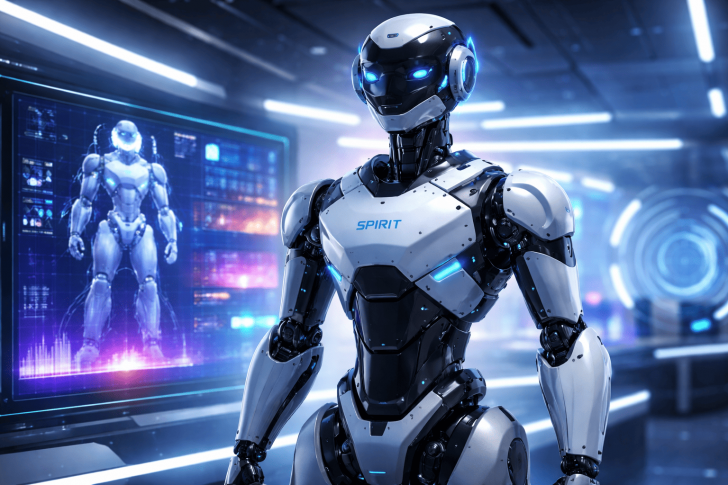
Spirit AI's latest v1.5 model has taken the lead on the RoboChallenge Table30 benchmark, achieving a 50.33% success rate and outperforming all other open-source robotic foundation models.
Advanced AI systems have independently produced formally verified solutions to two previously unsolved Erdős problems, demonstrating a significant leap in machine-driven mathematical discovery.
Leading AI models are holding the top ranking for barely over a month these days, showing just how crazy fast the competition in artificial intelligence has become.
Chinese AI lab DeepSeek is gearing up to drop its V4 model around mid-February, and early buzz points to some seriously impressive coding performance that could shake up the competition.
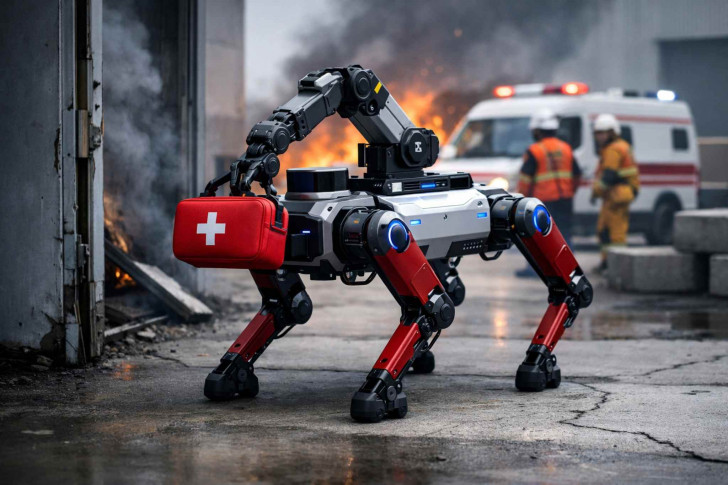
Deep Robotics put its quadruped robot through a live emergency rescue drill, showing off its ability to handle rough terrain, spot fires, and work in areas with no signal connectivity.
We use cookies to improve your experience on our site and to show you relevant advertising. To find our more, read our privacy policy and cookie policy


 Victoria Bazir

 Peter Smith

 Saad Ullah

 Eseandre Mordi

 Usman Salis






 Marina Lyubimova


 Alex Dudov