63 articles
Meta Platforms unveils Self-Play SWE-RL research showing AI agents that autonomously learn from real codebases and generate new software independently, potentially surpassing human abilities in complex technical challenges.
Google has published a 46-page AI Agent Handbook outlining practical ways organizations can build and deploy AI agents. The guide focuses on real-world business use cases and is available for free through Google Cloud.
Firecrawl has launched /agent, an AI research tool that searches and gathers web data beyond traditional API limits. Released as a research preview, it lets users retrieve information by describing their needs without requiring specific URLs.
Google released the Agent Development Kit for TypeScript, an open-source framework that lets developers build AI agents using a code-first approach with familiar programming tools.
Manus has rolled out version 1.6 featuring its Max agent, which shows stronger task completion rates, broader development capabilities, and measurable performance improvements across key benchmarks.
New research breaks down how memory works in AI agents, offering a practical framework with three key categories that could shape the next generation of intelligent systems.
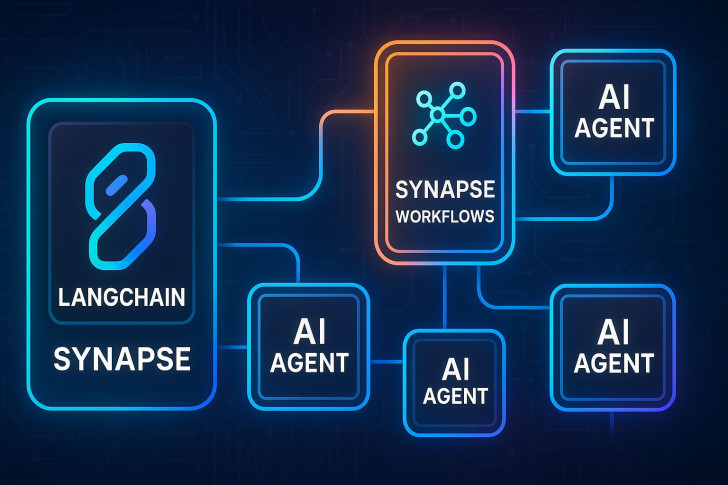
LangChain has released Synapse Workflows, a multi agent AI platform that operates through LangGraph. The platform unites search, productivity and data analysis agents within a single coordinated system.
Researchers have developed LatentMAS, a new framework that lets AI agents work together by sharing internal representations instead of text messages, slashing token consumption by 83% while boosting accuracy by nearly 15%.
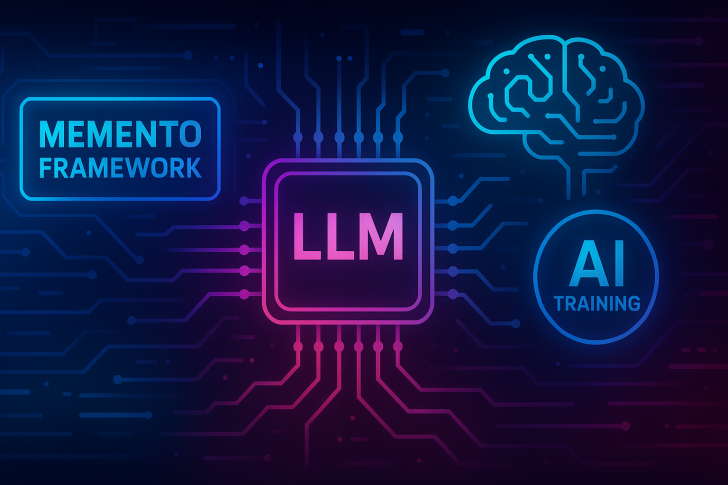
New open-source Memento framework enables LLMs to learn continuously through memory-based systems, achieving 87.88% Pass@3 on GAIA validation without modifying model weights.
Simular has launched Simular 1.0, a Mac desktop agent that automates multi-step workflows using a neurosymbolic architecture combining LLM exploration with deterministic code, achieving near-human performance on industry benchmarks.
Stanford researchers have developed a breakthrough method enabling AI agents to coordinate through internal neural network signals rather than explicit communication, achieving significant performance gains and efficiency improvements across multiple benchmarks.
An open-source Deep Search tool using Google ADK and Gemini 3 is gaining traction for autonomous multi-source research. The system uses recursive reasoning to plan, validate, and generate structured reports.
Anthropic has released a comprehensive guide showcasing improved techniques for AI agent tool integration, featuring tool search, programmatic calling, and schema-based examples that cut token usage by up to 85% while boosting accuracy to 90%.
A recent breakdown explains how AI agents work and why agentic workflows are gaining traction. The piece covers adaptive systems built on reasoning, tools, and memory that can handle complex tasks with minimal human input.
Microsoft warns that Windows 11's new AI agents will access six core folders including Documents and Downloads, raising security concerns as these autonomous systems gain unprecedented control over personal files and applications.
When Manus AI claimed the top spot on AI agent rankings, tech commentato skeptical tweet went viral. The Singapore-based autonomous agent has generated buzz with impressive benchmark scores, but experts are questioning whether the hype matches reality.
Questflow has unveiled Daydreams, a groundbreaking platform where AI agents can operate independently—thinking, acting, and making payments without human input. Powered by x402 payment rails and connected to leading AI models, this marks a major step toward truly autonomous digital economies.
AI agents are making engineers up to three times more productive, but the real challenge now is figuring out what to build and how to design it well.
Google has introduced Pomelli, an experimental AI marketing agent that analyzes brand identity and creates complete campaigns in minutes. Currently available in select English-speaking countries, it represents Google's latest move into agentic AI for creative work.
Zapier CEO Wade Foster argues that businesses should focus on agentic workflows—structured, AI-powered automations—rather than chasing fully autonomous AI agents. In insights shared, Foster outlines a practical framework for implementing AI that prioritizes reliability, human oversight, and incremental progress.
We use cookies to improve your experience on our site and to show you relevant advertising. To find our more, read our privacy policy and cookie policy


 Peter Smith
 Saad Ullah
 Usman Salis
 Alex Dudov




 Eseandre Mordi