Maria Lobanova

The company launched what it called its “most ambitious” pre-training run in July, using substantially more compute for a larger frontier model. Early pre-training evaluations are reportedly strong, while the model has now moved into post-training.
For developers, the key areas are:
- Coding — stronger code generation, reasoning and software-engineering capabilities.
- Autonomous agents — models capable of planning, using tools and executing multi-step tasks with less human supervision.
- Recursive Self-Improvement (RSI) — Google is reportedly directing more compute toward systems that can help improve their own capabilities.
Sergey Brin is also reportedly pushing Gemini teams to ship faster and reduce internal bureaucracy, with Gemini 4.0 being run more like a startup than a traditional Google project.
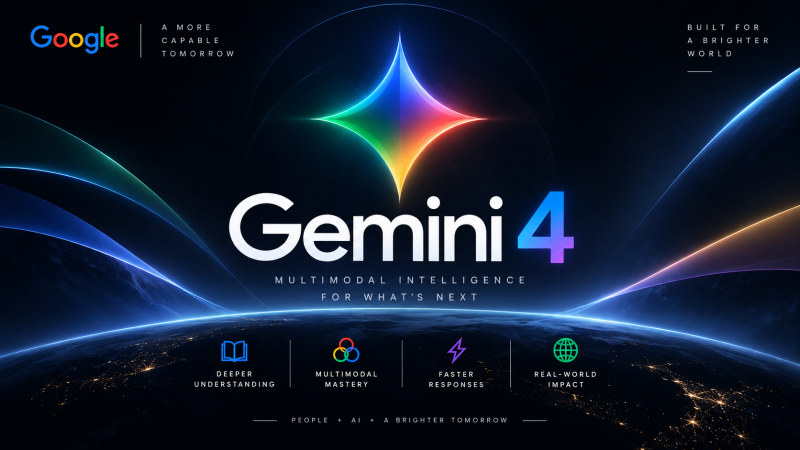
Google already has relevant technology in production research. AlphaEvolve combines Gemini with automated evaluators to generate, test and iteratively improve algorithms, and has been applied to data-center optimization, chip design and AI training.
The important shift with Gemini 4.0 may therefore be less about another increase in benchmark scores and more about autonomous software development: models that can inspect codebases, plan changes, write and test code, use external tools and iterate on failures.
Google has not officially announced a Gemini 4.0 release date, and reports about its current post-training stage remain unofficial.
If development is already this far along, Gemini 4.0 could debut soon.
 Maria Lobanova