168 articles
OpenAI is building a unified AI superapp combining ChatGPT, coding, and agent tools. The move reflects a broader strategy to drive adoption through a single integrated platform.
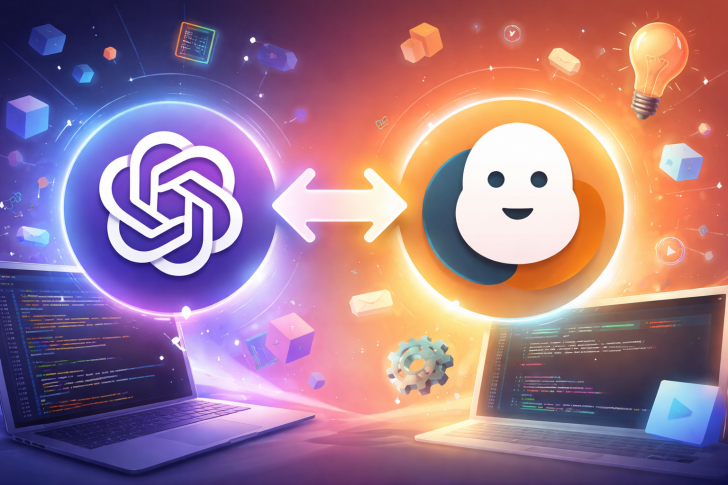
OpenAI has launched a plugin enabling Codex models to run inside Anthropic's Claude Code CLI. The update reflects growing interoperability across AI developer tools and signals a broader shift toward flexible, cross-platform workflows.
OpenAI has released a Codex Use Cases gallery, giving developers access to ready-made workflows and prompts directly inside its coding environment.
OpenAI introduced GPT-5.4 mini and nano, offering lower-cost AI models with strong reasoning capabilities. Benchmarks show nano emerging as a leader in cost-efficiency despite trade-offs.
OpenAI's pre-IPO filing flags $13B Microsoft dependency and TSMC supply chain risks as key threats to its AI infrastructure.
OpenAI targets a fully autonomous AI researcher by 2028, backed by 30GW compute and $1.4T investment.
Anthropic surpassed OpenAI in enterprise AI adoption, capturing 73% of new clients in just two months.
OpenAI's GPT-5.4 Mini tops execution benchmarks with 72.1% on OSWorld, while Gemini 3 Flash leads reasoning at 90.4% GPQA Diamond.
xAI's Grok-4.20-Beta model has claimed the top spot on the Search Arena leaderboard. The 500B-parameter system outperformed competing search models from Google, OpenAI, and Anthropic.
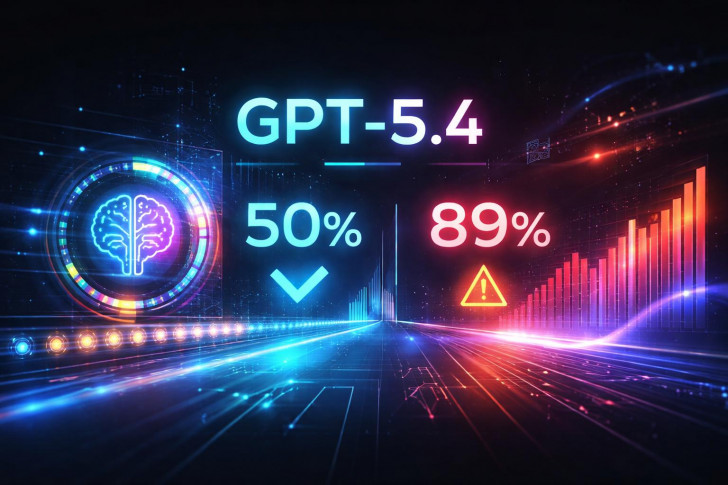
Benchmark charts suggest OpenAI's GPT-5.4 is among the more knowledgeable models tested — yet it also records one of the highest hallucination rates. The contrast has sparked debate about how well AI benchmark scores reflect real-world reliability.
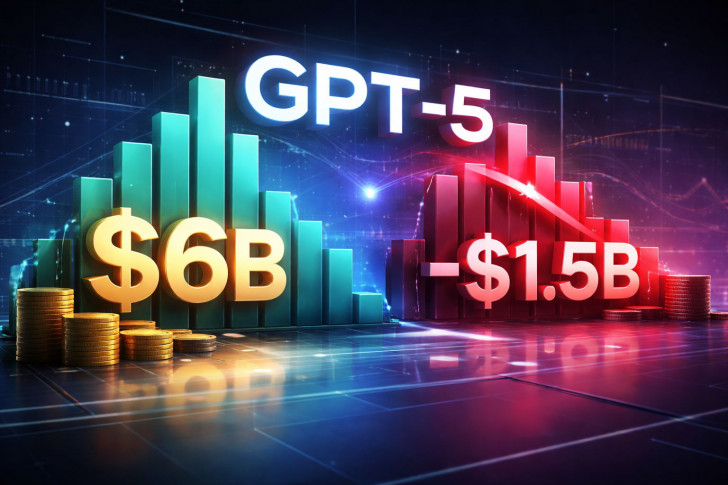
New estimates suggest OpenAI's GPT-5 generated roughly $6 billion in revenue but likely produced a net loss after operating expenses and revenue-sharing costs were included.
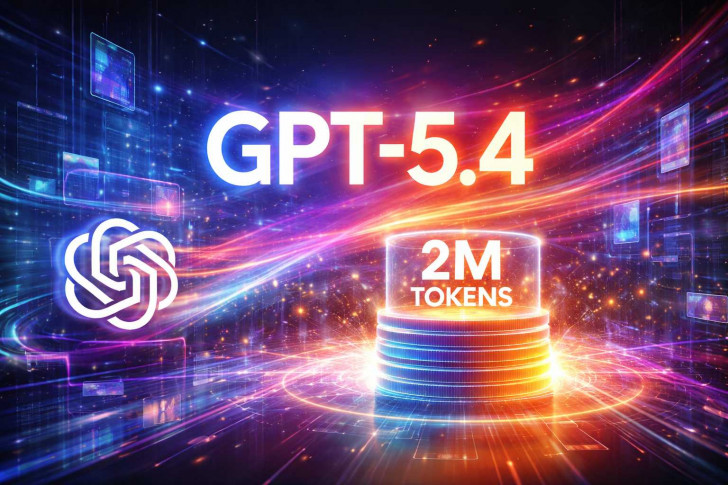
Screenshots from public repository edits suggest GPT-5.4 could introduce a 2 million token context window, full-resolution vision, and faster response tiers. Community prediction markets already assign high odds to an imminent release.
Google Trends data from late February shows a sharp but short-lived surge in Anthropic searches following a U.S. agency usage ban report, while OpenAI held steady. Both brands ended the week with an equal average score of 26 - revealing how social media noise can distort real market signals.
OpenAI has raised $110 billion at a $730 billion pre-money valuation, with major backing from SoftBank, NVIDIA (NVDA), and Amazon (AMZN). The company reports 900 million weekly ChatGPT users and an expanded strategic compute partnership.
Lovable has integrated GPT-5.3-Codex for its most complex tasks, reporting the model is significantly stronger than GPT-5.2 and 3-4 times more token-efficient - a shift that could reshape how AI tools handle demanding technical workloads.
OpenAI's latest GPT-5.2-chat model has broken into the Arena.ai Text Arena top five rankings, scoring 1478 points and marking a significant 40-point jump over its predecessor.
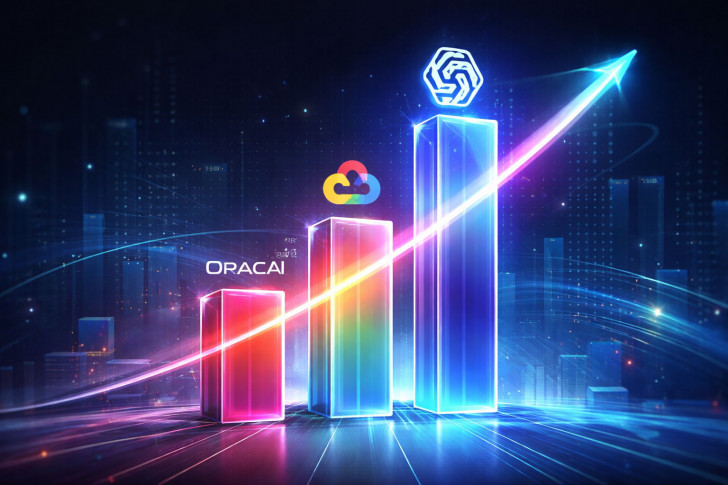
OpenAI's projected revenue could reach $284 billion by 2030, putting it in the same league as Google Cloud and ahead of Oracle. AI subscriptions and platform APIs are expected to drive most of that growth.
METR's latest evaluation puts OpenAI's GPT-5.3-Codex at a 50% task success horizon of around 6.5 hours on software assignments, with a 95% confidence interval spanning 3 to 17 hours.
New research shows Anthropic's revenue growth rate outpacing OpenAI's since both passed $1 billion annualized revenue. The projection suggests Anthropic may surpass OpenAI by mid-2026 if current trends continue.
OpenAI locked down 100 megawatts of AI-ready data center capacity in India through a deal with Tata, eyeing an ambitious scale-up to 1 gigawatt while expanding ChatGPT Enterprise across Tata's business units.
We use cookies to improve your experience on our site and to show you relevant advertising. To find our more, read our privacy policy and cookie policy


 Usman Salis
 Peter Smith
 Eseandre Mordi
 Saad Ullah

 Victoria Bazir
 Marina Lyubimova
 Artem Voloskovets