55 articles
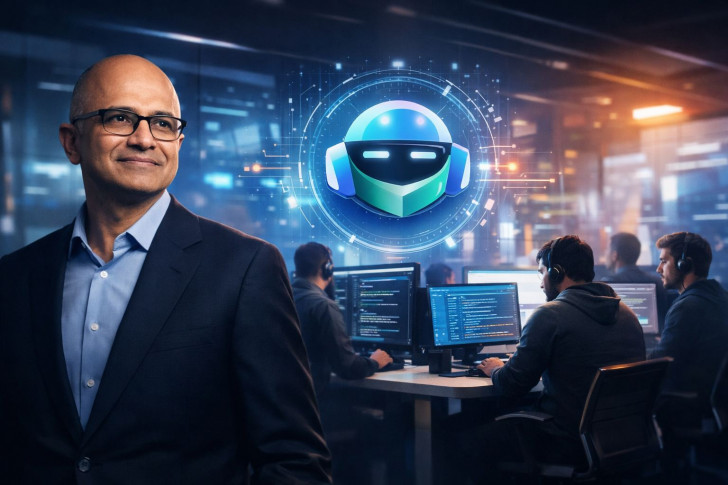
Microsoft CEO Satya Nadella has personally stepped in to tackle Copilot's reliability problems, joining a 100-engineer Teams channel and running weekly fix-it sessions to address user complaints across Microsoft 365.
Microsoft's Agent Lightning is a new open source framework that lets developers add reinforcement learning capabilities to AI agents without touching their existing code, making advanced AI training more accessible.
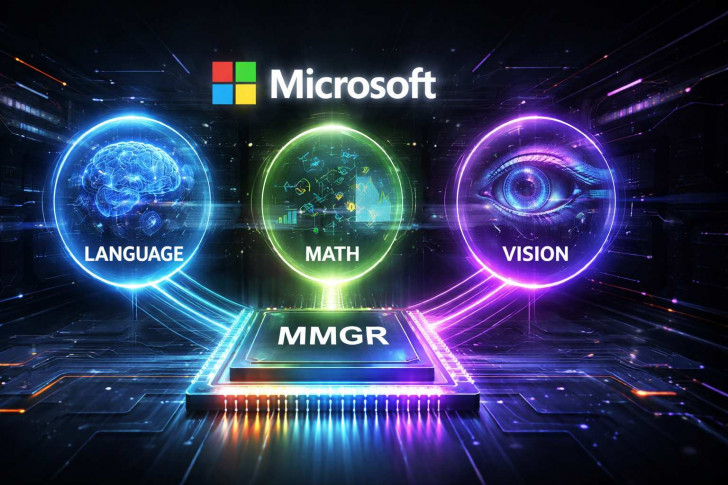
Microsoft partnered with academic institutions to launch MMGR—a benchmark that tests whether multimodal AI can truly understand reasoning, physics, and spatial relationships, not just generate realistic-looking outputs.
Microsoft published an open source Azure AI Samples Repository. The repository gives developers step-by-step examples that show how to take an AI application from a local machine to a live Azure production environment with LangChain and a serverless architecture.
Microsoft is building a year-end recap feature for Copilot that wraps up your AI conversations from 2025, joining OpenAI and Anthropic in offering users a look back at their AI usage.
Microsoft slashed Copilot AI sales targets by up to 50% amid weak enterprise demand. Market data reveals Copilot holds just 14% share while ChatGPT dominates with 61%, exposing growing pressure on Microsoft's AI strategy.
Microsoft is rolling out GPT-5.1 for Smart Mode and building a new Reminders feature. The move puts the company in the race for stickier AI assistants as platforms bet on simple productivity tools that keep users coming back.
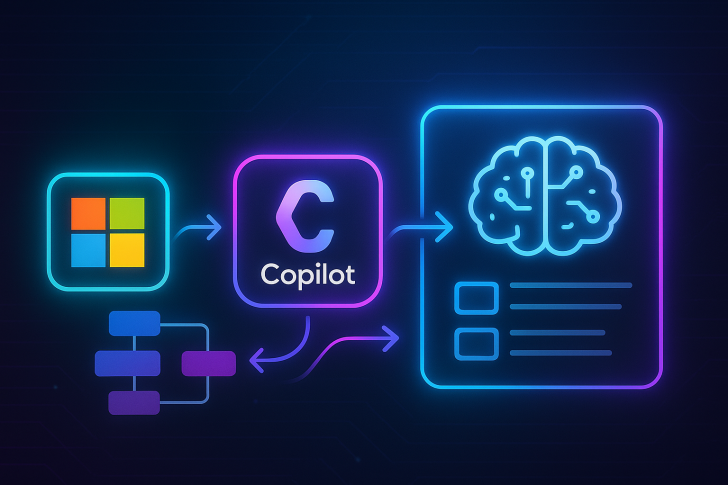
Microsoft is rolling out new "Projects" capabilities for Microsoft 365 Copilot, transforming the assistant from a simple chatbot into a structured project management tool that handles complex, multi-step workflows.
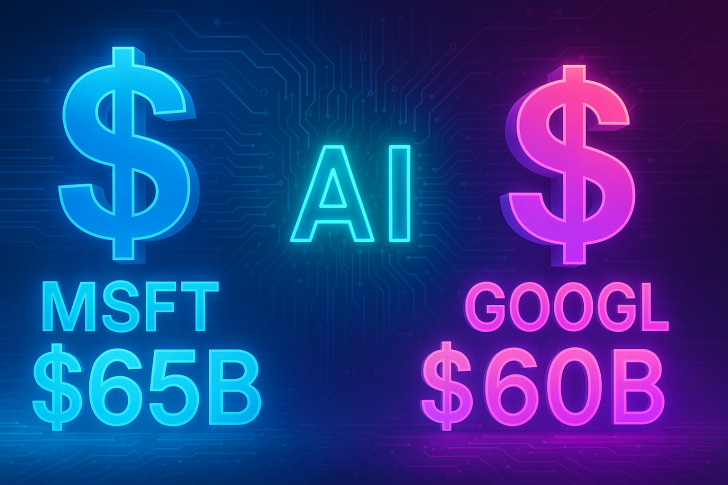
Microsoft and Alphabet are pouring unprecedented capital into AI infrastructure, with spending jumping from around $21-22B in 2020-2021 to an estimated $65B and $60B respectively by 2025, even as interest rates climb and cash reserves decline.
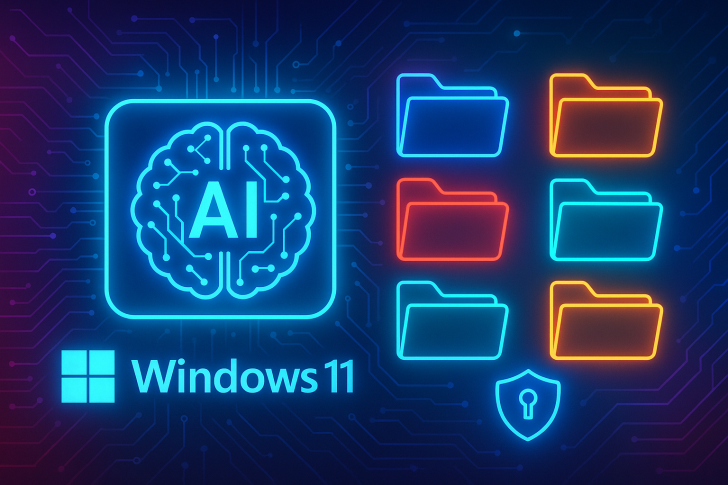
Microsoft warns that Windows 11's new AI agents will access six core folders including Documents and Downloads, raising security concerns as these autonomous systems gain unprecedented control over personal files and applications.
Microsoft, NVIDIA, and Anthropic have launched a major AI partnership involving multibillion-dollar investments, large-scale cloud expansion, and deep technical collaboration. The agreement positions Claude as a fully integrated frontier model across major cloud ecosystems.
Credit default swap prices for major tech companies including Oracle and Microsoft have jumped to multi-year highs, with some CDS levels more than doubling since September as hedge funds sell protection to banks worried about AI-related credit exposure.
Microsoft unveiled Fairwater, a massive AI superfactory developed alongside OpenAI. The facility brings online GPU power matching approximately 1.2 million H100-class units across Microsoft's worldwide infrastructure.
Major cloud providers Amazon, Microsoft, and Anthropic are supporting the Gain AI Act, a legislative proposal that would require AI chip makers like Nvidia to prioritize U.S. domestic demand before exporting advanced processors to restricted markets, potentially reshaping the global AI hardware landscape.
Microsoft's new study reveals which 40 jobs face the highest AI disruption risk and which remain safe, showing writing, translation, and analytical roles under greatest pressure.
Lambda partners with Microsoft in a massive deal to build AI infrastructure using tens of thousands of NVIDIA GPUs, including next-gen GB300 systems.
Microsoft's Azure hit a new AI performance benchmark of 1.1 million tokens per second using a single rack of NVIDIA GB300 GPUs, according to CEO Satya Nadella.
Microsoft has become the first U.S. company authorized to export Nvidia's high-end AI chips to the UAE, signaling a shift in American tech policy. The company plans to invest $7.9 billion in Abu Dhabi data centers through 2029, positioning the region as a major AI hub.
A Microsoft study analyzing over 200,000 worker interactions with AI tools has identified which jobs are most and least vulnerable to automation. The findings show that language-heavy roles face the biggest shifts, while hands-on physical jobs remain largely safe from AI disruption.
Microsoft CEO Satya Nadella revealed that thousands of NVIDIA GPUs sit idle due to power shortages, showing that energy—not chips—has become the real bottleneck in AI expansion.
We use cookies to improve your experience on our site and to show you relevant advertising. To find our more, read our privacy policy and cookie policy


 Sergey Diakov
 Eseandre Mordi
 Alex Dudov
 Victoria Bazir
 Saad Ullah
 Peter Smith
 Artem Voloskovets