8 articles
McKinsey data reveals a dramatic acceleration in AI skill requirements, with demand for AI fluency jumping sevenfold in just two years.
McKinsey now officially treats AI agents as workforce members, currently deploying 20,000 agents alongside 40,000 human employees with plans to reach equal numbers in just 18 months.
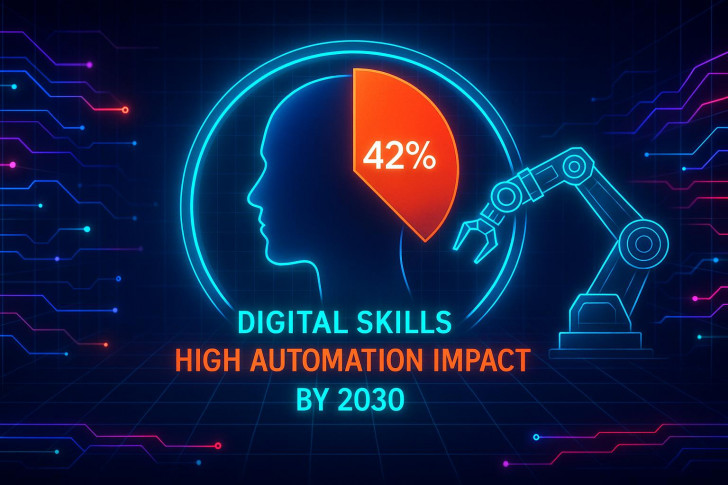
New research reveals how AI will transform different workplace skills at vastly different speeds, with digital capabilities changing fastest and human care roles staying most stable.
McKinsey says early AI mistakes should be viewed as catalysts for long-term scaling rather than setbacks. The firm urges companies to accelerate their AI roadmaps to capture emerging opportunities.
McKinsey's latest research shows that companies which derive at least 10 percent of their EBITDA from generative AI spend far more on governance and trust measures than their rivals plus lead in responsible AI practices.
A new McKinsey Global Institute report finds that AI will not replace most human skills but will significantly change how they are applied. Negotiation, problem solving, and leadership are projected to gain value as automation expands.
McKinsey's new report reveals AI-driven automation could fundamentally transform U.S. labor markets and generate up to $2.9 trillion in economic value by 2030, with AI fluency becoming the fastest-growing job requirement nationwide.
McKinsey's 2025 AI Report shows most companies are using AI but few are getting real results. While 88% have adopted AI tools, most remain stuck in testing phases with limited business impact.
We use cookies to improve your experience on our site and to show you relevant advertising. To find our more, read our privacy policy and cookie policy


 Marina Lyubimova

 Alex Dudov

 Eseandre Mordi
 Usman Salis


 Peter Smith

 Saad Ullah