1846 articles
NVIDIA just released Nemotron-VLM Dataset v2 on Hugging Face—a free, commercially-usable collection with 8+ million samples for training vision-language AI models, complete with OCR tools and multilingual support.
OpenAI is offering one-year free access to ChatGPT Go for all users in India starting November 4, coinciding with the company's first DevDay Exchange event in Bengaluru.
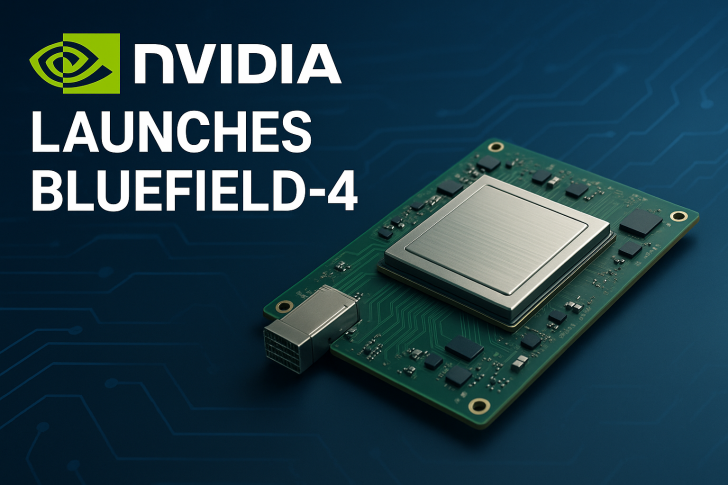
Nvidia introduces the BlueField-4 DPU, a 64-core processor that offloads networking, storage, and security tasks to boost AI data center performance by up to 6x.
Nvidia's $1 billion investment in Nokia marks a strategic push into AI-driven telecom infrastructure, combining the chipmaker's AI expertise with Nokia's network technology to develop next-generation 5G and 6G systems.
OpenAI CEO Sam Altman has signaled that a public listing is becoming the company's "most likely path" forward, potentially setting up one of the most anticipated tech IPOs in recent history.
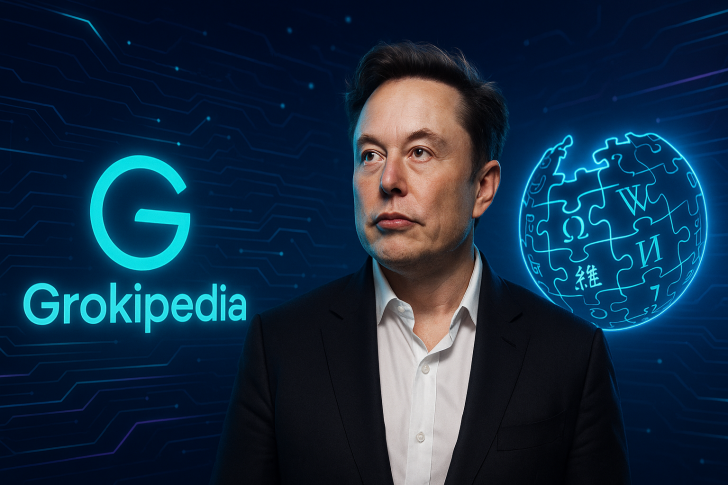
Elon Musk's new AI encyclopedia Grokipedia is drawing fire for allegedly pushing right-wing narratives and false information, triggering a public battle with traditional media and Wikipedia.
Wharton research shows AI investments are paying off across industries, with mid-sized firms leading the way
Google has introduced Pomelli, an experimental AI marketing agent that analyzes brand identity and creates complete campaigns in minutes. Currently available in select English-speaking countries, it represents Google's latest move into agentic AI for creative work.
DeepMind has developed an AI system that can autonomously create and optimize its own reinforcement learning algorithms, moving beyond human-designed methods toward self-improving machine intelligence.
At its 2025 livestream, OpenAI laid out an aggressive plan including trillion-dollar infrastructure investments and a bold goal — fully automated AI researchers by 2028.
A quick look at how GPT-5's latest version handles safety more consistently during extended conversations.
DeepSeek OCR scored 84.24% on OmniDocBench, just ahead of open-source OLmOCR-2 at 81.56%. The tight race shows how close community-driven AI has gotten to proprietary systems in document understanding.
Anthropic's Claude models now command over 50% of AI token usage in production environments, outpacing OpenAI's GPT and Google's Gemini according to recent Vercel AI Gateway data.
Zapier CEO Wade Foster argues that businesses should focus on agentic workflows—structured, AI-powered automations—rather than chasing fully autonomous AI agents. In insights shared, Foster outlines a practical framework for implementing AI that prioritizes reliability, human oversight, and incremental progress.
Zhipu AI's GLM-4.6 is shaking up the AI landscape as a high-performance open-source language model that rivals top proprietary systems. With a 200K token context window, competitive benchmarks, and pricing 15–20% lower than closed alternatives, it's proving that open models can compete on both quality and cost.
Google Cloud and PayPal have teamed up to launch an AI-powered commerce platform that lets autonomous AI agents handle everything from product discovery to checkout. With PayPal's 36 million merchant network and Google's AI infrastructure, this partnership could challenge Amazon and Shopify's dominance in digital retail.
Several data center operators have posted massive gains this year as AI and cloud computing drive unprecedented demand for infrastructure.
Qualcomm just dropped two new AI accelerator chips (AI200 and AI250) aimed squarely at the data center market, challenging NVIDIA and AMD's dominance in AI hardware.
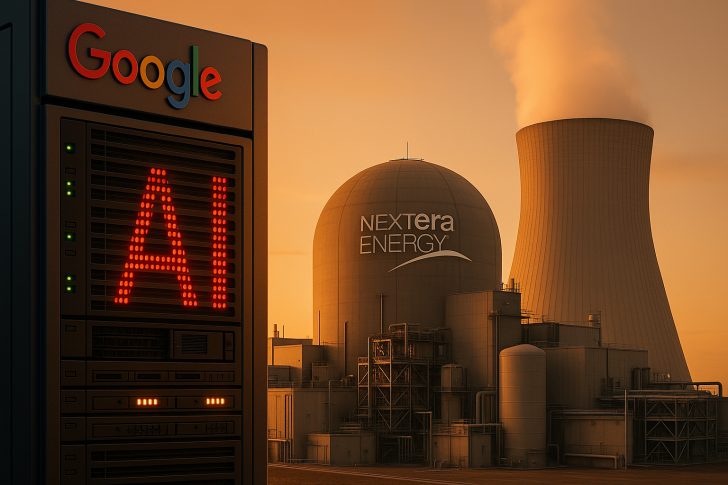
Google and NextEra Energy are partnering to restart Iowa's Duane Arnold nuclear plant, providing clean power for AI operations through 2029 under a 25-year agreement.
Microsoft launches Teams Mode for Copilot, enabling groups to collaborate with AI directly in Microsoft Teams chats for real-time co-creation and productivity.
We use cookies to improve your experience on our site and to show you relevant advertising. To find our more, read our privacy policy and cookie policy


 Usman Salis
 Peter Smith
 Saad Ullah
 Eseandre Mordi
 Alex Dudov