1846 articles
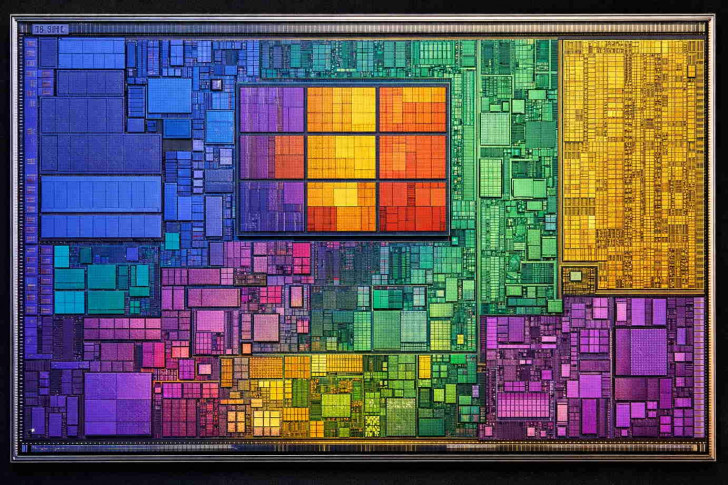
A detailed die shot of the Qualcomm Snapdragon 8 Gen5 (SM8845) reveals a 103.552mm² die size and redesigned internal architecture, showing how the chip compares to the Snapdragon 8 Elite variants.
Elon Musk called the new SpaceX Raptor 3 rocket engine a major breakthrough, highlighting big gains in efficiency, payload capacity, and reliability.
ByteDance launched Seedance 1.5 Pro, an AI model that generates video and audio together while solving style and character consistency problems. The tool lets creators lock first and last frames for better control over motion and scene flow.
New Epoch AI data shows frontier model performance climbing nearly twice as fast in recent months, though experts caution the acceleration may reflect benchmark optimization rather than across-the-board capability gains.
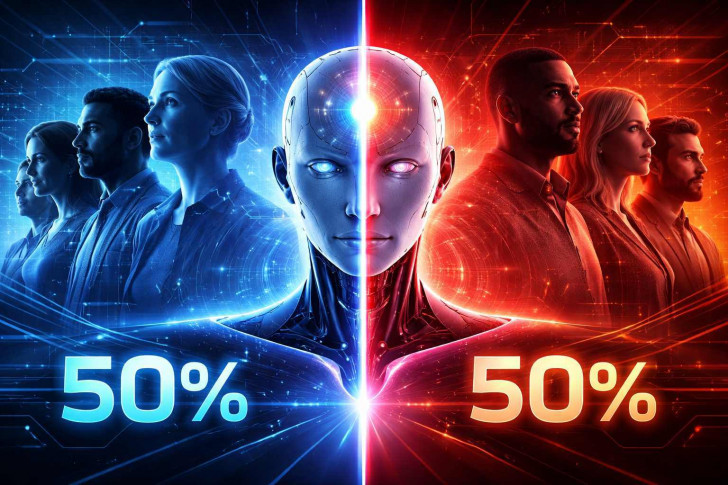
A new U.S. survey reveals Americans are evenly divided on whether artificial intelligence will help or harm society, with public opinion ranging from optimism to caution as AI continues reshaping everyday life.
Fresh data reveals AI systems are gaining ground at an unprecedented pace. The time horizon for coding tasks these systems can tackle independently now doubles every four months, a sharp jump from the seven-month doubling rate seen between 2019 and 2025.
GLM 4.7 has rocketed to second place on Website Arena's Model Performance leaderboard, landing right behind Gemini 3 Pro Preview and becoming the top-ranked open-weight AI model available today.
Alibaba Cloud launched Qwen-Image-Edit-2511, an open-source AI model that cuts down on image drift while adding multi-character consistency and structural intelligence.
Starlink's satellite network is replacing clunky airplane internet with fast, stable connections that work from gate to gate—not just at cruising altitude.
Google unveiled FunctionGemma 270M, a compact AI model that runs entirely on smartphones and edge devices, converting everyday language into system commands while keeping data local for faster response times and enhanced privacy.
Anthropic has introduced Selective Gradient Masking, a technique designed to block specific dangerous knowledge in AI models while keeping their overall abilities intact. The company says this method is tougher to reverse than standard unlearning approaches.
University of Alberta researchers developed Reason2Decide, a training framework that makes AI medical predictions more explainable using models 40 times smaller than GPT-4.
Fresh benchmark data reveals Nvidia's Blackwell GB300 NVL72 delivers up to 1.9× faster training speeds per chip than Google's Ironwood TPU when running complex AI workloads.
New Epoch AI data reveals frontier artificial intelligence capabilities started improving almost twice as fast in 2024, driven by advances in reasoning models and reinforcement learning techniques.
xAI's Grok 4.1 Fast now supports a 2 million-token context window—the largest among major AI models. This massive capacity lets users handle enormous inputs in one go, from lengthy conversations to entire codebases.
Epoch AI's 2025 retrospective reveals exponential acceleration in large language model development, with performance improvements now occurring in months rather than years across capability, efficiency, and research output metrics.
For the first time ever, an AI has cracked an open math problem completely on its own, delivering a verified proof without any human help or hints.
Meta AI overtook Claude in daily active users during late 2024, powered by rapid adoption growth. Similarweb data reveals Meta AI ended the year with significantly higher engagement across mobile platforms worldwide.
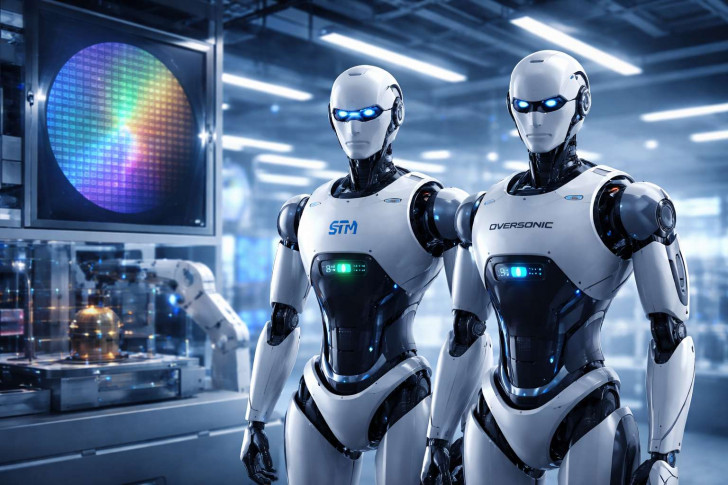
STMicroelectronics is teaming up with Oversonic Robotics to bring humanoid robots into semiconductor manufacturing facilities. This collaboration represents the first major integration of cognitive humanoid robots into chip production environments.
Google DeepMind just launched Gemma Scope 2, bringing interpretability tools to every layer of its Gemma 3 models—giving researchers unprecedented access to see how AI actually thinks.
We use cookies to improve your experience on our site and to show you relevant advertising. To find our more, read our privacy policy and cookie policy


 Peter Smith
 Saad Ullah

 Victoria Bazir


 Eseandre Mordi


 Marina Lyubimova






 Alex Dudov

 Usman Salis