39 articles
New analysis reveals US data centers rely mostly on natural gas while China uses coal to meet AI power needs. The IEA warns this fossil fuel dependence could drive electricity prices higher and create supply risks as AI demand explodes globally.
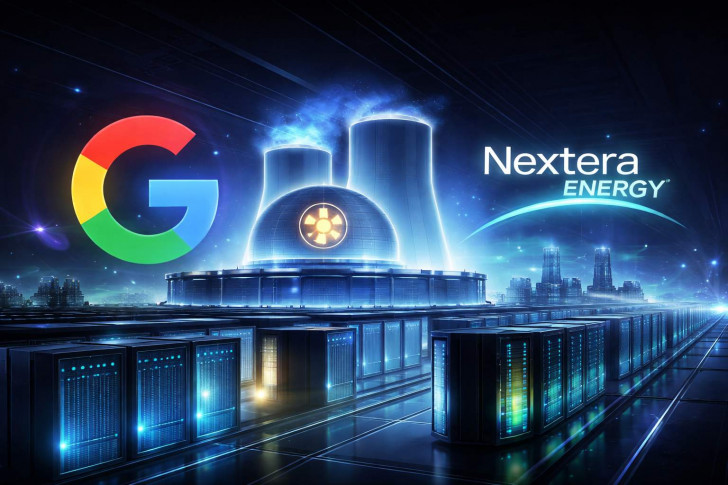
Google has signed a long-term power agreement with NextEra Energy to restart Iowa's Duane Arnold nuclear plant, with electricity expected to begin flowing by 2029.
Amazon is building an $11 billion AI-focused data center campus in Indiana that will consume enough electricity to power a million homes and require 300 million gallons of water annually for cooling.
Oracle and OpenAI just scored Michigan's approval to power a massive AI data center that'll need as much electricity as a nuclear reactor—marking one of America's biggest AI infrastructure bets yet.
Global data center capacity is expected to grow by about 15 percent each year until 2027, but that rate will still fall short of the rapidly increasing worldwide demand driven by AI.
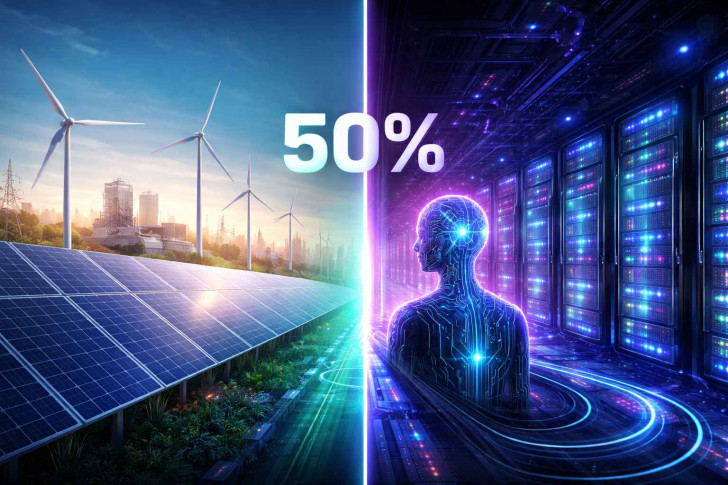
Artificial intelligence is driving an unprecedented surge in global electricity demand from data centers, with consumption expected to more than double by decade's end. This creates a critical energy challenge as the need for continuous, reliable power clashes with renewable energy limitations.
AI infrastructure boom drives 36% upward revision in electricity forecasts as nationwide grid expansion accelerates
Bank of America reports a sharp jump in debt issuance by major tech companies funding AI datacenter expansion, with 2025 borrowing at $121 billion—four times the five-year average. Hyperscalers are leaning heavily on loans and bonds as capital needs climb.
A 47 GW power gap looms for U.S. data centers between 2025 and 2028, even with fast-track power solutions, as AI infrastructure demand rapidly outpaces supply.
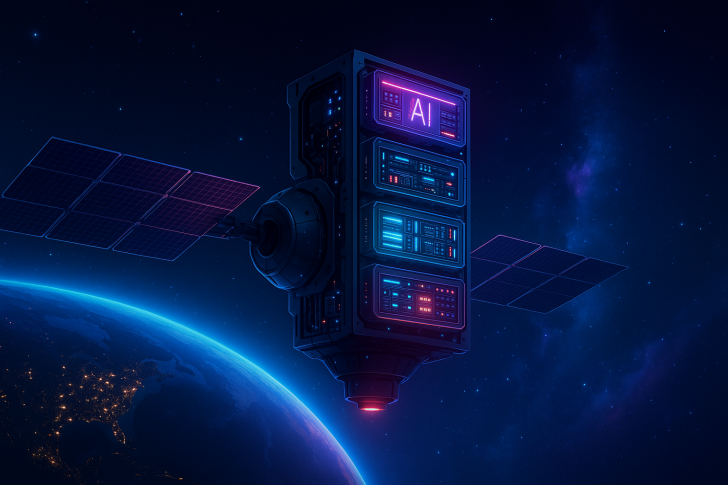
Google continues to work on a plan to place an artificial intelligence data center in orbit. The facility would draw power from large solar panels and would exchange data with Earth through laser links. The project suggests that computing hardware might one day operate in space instead of on the ground.
The rapid expansion of AI infrastructure is pushing electricity consumption to new highs. Power companies are warning that utility bills across the board may climb significantly as data centers demand more energy over the next few years.
U.S. data-center investment has surged more than 300% in three years, far outpacing all other commercial construction categories. New data shows AI-related spending contributed most of U.S. GDP growth in early 2025.
Nvidia now holds more than 80 % of the market for chips used in data centers and for artificial intelligence. In early 2021 its share was only 25 %. Intel besides AMD have not kept up with the steep rise in demand for hardware built for AI work, which let Nvidia expand quickly.
David Friedberg disputed Michael Burry's concerns about hyperscaler depreciation practices, arguing that GPUs and TPUs at companies like $GOOGL remain fully operational for 7-8 years, justifying extended depreciation schedules.
Big Tech's AI infrastructure investments are approaching $100 billion per quarter, but power grid constraints, permitting delays, and revenue expectations creating a $650 billion annual gap are exposing the limits of explosive growth.
JPMorgan warns that AI data-center expansion may need up to $7 trillion over five years, creating a massive financing gap that could transform global debt markets and reshape the industry.
Data center financing is exploding in 2025, with debt issuance projected to hit $25.4 billion as the AI infrastructure race intensifies and operators scramble to build the computing power needed for next-generation models.
Morgan Stanley predicts private credit will supply over half of the $1.5 trillion needed for data center expansion, fundamentally changing how AI infrastructure gets funded.
A fresh forecast from Bain & Company, highlighted by analyst, shows global data center capacity is about to explode—with AI workloads pushing growth between 13% and 20% annually through 2030.
We use cookies to improve your experience on our site and to show you relevant advertising. To find our more, read our privacy policy and cookie policy


 Peter Smith
 Eseandre Mordi
 Saad Ullah
 Marina Lyubimova


 Usman Salis